Jesus’ Manifesto


The Word Makes Us Nervous

The word manifesto makes some Christians nervous.  It sounds political. Ideological. Revolutionary. Maybe even dangerous.

For many, the word conjures images of angry movements, cultural upheaval, or ideological extremism. In our modern moment, “manifesto” often feels politically charged before we even define it. Some immediately associate the term with revolutionary movements on the far left or far right, with propaganda, coercion, or attempts to seize cultural power.

And to be fair, history has certainly produced destructive manifestos. Some have fueled oppression, violence, nationalism, or utopian visions untethered from humility and love. So, the hesitation is understandable.

When we view a manifesto in a category that belongs exclusively to political radicals and cultural revolutionaries, rather than recognizing it more broadly as a public declaration of vision, convictions, and way of life, we have flattened the value of the term.  It then becomes difficult to recognize that Jesus Himself spoke in ways that were deeply public, deeply disruptive, and deeply challenging to the social and religious assumptions of His day – manifesto-like.

I recently read about a pastor preaching a message focused on The Sermon on the Mount. Afterward, one of the church leaders confronted him about his “woke ideologies.” The pastor responded that he had simply been repeating the words of Jesus. The man replied, “Not my Jesus.”

Whether the story is apocryphal or not, it captures something revealing about our moment. We have become so discipled by modern political categories that the teachings of Jesus can sound foreign – even threatening – when heard without the filters we normally place on them.


A Domesticated Jesus?

Perhaps part of our discomfort is that we have grown accustomed to thinking of Jesus primarily in private and personal terms – as though His teachings were mainly about individual spirituality or moral inspiration rather than the announcement of an entirely different kind of kingdom and humanity.  In a sense, we have domesticated Jesus.

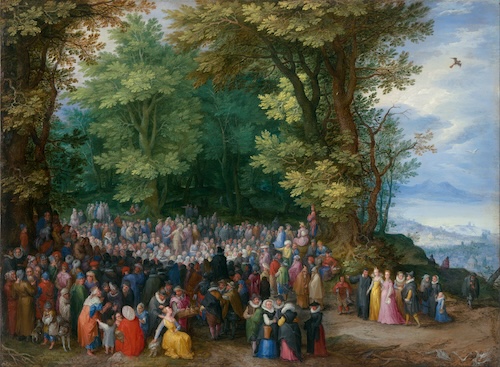
When Jesus ascended a hillside in Galilee, sat down with His disciples, and began speaking about blessing, enemies, lust, anger, money, anxiety, prayer, power, integrity, retaliation, and the kingdom of God, He was not offering detached religious reflections for private inspiration. He was announcing an entirely different way of being human under the reign of God.

In many ways, the Sermon on the Mount reads like a manifesto.


What Manifestos Actually Do

A manifesto is a public declaration of vision, values, convictions, and way of life. It names what is wrong with the present order and calls people into an alternative reality. Manifestos challenge assumptions. They form identity. They summon allegiance. They announce that another way is possible.

The Declaration of Independence functioned as a manifesto. It publicly declared that the existing relationship with the British crown was no longer acceptable, articulated foundational convictions about human dignity and governance, and called for an entirely new national identity to emerge.

Martin Luther’s Ninety-five Theses served as a manifesto for reform within the Church. What began as an academic dispute became a public challenge to corruption, spiritual abuse, and distorted theology. Luther was not merely complaining; he was calling people back to a different understanding of the gospel and authority.

Likewise, The Rule of Saint Benedict functioned as a manifesto for an alternative kind of community. Benedict laid out rhythms, values, practices, and shared commitments that shaped how people would live together under the lordship of Christ. It was not simply theoretical theology. It was an embodied vision.


The Manifesto of the Kingdom

Manifestos do not merely describe ideas. They seek to form people.  And that is precisely what Jesus seemed to be doing in the Sermon on the Mount.

We can easily reduce the Sermon on the Mount to one of three things:

  • impossible moral standards meant to make us feel our need for grace,
  • inspirational sayings suitable for coffee mugs and wall art,
  • or ethical suggestions for especially serious Christians.

But Jesus presented the Sermon as none of those things.  This was the manifesto of the kingdom of God.  Jesus announced a new reality breaking into the world: “Repent, for the kingdom of heaven has come near.”  

God was indeed king.

And the Sermon on the Mount described what life looks like when people actually live under His reign.  This manifesto was radically counter-cultural then, and it remains radically counter-cultural now…

  • Blessed are the poor in spirit. 
  • Love your enemies. 
  • Pray for those who persecute you. 
  • Reject performative religion. 
  • Tell the truth without manipulation. 
  • Refuse vengeance. 
  • Seek first the kingdom. 
  • Do not store up treasures on earth. 
  • Do unto others as you would have them do unto you.

None of these fits neatly into modern ideological categories.

Jesus confronted both religious nationalism and moral compromise. He challenged hypocrisy and self-righteousness. He critiqued greed, status-seeking, lust for power, anxiety-driven accumulation, and hatred toward enemies. He called people into a life marked by humility, mercy, purity, courage, integrity, generosity, reconciliation, and radical trust in the Father.

That is not Republican.
That is not Democrat.
That is kingdom.

And perhaps that is why the Sermon still unsettles us.


More Than Private Spirituality

We have become remarkably skilled at admiring Jesus while explaining away the direct implications of His teachings. We sentimentalize the Sermon on the Mount because actually obeying it would require a profound reordering of our lives, priorities, politics, relationships, economics, ambitions, and identities.

Jesus was not merely offering spiritual guidance for getting into heaven someday.  He was forming a people who would embody the life of heaven here and now – “On earth as in heaven.”

A manifesto.

Not enforced through coercion or violence.
Not advanced through domination.
But through surrendered hearts shaped by the reign of God.

In the coming posts, we will spend some time walking through the Sermon on the Mount as Jesus’ kingdom manifesto – not as abstract ideals, but as the invitation into an entirely different way of living in the world.

Kingdom Politics in a Partisan Age


When we hear the word political, our minds often drift toward partisan bickering, campaign ads, and endless fights between the left and the right. Politics, fundamentally, is about how communities govern themselves and pursue human flourishing together – how power is exercised, how justice is pursued, and how public life is ordered.  It concerns the values and structures that shape public life.

Partisanship is narrower. It is allegiance to a party, ideology, tribe, or faction, often reducing reality into “us versus them.” In short, being political is about the common good; being partisan is about taking sides.

That distinction matters when we talk about Jesus.

Whether we recognize it or not, Jesus was profoundly political. He proclaimed a kingdom, confronted systems of power, redefined authority, and announced a new social reality under the reign of God. Yet he consistently resisted being co-opted by the partisan movements of his day.

He did not align himself with the Pharisees, Sadducees, Herodians, or Zealots. He transcended them all.

And that frustrated people.

Some wanted Jesus to overthrow Rome. Others wanted him to reinforce the religious establishment. Still others hoped he would baptize their version of nationalism or morality. Jesus refused every attempt to squeeze him into a human political category.

That refusal still frustrates people today.


The Politics of the Kingdom

Jesus’ first public proclamation was deeply political: “The kingdom of God is at hand. Repent and believe the good news.” (Mark 1:15)

In the Roman world, Caesar claimed titles like “Lord” and “Savior.” The empire proclaimed its own “gospel” — good news about the reign of Caesar and the peace of Rome.

So when Jesus announced the kingdom of God, he was declaring an alternative reign, an alternative allegiance, and an alternative vision for human flourishing.  The earliest Christians understood this – when they confessed, “Jesus is Lord,” they were simultaneously declaring, “Caesar is not.”

But Jesus’ politics did not mirror Caesar’s politics.

His kingdom would not advance through domination or violence. It would spread through love, truth, healing, forgiveness, and love of the enemy. Jesus subverted the normal assumptions of political power.

As Stanley Hauerwas often argues, Christians are called to resist the political categories, assumptions, and demands of their age.  The church proclaims that we belong first to another kingdom.


Challenging Power Without Grasping for It

Jesus consistently confronted distorted uses of power.

He overturned tables in the temple because worship had become entangled with exploitation (Matthew 21:12–13). He rebuked leaders who burdened others while refusing to help carry the load (Matthew 23:4). And he taught that leadership in God’s kingdom is about serving, not “lording it over” others (Mark 10:42–45, Luke 22:25–26), contrasted with the politics of earthly kingdoms.

Jesus rejected domination as the pathway to transformation.

That is why he puzzled both the religious establishment and the political revolutionaries of his day. The Zealots wanted revolt. Rome wanted order through force. Jesus chose servanthood.

He taught that greatness looks like humility, leadership looks like sacrifice, and authority looks like washing feet.


Refusing Partisan Co-Option

One of the clearest examples of Jesus resisting partisan co-option came when he was asked whether Jews should pay taxes to Caesar (Matthew 22:15–22).

The question was a trap.

If Jesus endorsed the tax, many Jews would see him as siding with Rome. If he rejected it, Rome could brand him a revolutionary.

Jesus refused the false binary.

“Give to Caesar what is Caesar’s,” he said, “and to God what is God’s.”

With one statement, Jesus acknowledged the limited role of earthly government while also relativizing its authority. Caesar may have his coins, but Caesar does not own human souls.

If coins bear Caesar’s image, human beings bear God’s image.  Our ultimate allegiance belongs to God.

This is why Christians must be careful whenever political parties attempt to claim unquestioned loyalty. The moment the church becomes fully identified with a partisan movement, it risks domesticating the kingdom of God into something far smaller than Jesus intended.

Jesus consistently resisted those kinds of reductions.

After feeding the five thousand, the crowds attempted to “make him king by force.” Jesus withdrew from them (John 6:15). They wanted a Messiah who fit their political expectations.

Jesus would not comply.


The Politics of Radical Human Dignity

Jesus’ politics were also visible in the people he welcomed.

Philip Yancey noted that Jesus refused to let institutions interfere with love for actual human beings…

Jesus spoke with a Samaritan woman whom society marginalized ethnically, morally, and religiously. He called Matthew the tax collector and Simon the Zealot into the same circle of disciples. He ate with Pharisees and sinners. He touched lepers, welcomed children, and praised outsiders.[1]

Again and again, Jesus placed people above categories. And every one of these actions carried political implications because they redrew the boundaries of belonging.

The kingdom of God was not built around tribal purity or partisan identity.  It was built around reconciliation.


Why This Matters Now

Following Jesus cannot be apolitical.

To live under the lordship of Christ means caring about justice, truth, peace, mercy, and the ordering of life together. Christians cannot retreat into a privatized faith that ignores public life.

At the same time, Jesus warns us against becoming captive to partisanship.  Paul rebuked believers for dividing themselves into factions:

“One of you says, ‘I follow Paul’; another, ‘I follow Apollos’… Is Christ divided?” (1 Corinthians 1:12–13)

That warning still matters.  Whenever Christians equate the kingdom of God with a political party, ideology, nation, or movement, we shrink the gospel into something tribal.  We tame the radical vision of Jesus.  We begin treating political opponents as enemies to defeat instead of neighbors to love.

N.T. Wright writes that God’s kingdom is the place “where love and justice and truth and mercy and holiness reign unhindered.”[2]  Those realities never fit neatly into partisan categories. The kingdom critiques every party.  Every ideology.  Every ruler.

Including the ones we prefer.


Living as Citizens of Another Kingdom

So the question is not whether Jesus was political.  He clearly was.

The better question is this: How can we be political like Jesus without becoming partisan like the world? That may mean:

  • Speaking truth to power, no matter who holds office.
  • Prioritizing the vulnerable even when it costs us socially or politically.
  • Refusing to demonize those on “the other side.”
  • Caring more about faithfulness than winning.
  • Remembering that our ultimate hope is not found in elections, parties, politicians, or nations, but in the risen Christ.

In a polarized age, the church has an opportunity to model a different kind of public witness – a people shaped not by outrage, fear, or tribalism, but by the ethics of the kingdom of God.  A people who proclaim that Jesus is Lord.

And because Jesus is Lord, no political party ever will be.


[1] Yancey, P. (1995). The Jesus I never knew (International trade paper edition). Zondervan Publishing House.

[2] Wright, N. T. (2004). Matthew for everyone : Part two.  Westminster John Knox Press.

Pulling It All Together: Reading Jesus Through the Right Lens


Over the past several posts in this “Not What You Think It Means” series, we have revisited words that sit at the center of Jesus’ message:

Kingdom.
Repent.
Believe.
Gospel.

At first glance, this may have felt like a long detour into vocabulary. But it was never really about vocabulary. It was about lenses.  Because how we understand those words shapes how we read everything Jesus said and did.

If the gospel is primarily about “how I get to go to heaven,” then we will inevitably read the Gospels through that framework. We might admire Jesus, learn from Him, or worship Him, but we may miss much of what He was actually announcing.

Jesus did not begin His ministry by saying, “Here is how to get to heaven.”  As we’ve seen, Mark summarized Jesus’ message this way:

“The time is fulfilled, and the kingdom of God has come near. Repent and believe the gospel.” (Mark 1:15)

That announcement becomes the interpretive key for everything that follows.  Without that lens, we can easily misread the Gospels.  And certainly not capture the full weight of what the writers wanted their readers to hear.


We May Reduce Jesus to a Sin-Forgiveness Mechanism

If the primary point of Christianity becomes personal afterlife assurance (“after-life” insurance?), Jesus can slowly become reduced to the One who helps us “go to heaven.”

Of course, forgiveness matters deeply. Eternity matters deeply.  But the Gospels reveal Jesus announcing something much larger: the reign of God breaking into the present world.  Once we begin to see that, His words and actions make more sense and take on new meaning.

His miracles were not random supernatural proofs designed merely to convince people that He was divine. They were signs of the kingdom.

Jesus was not merely preparing people for life after death. He was revealing what life under the reign of God looks like right now.


We May Misread the Parables

The parables especially begin to change when viewed through a kingdom lens.  Modern readers often approach parables looking primarily for moral lessons or hidden theological codes. But Jesus repeatedly said:

“The kingdom of God is like…”

That matters.  The parables were helping people imagine what happens when God becomes King…

  • The kingdom was like a mustard seed — small, overlooked, yet growing into something far larger than expected.
  • The kingdom was like yeast in dough — quiet, hidden, yet slowly transforming everything.
  • The kingdom was like a treasure hidden in a field — valuable enough to reorder one’s entire life around it.

Without a kingdom lens, we can flatten these stories into generic encouragements about faith or morality.  But Jesus was describing an entirely new reality breaking into the world.

Even parables of judgment begin to read differently. They are not merely threats about the afterlife. They are warnings about resisting the reign of God that was arriving in their midst.


We May Miss Why Jesus Clashed with Religious Leaders

Without understanding the gospel of the kingdom, Jesus’ confrontations with religious leaders can seem unexpectedly harsh.  Why did He provoke them so often?  Why did Sabbath debates become so intense? Why were they scandalized by what he said and did?

Because Jesus wasn’t merely tweaking religious behavior. He was challenging entire ways of seeing God, power, holiness, and identity.  The kingdom of God was disrupting existing systems. He was inaugurating a radical reorientation of thought and life in light of the reality that God’s reign had come near.

“You have heard it said… but I say to you.”

Jesus continually challenged assumptions about enemies, status, greatness, purity, wealth, retaliation, righteousness, etc.

It was all very scandalous!


The Sermon on the Mount Changes Completely

This may be most obvious with the Sermon on the Mount.  Without a kingdom framework, the Sermon can feel impossible, disconnected from reality, or reduced to inspirational ideals.

Love your enemies.
Turn the other cheek.
Bless those who curse you.
Do not worry.
Seek first the kingdom.

Read through an individualistic “how do I get saved?” framework, these teachings can feel strangely disconnected from the “main point” of Christianity.  But Jesus was describing what life looks like under the reign of God, which is the main point.

The Sermon on the Mount is not random ethics. It’s foundational.  It describes life under God’s rule.  It describes the kind of people God is inviting and forming to participate as workers in his kingdom.  

The Beatitudes suddenly become more than poetic sayings. They become announcements of who the kingdom is available to: the overlooked, the humble, the merciful, the peacemakers.

“Seek first the kingdom of God” stops being a decorative Christian phrase and becomes the framework through which we order our lives.

Why This Matters Going Forward

This is why we have spent time visiting these foundational words.  We are not merely nuancing definitions. We are learning to read Jesus through the framework He Himself announced.

The kingdom of God has come near.
Repent.
Believe the good news.

From here forward, we are going to revisit Jesus’ teachings, actions, parables, and confrontations through that lens.

Because when the message of Jesus becomes centered primarily on “going to heaven when we die,” Jesus Himself can gradually become reduced to the means of getting there rather than the One announcing and embodying the reign of God breaking into the present world.

And once that happens, discipleship can quietly become optional.

Following Jesus may be treated as an advanced step only for especially committed Christians rather than the normal response to the King and His kingdom. The focus can shift toward securing forgiveness or eternal destiny while leaving the larger invitation of Jesus — “Follow Me” — sitting at the edges of the Christian life.

Ironically, this can also drift toward moralism.

When the kingdom of God is no longer the central framework, the teachings of Jesus become reduced to ethical expectations detached from the life and power of God’s reign. Remember, He called people to become disciples —

Apprentices who would learn to live under the reign of God here and now.

Gospel: Not What You Think It Means (Part 1)


We’ve been on a journey since the fall of 2024 – a journey to discover/rediscover the kingdom of God that stood at the very center of Jesus’ message. (See Almost Getting It… and On Earth as in Heaven….)

For me, that journey began nearly 35 years ago, when I first realized that the kingdom of God wasn’t peripheral to Jesus’ teaching – it was the thing. And yet, that realization came with a tension: though Jesus spoke primarily about the kingdom, I struggled to remember hearing much teaching that reflected His focus.

We’ve been lingering – intentionally – on Jesus’ opening proclamation in Mark’s account, slowing down to consider the meaning of the words He chose.

“Jesus came into Galilee, preaching the gospel of God, and saying, ‘The time has come, and the kingdom of God has come near; repent and believe in the gospel.’” (Mark 1:14–15)

We’ve spent time with the kingdom of God, repent and believe. Now it’s time to turn to another word in that sentence – one we use often, perhaps too casually:

Gospel.

And here’s my working hypothesis: “Gospel” may be one of those terms we use regularly without fully understanding what it means – especially as Jesus used it, and as first-century Israelites would have heard it.

If that’s true, then it matters more than we might think. Because if we misunderstand “gospel,” we may also misunderstand:

  • what Jesus was announcing,
  • what He was inviting people into,
  • and how the kingdom of God actually breaks into the present.

A Simple Question

Several years ago, I posted a simple prompt on Facebook:

In a sentence or two, what is the gospel?

The responses were thoughtful, sincere, and – perhaps most interestingly – quite diverse.

Here’s a sampling:

  • “God showing eternal, grace-filled, unconditional love in human form through Jesus on earth.”
  • “Jesus is God with us… to show us God’s love, save us from sin, set up God’s kingdom…”
  • “It’s the New Testament telling of Jesus’ life… so that our sins are forgiven.”
  • “The truth.”
  • “The BEST news… that God loves us and has made it possible for us to live a forever life with Him, starting now.”
  • “Jesus died to pay for our sins so that we can be forgiven and go to Heaven…”
  • “A love story.”
  • “My only hope… Jesus living a perfect life, dying in my place…”
  • “Four gospels telling their version of the same story.”
  • “Hope for all!”
  • “Christ’s death and His resurrection.”
  • “The invitation to eternal life.”

Take a moment and sit with these.

What resonates with you?
What feels incomplete?
What makes you pause?


What We Tend to Mean by “Gospel”

As I’ve reflected on these responses, a few general themes begin to emerge.

1. The Gospel as a Message About Personal Salvation
Many responses focused on sin, forgiveness, and eternal life – especially life after death. This framing emphasizes what Jesus has done for me so that I can be saved and go to heaven.

2. The Gospel as an Expression of God’s Love
Others highlighted God’s love story – grace, compassion, and relational restoration. This centers on who God is and how He has acted toward humanity.

3. The Gospel as the Story of Jesus’ Life and Work
Some described the gospel as the narrative itself – the life, teachings, death, and resurrection of Jesus.

4. The Gospel as Good News (in a General Sense)
A few answers stayed closer to the literal meaning – “good news,” “hope,” “truth” – but without always defining what the news is.


All True… But Is That All?

Here’s what’s striking: There is truth in every one of these responses. And yet, if we placed ourselves in Galilee in the first century, standing in the crowd as Jesus spoke these words…

“The time has come. The kingdom of God has come near. Repent and believe in the gospel.”

…would the people listening have understood “gospel” primarily in these ways?

Would they have heard:

  • “a plan of personal salvation,”
  • or “a summary of theological truths,”
  • or “a set of writings not yet written”?

Or would something else have come to mind? Something more immediate… more public… more world-shifting?


Before We Define It…

Before we rush to define “gospel,” it may be worth lingering in the tension. Because sometimes the problem isn’t that what we believe is wrong – It’s that it might be too small.

So before moving forward, consider:

  • Which of the responses do you instinctively agree with?
  • Which ones feel incomplete or lacking?
  • Which ones stretch your current understanding?
  • And perhaps most importantly…

What might be missing altogether?

We’ll begin to explore how “gospel” was used in everyday first-century life – and what Jesus’ audience likely heard. Next time.

For now, just sit with the question.

Because what we think the gospel is…
will shape how we hear everything Jesus said.

Repent: Not What You Think It Means


In the previous post in this series, Not What You Think It Means: The Words That Framed Jesus’ Message, we began looking at several words that sit at the very center of Jesus’ proclamation:

“The time has come,” he said. “The kingdom of God has come near. Repent and believe the gospel!” (Mark 1:15)

For many modern readers, words like kingdomrepent, and gospel have become overly familiar. We hear them so often that we assume we know exactly what they mean.

But familiarity can sometimes mask misunderstanding.

In particular, the word repent often carries baggage that may not reflect what Jesus’ original listeners heard. For many people today, the word repent sounds like a stern religious command: feel guilty, confess your sins, and promise to do better.

While repentance certainly involves moral change, that understanding may miss the larger picture of what Jesus was announcing. To see this more clearly, we need to step back and ask a simple question:

What did the word “repent” mean in the world of Jesus?

Seeing Differently

The New Testament word translated repent is the Greek verb metanoeō, with the related noun metanoia. The word comes from two Greek roots:

meta – after, beyond, or change
nous – mind, perception, understanding

At its most basic level, metanoia meant a change of mind. But in Greek thought, the “mind” was not merely intellectual. It referred to the center of perception – how a person understood reality, made judgments, and oriented their life.

Repentance, therefore, described a shift in how someone saw things: a reconsideration of one’s assumptions and a recognition that one’s previous understanding may have been mistaken.

Classical Greek writers used the word this way long before the New Testament. A general might rethink a military strategy, a statesman might reverse a policy after realizing it was misguided, or a person might reconsider a decision after gaining new insight. In those settings, repentance was not primarily religious. It simply meant reconsidering and changing course.

Another Greek word, metamelomai, described emotional regret or remorse. But metanoia focused more on a change in perspective that led to a change in direction.

That distinction matters. Repentance was not primarily about feeling bad. It was about seeing differently.

The Prophets’ Call: Return to the Lord

When Jewish scholars translated the Hebrew Scriptures into Greek (in what we call the Septuagint), they sometimes used metanoeō to translate the Hebrew word shuv, which meant to turn or to return.

In the Old Testament, repentance meant turning back to God – abandoning idols, injustice, and self-reliance and returning to covenant faithfulness. The prophets called Israel to repent not merely by feeling remorse but by reorienting their lives toward Yahweh (cf. Joel 2:12–13; Hosea 14:1–2; Isaiah 55:6–7; Jeremiah 3:12–14; Ezekiel 18:30–32).

“Return to me,” God said through the prophets.

This Hebrew background added an important dimension to the Greek word. Repentance became not only a change of thinking but a relational turning toward God.


What Repentance Meant in Jesus’ World

Now place yourself among the people who first heard Jesus’ words.

John the Baptist had already appeared in the wilderness calling Israel to repentance and warning that God was about to act decisively in history. Then Jesus arrived in Galilee announcing:

“The time has come. The kingdom of God has come near. Repent and believe the gospel.”

Notice the order.

Jesus did not simply say, “Repent.” He said repent because something had happened. “The time has come.”  In other words, the long-awaited moment in God’s story with Israel had arrived.

“The kingdom of God has come near.”  God’s reign – the reality Israel had prayed for, longed for, and sung about in the Psalms – was now breaking into history in a new way.

In light of that announcement, Jesus called people to repent. Seen in this context, repentance sounded less like a rebuke and more like an invitation.

It meant something like this: Rethink everything.

The way you understood God’s work in the world.
The way you imagined the kingdom would come.
The way you expected power, victory, and salvation to look.

God was acting – but not in the ways many expected. The kingdom was arriving not through political revolt or military power but through the surprising ministry of Jesus himself. Tax collectors, fishermen, and ordinary villagers began to follow him. The sick were healed. Sinners were welcomed. Outsiders were brought near.

If people wanted to recognize what God was doing, they had to see differently.

They had to repent.

Rethinking Life Under God’s Reign

When Jesus called people to repent, he was not simply telling them to feel sorry for their sins. He was inviting them to adopt a new vision of reality.

Repentance meant allowing one’s assumptions about God, power, righteousness, and identity to be reshaped by the arrival of the kingdom. It meant recognizing that the story many people thought they were living in was not the whole story.

God was doing something new – yet something deeply rooted in the promises of Israel’s Scriptures. To repent was to step into that story. And once someone began to see the world through the lens of God’s kingdom, life inevitably began to change.

Because when we see differently, we live differently.

Part of the challenge for modern readers is that we often hear repentance through the lens of what sociologists call Moralistic Therapeutic Deism1 – the idea that God mainly wants people to be nice, happy, and feel good about themselves. In that framework, repentance shrinks into little more than moral self-improvement. But Jesus’ call to repent was far more disruptive than that – it was an invitation to rethink everything in light of the arriving kingdom.

Repentance as Good News

For many of us, the word repent still carries echoes of accusation or pressure.

But in the mouth of Jesus, repentance was part of the gospel itself. It was an invitation to wake up – to recognize that God’s kingdom had drawn near and that a new way of seeing and living had become possible.

Repentance was not merely about looking backward at past mistakes. It was about turning toward the reality of what God was doing right now.

In other words:

The kingdom was near.  So rethink everything.


1Smith, C., & Denton, M. L. (2005). Soul searching: The religious and spiritual lives of american teenagers. Oxford; New York: Oxford University Press.
Not What You Think It Means: The Words That Framed Jesus’ Message


In several recent posts here at Practical Theology Today, we have lingered over a phrase that stood at the heart of Jesus’ proclamation: “the kingdom of God has come near.” We explored what it meant for God’s reign to draw near – how the kingdom was not merely a distant heaven waiting for us someday, but God’s active rule breaking into the ordinary world.

That announcement formed the center of Jesus’ message. But it was not the only thing He said. Mark preserved Jesus’ earliest summary of His preaching in a remarkably compact form:

Now, after John was taken into custody, Jesus came into Galilee, preaching the gospel of God, and saying, “The time has come, and the kingdom of God has come near; repent and believe in the gospel.” (Mark 1:14–15)

In two short verses, Mark gave us the core vocabulary of Jesus’ ministry: kingdomrepentbelieve, and gospel.

These words are familiar to most Christians. Perhaps too familiar. Over time, they have accumulated layers of assumption, tradition, and misunderstanding. We often hear them through modern religious filters rather than through the world in which Jesus first spoke them.

In the posts ahead, we will slow down a bit and take a closer look at the words Jesus used when announcing the kingdom.  So, we begin a short series called…

Not What You Think It Means.


The Beginning of the Good News

Before Mark recorded Jesus’ proclamation in Galilee, two important events had already unfolded.

First, John the Baptist had appeared in the wilderness, calling Israel to repentance and preparing the way for the coming One (Mark 1:1–8). John’s ministry created a sense of anticipation. Something was about to happen. God was stirring again among His people.

Then Jesus came to the Jordan and was baptized. As He came up out of the water, the heavens were torn open, the Spirit descended upon Him, and the Father’s voice declared, “You are my Son, whom I love; with you I am well pleased” (Mark 1:11).

Immediately afterward, the Spirit drove Jesus into the wilderness, where He faced temptation for forty days (Mark 1:12–13). There, in solitude and testing, Jesus confronted the rival voices that would attempt to define His mission.

Only after these events did Jesus step into public ministry.

And Mark noted one more detail: John had been arrested.  The prophetic voice that prepared the way had been silenced by political power. Yet the message did not stop.  Jesus began proclaiming the same kingdom John had announced – but now with a new authority.


The Words that Framed the Message

Mark summarized Jesus’ preaching in a single sentence:

The time has come… the kingdom of God has come near; repent and believe in the gospel.”

Every word in that sentence mattered.

Jesus was announcing that history had reached a decisive moment – “the time has come.” The long story of Israel’s hope was reaching its fulfillment.

And the reason was clear: the kingdom of God had come near.

In previous posts, we explored what that meant. The kingdom was not simply a future destination. It was the reality of God’s reign drawing near, in and through Jesus Himself. Wherever Jesus went, the rule of God came close enough to be encountered.

But notice what followed the announcement. Jesus did not simply declare the kingdom’s nearness. He invited a response:

  • Repent.
  • Believe.
  • Receive the gospel.

Those three words – repent, believe, gospel – have shaped Christian vocabulary for centuries. Yet the meanings we often attach to them are not always the meanings Jesus intended. Which raises an important question: 

What did Jesus actually mean when He said, “Repent and believe in the gospel”?


Luke’s Window into Jesus’ Mission

As you may recall, Luke recorded what many consider to have been Jesus’ mission statement – The Spirit of the Lord is upon me… (Luke 4:16-20).  Jesus described the kind of kingdom He was bringing: one that liberated, restored, healed, and welcomed the marginalized.

Mark’s summary in 1:14–15 functioned differently. Instead of describing the mission, it captured the core announcement and invitation that accompanied it. Put the two together, and we begin to see the shape of Jesus’ message:

  • Luke 4 showed us what the kingdom looked like when it arrived
  • Mark 1 showed us how people were invited to respond when they heard about it

Both passages pointed to the same reality: God’s reign had drawn near in Jesus.


Words We Think We Know

Here’s where our problem begins. When modern readers hear the words repentbelieve, and gospel, we often import meanings that developed much later in Christian history.

For example:

  • Repent is frequently heard as feeling sorry for personal sins.
  • Believe is often reduced to mentally agreeing with certain doctrines.
  • Gospel is sometimes understood as a formula for how individuals go to heaven when they die.

But when Jesus first spoke those words in Galilee, His listeners heard them within the larger story of Israel and the announcement that God’s kingdom was arriving.

Those words carried layers of meaning connected to that announcement. They were not isolated religious commands; they were responses to the nearness of God’s reign.

To hear them rightly, we need to step back into that moment in Mark’s Gospel – when Jesus walked into Galilee and declared that something new had begun.


Where This Series Is Going

In the coming posts in this series, we will slow down and revisit these familiar words one by one.

  • What did Jesus mean when He said, repent?
  • What did it mean to believe in the context of the kingdom?
  • And what exactly was the gospel Jesus proclaimed?

Each of these words has often been simplified, reduced, or misunderstood in modern Christian vocabulary. Yet when we recover their original context, their meaning begins to come to life.

And when they do, something remarkable happens.  We start to hear Jesus’ invitation the way His first listeners did – not merely as religious terminology, but as a call to reorient our lives around the nearness of God’s kingdom.

So this short series will explore some of the most familiar words in the Christian faith.

Words we think we know.

Words that may not mean quite what we think they mean.

And words that, once rediscovered, may help us hear the message of Jesus with new ears.

When the Good News Took to the Streets


Mission statements are easy to admire. They sound clear and purposeful, especially when they remain safely on paper. The real test comes after the words are spoken – when life presses in and those words must be lived. Luke’s Gospel placed Jesus squarely in that tension.

When Jesus stood in the Nazareth synagogue and read from Isaiah – “The Spirit of the Lord is upon me…” – He was not offering a reflection or a general hope for the future. He was naming what He had been sent to do. Luke 4:18–19 functioned like a mission statement, a public declaration that the kingdom of God had arrived and that its arrival would be experienced as good news by the poor, the captive, the blind, and the oppressed.

Luke refused to let that declaration remain abstract. Almost immediately, the narrative moved from announcement to action. The meaning of Jesus’ words was not explained – it was embodied.  The good news hit the streets.

The Kingdom Left the Synagogue 

Luke’s storytelling was deliberate. Jesus’ reading in the synagogue named the purpose of His ministry. What followed showed how that purpose took shape in the world. Rather than unpacking Isaiah line by line, Jesus walked straight into the kinds of lives Isaiah described.

He went to places religious leaders avoided and spent time with people respectable rabbis ignored. He lingered with those whose presence threatened ritual cleanliness and social standing. In doing so, Jesus made something unmistakably clear: the kingdom He announced would not be guarded by distance. That’s why it was such good news.

In Jesus’ world, proximity carried meaning. Rabbis were careful about where they went, whom they touched, and with whom they were seen. Attention was a limited resource, reserved for those deemed worthy of instruction and investment. The margins were not places of formation; they were places of caution.

Jesus inverted that logic – a great reversal, as Eugene Peterson describes it.

Nearness as Good News

Again and again in Luke’s Gospel, Jesus’ presence became the first experience of good news for those Isaiah had named. Before anyone was healed, forgiven, or restored, they were noticed.

Jesus touched a leper.
He addressed paralytics directly.
He allowed sinful women to draw near.
He welcomed tax collectors into relationship.
He stopped for beggars that others tried to silence.

For these people, the good news was not initially that their circumstances might change. It was that God had drawn near to them at all. No contemporary rabbi would have given them sustained attention (or any attention), let alone shared table fellowship or physical touch. Their lives had trained them to expect avoidance, not engagement.

Jesus shattered that expectation.

It was the nearness of the kingdom made visible.

The Scandal of Proximity

Jesus’ nearness was not accidental, nor was it neutral. It exposed a religious imagination that had learned how to speak about God while remaining distant from the people God seemed most concerned about. Without issuing formal condemnations, Jesus’ actions challenged the assumption that holiness required separation.

He did not lower the bar of faithfulness. He revealed its true direction.

Holiness looked like proximity to suffering rather than insulation from it. Faithfulness looked like interruption rather than efficiency. Righteousness was expressed not through avoidance, but through mercy.

The kingdom did not advance by protecting boundaries, but by restoring people.

Why the Incarnation Matters Here

John’s Gospel deepened what Luke displayed. Where Luke showed us what Jesus did, John named who Jesus was. “In the beginning was the Word… and the Word became flesh and dwelt among us.”

Jesus’ presence among the marginalized was not merely compassionate; it was incarnational – God in the flesh.

God did not redeem the world from a safe distance; He entered it fully – taking on flesh, vulnerability, hunger, fatigue, and rejection. The incarnation declared that divine holiness was not threatened by human brokenness. It moved toward it.

So when Jesus touched the unclean, God was revealing His own heart. When Jesus lingered with the overlooked, God was making Himself known. The margins were not on the edge of God’s mission; they were central to it.

The Geography of God

Luke and John converged on a startling truth: the people others avoided became the very places where God revealed Himself. The poor, the captive, the blind, and the oppressed were not afterthoughts in the kingdom of God. They were its earliest witnesses.

Jesus did not simply bring good news to the margins. His very presence declared that God had always been oriented toward them.

Mission, then, was not merely something Jesus talked about. It was something He practiced with His body, His time, and His attention. The mission statement found its truest expression in His presence.

If We Bear His Name…

If Luke 4 named Jesus’ mission and His life embodied it, the question facing His followers is unavoidable. The issue is not whether we can articulate the mission clearly. The issue is whether our presence communicates it faithfully.

Who experiences good news simply because we showed up?
Who feels seen before they are fixed?
Who encounters the reality of God not through our explanations, but through our nearness?

Jesus did not rush past the people Isaiah named. He lingered. And in that lingering, heaven brushed against earth.

The kingdom had arrived – in person.

And it still does – whenever and wherever His people choose to show up.

The Visible Expression of the Invisible God

Paul wrote with breathtaking clarity: Christ is the visible expression of the invisible God. (Col. 1:15, JB Phillips). Not a sketch. Not a shadow. Not a partial rendering. Jesus was the visible expression of the God no one had ever seen.

That claim did not emerge in a vacuum. It rested within Israel’s long, layered story of a God who had always made Himself known through visible expressions of His presence. The incarnation did not interrupt that story. It fulfilled it.

John began his Gospel by reaching all the way back before Genesis. “In the beginning was the Word.” The Greek word John used was logos – a term thick with meaning. Logos carried the sense of speech, reason, and self-expression. God was not merely silent power behind the cosmos; God had always been expressive. He had always spoken.

And then John stunned his readers: “The Word became flesh and dwelt among us.”

We might say it this way: Jesus was God’s Logos made legible.

In our modern world, the word logo functions in a strikingly similar way. A company’s logo is not the company itself, but it is the visible expression of its identity, mission, and purpose. A well-designed logo makes values concrete. It takes something invisible – vision, intent, character – and renders it visible.

John suggested that Jesus did for God what a logo does for a company – except infinitely more. Jesus did not merely point toward God. He embodied Him.

God Had Always Made Himself Visible

Long before Bethlehem, God had been revealing Himself in visible ways.

When Israel emerged from slavery, God went before them as a pillar of cloud by day and fire by night. His presence was not abstract. It was luminous, directional, and protective. He guided them not by theory, but through His presence.

At Sinai, the mountain trembled. Smoke ascended. Thunder rolled. Fire crowned the summit. God’s holiness overwhelmed the senses. The people did not merely hear about God; they encountered Him as glory, sound, heat, and fear. Theophany – the visible manifestation of God – marked Israel’s story from its earliest chapters.

Later, God instructed Moses to build the tabernacle. The tabernacle became a portable sign that the God of heaven chose to dwell among His people. Glory filled the space. God localized His presence, not to limit Himself, but to make Himself known.

The same pattern continued with the temple. When Solomon dedicated the first temple, the glory of the Lord filled it so fully that the priests could not stand to minister (2 Chronicles 6:12-42). Though no walls of stone or beams of cedar could hold Him, He made His presence known within them. The temple functioned as a visible expression of divine nearness.

Yet each of these expressions carried limitations. The cloud and fire guided but did not speak. Sinai revealed holiness but created distance. The tabernacle and temple mediated presence, but only through layers – curtains, sacrifices, priesthoods.

They were real revelations, but they were not the final word.

The Logos Took on a Face

John wrote that the Word “dwelt” among us – literally, “tabernacled.” In Jesus, God did not merely revisit the tabernacle; He redefined it. The presence of God was no longer housed in fabric or stone, but in a human life.

Jesus healed with touch. He taught with stories. He revealed mercy through meals, forgiveness through proximity, authority through self-giving love. When people encountered Jesus, they encountered what God was like.

– If someone wanted to know how God treated sinners, they watched Jesus eat with them.
– If they wanted to know God’s posture toward the marginalized, they watched Jesus stop, listen, and restore.
– If they wondered what divine power looked like, they saw it kneel and wash feet.

Jesus did not merely talk about God. He showed Him.

This is why the incarnation matters so deeply. God did not finally reveal Himself through a book alone, or a building, or a system. He revealed Himself through a life. In Jesus, everything God had shown before finally came into focus. The cloud, the fire, the mountain, the tent, the temple – all pointed forward. Jesus gave them a face.

Gospel Immersion and the Discovery of God

If Jesus was the visible expression of the invisible God, then knowing God is inseparable from knowing Jesus.

This is why gospel immersion matters. Not as an academic exercise. Not as religious obligation. But as the discovery of the centrality of our faith…

The reality, the core, the import, is found in the Anointed One (Colossians 2:17b, VOICE).

We do not come to the Gospels primarily to extract principles. We come to behold a person. As we linger in the stories – watching how Jesus moved, listened, responded, withdrew, confronted, healed, and forgave – we are learning what God is like.

Gospel immersion trains our imagination. It reshapes our instincts. It reorients our assumptions about power, holiness, love, and faithfulness. Over time, Jesus becomes the lens through which we interpret God – and ourselves.

In a world still tempted to reduce God to abstraction, ideology, or utility, the Gospels insist on something better: God made Himself visible. God allowed Himself to be seen, touched, understood, misunderstood, rejected, and crucified.

And in doing so, God showed us Himself.

The invisible became visible.
The seemingly unknowable became near.
The Logos took on flesh.

And we behold His Glory.

The Kingdom Has Come Near


The Kingdom Journey

As we have been discovering over the last year of blog posts, the “kingdom of God” was not a new idea initiated by Jesus. Throughout Israel’s history, God’s kingship was a central confession. The Psalms proclaimed, “The Lord reigns!” (cf. Psalms 93:1; 97:1; 99:1). God was Israel’s true King – ruling with justice, righteousness, and steadfast love (hesed).

Yet by the time Jesus appeared in Galilee, that kingdom vision felt distant. Israel had endured centuries of foreign domination – Babylonian, Persian, Greek, and now Roman. God’s people lived in their land but did not rule it. They waited for deliverance – for God to act again as He did in the Exodus, overthrow oppressors, and restore His reign among them.

The prophets kept that hope alive. Isaiah, Jeremiah, Daniel, and others spoke of a coming day when God would reign in fullness, when peace and justice would flourish, and when all nations would come to know the God of Israel. By the first century, this hope often took on political and messianic expectations. Many longed for a new Davidic king – a Messiah who would reestablish Israel’s sovereignty and throw off Rome’s yoke.

Into that setting came Jesus, saying, “The kingdom of God has come near.”


Mark’s Gospel wasted no time getting to the heart of things. After introducing John the Baptist and recounting Jesus’ baptism and temptation, Mark moves straight to the core of Jesus’ message:

“After John was put in prison, Jesus went into Galilee, proclaiming the good news of God. ‘The time has come,’ he said. ‘The kingdom of God has come near. Repent and believe the good news!’” (Mark 1:14–15)

These verses functioned as a thesis statement for Jesus’ ministry. Everything that followed – His teachings, healings, table fellowship, death, and resurrection – flowed from this announcement: The kingdom of God has come near.

Not the Kingdom They Expected

For many, Jesus’ announcement must have sounded electrifying. Was this finally the moment when God would set things right?

But as Jesus’ ministry unfolded, it became clear that the kingdom He proclaimed was not the one many expected. He spoke not of political revolt, but of transformed lives. He welcomed the poor, the outcast, the sinner, and the marginalized. He declared that the kingdom belonged to such as these.

In other words, the kingdom arrived not through might or coercion, but through mercy.

God’s reign was not being reestablished on a throne in Jerusalem but revealed in human lives yielded to His will. The divine rule came near in the person of Jesus Himself. Wherever He went, the kingdom broke in – healing the sick, forgiving sinners, restoring the broken.


Repent and Believe

Jesus’ announcement came with a summons: “Repent and believe the good news.”

Repentance (metanoia) meant more than feeling sorry for sin. It meant reorientation – a turning away from old ways of imagining God’s reign and a turning toward what God was now doing in and through Jesus.

But repent from what?

Israel was called to turn from false expectations – nationalistic hopes of deliverance by force, empty religious performance, and self-assured confidence in being God’s chosen people. The kingdom was not coming through them, but to them – and that required humility.

And so does our repentance.

To “believe the good news” was to trust that God was acting, that His reign was breaking into the world, and that life under His gracious rule was now possible.


Why It Was Good News

Mark tells us Jesus came “proclaiming the good news of God.” In the ancient world, the Greek word euangelion (good news) referred to royal announcements – a new king, a decisive victory, a turning point in history.

Jesus’ use of the word was no accident. His message was royal news: God was reclaiming His world.

But for whom was this news good?

For the poor, it meant hope.
For the captives, freedom.
For the blind, sight.
For the oppressed, liberation (see Luke 4:18–19).

For sinners and those on the margins, it meant forgiveness and restoration. In short, the kingdom was good news – very good news – for everyone who knew they needed God.

Yet it was unsettling news for those who thought they already possessed Him. The self-assured, the powerful, the religious elite – they often found Jesus’ proclamation of the kingdom threatening. The arrival of the kingdom through Him was leveling the playing field – exalting the lowly and humbling the proud.

The kingdom of God turned the world upside down (or perhaps, right side up).


The Nearness of the Kingdom

“The kingdom of God has come near.”

That nearness was not merely chronological but relational. In Jesus, God’s reign drew close – visible, tangible, embodied. He revealed what life under God’s rule looked like. On earth as in heaven.

And the nearness continues.

Where mercy triumphs over condemnation, where forgiveness replaces bitterness, where hope rises from despair, the kingdom draws near again and again. It is not something we build; it is something we receive and reflect. The kingdom is God’s reign in action, lived out through those who have repented and believed the good news – the community we call the Church.


Living in the Kingdom Today

Jesus’ first words in Mark were not abstract theology but an invitation to a present reality.

To live as citizens of the kingdom today is to trust that God’s reign is both already present and still unfolding. It means participating in His redemptive work – loving enemies, forgiving freely, serving sacrificially, and living as those blessed to be a blessing (Genesis 12).

The kingdom is not about escape from the world but the transformation of it. Jesus did not come to remove us from the earth, but to renew it – to bring heaven’s rule to bear in every corner of life. Again, think, “On earth as in heaven.”

So when Jesus said, “The time has come,” He announced more than a moment in history. He proclaimed the embodiment of God’s great restoration project – the King Himself stepping onto the scene and saying, “This is what life under God looks like.”

As Stanley Hauerwas observed, “Repent, and believe the good news is the radical proclamation that Jesus has unleashed a movement that puts in jeopardy the powers of this world, powers that gain their power from our fear of death and of one another.”1

That is good news indeed.


1Hauerwas, S., & Harrison Warren, T. (2025). Jesus changes everything : a new world made possible (C. E. Moore, Ed.). Plough.

Jesus’ Baptism


The scene at the Jordan River is one of the most beautiful and mysterious moments in all of Scripture. Jesus – thirty years old, fresh from Nazareth, with no disciples, no miracles, no sermons yet preached – stepped into the murky waters where John had been baptizing the crowds. This act seems, at first glance, unnecessary. After all, John’s baptism was a baptism of repentance. What did Jesus have to repent of? So why was He there?

The answer takes us deep into the heart of God’s redemptive story – a story of fulfillment, identification, and revelation.


Fulfillment

John’s ministry had drawn attention across Judea. People flocked to the wilderness, confessing their sins and being baptized as a sign of repentance and renewal. His message was clear and prophetic: “Prepare the way for the Lord” (Isaiah 40:3). John stood at the hinge point of history – the closing of one age and the dawning of another.

So when Jesus came to John to be baptized, Matthew tells us that John resisted: “I need to be baptized by you, and do you come to me?” (Matthew 3:14). John sensed a reversal. The greater was submitting to the lesser. The sinless One was stepping into waters meant for sinners.

But Jesus’ response mattered: “Let it be so now; it is proper for us to do this to fulfill all righteousness” (v.15).

That phrase, fulfill all righteousness, isn’t about moral perfection or rule-keeping. In the Scriptures, righteousness often refers to God’s saving action – His commitment to set things right. Or, as N.T. Wright frequently puts it, to put the world back to rights. Jesus’ baptism wasn’t a personal need; it was a divine necessity. It was His way of saying, I am fully aligned with My Father’s will, and I will walk the path before Me.

Jesus stepped into Israel’s story as its perfect representative. Just as Israel had passed through the waters of the Red Sea and then the Jordan into a new life of covenant faithfulness (Exodus 14; Joshua 3), Jesus passed through these same waters. He embodied the true Israel – obedient, faithful, and ready to inaugurate the kingdom of God.


Identification

But Jesus’ baptism wasn’t only about fulfillment but also about identification.

In choosing baptism, Jesus identified Himself with the very people who needed repentance and renewal. He stepped into the same waters as sinners – not to confess His own sin, but to stand in solidarity with theirs (and ours).

This is the Incarnation made visible. The eternal Word does not remain distant or aloof. He entered fully into human brokenness. He doesn’t shout from heaven, “Get your act together.” He stepped into the muddy Jordan and said, in effect, “I’m with you.”

John’s baptism had become a sign of repentance for those longing for forgiveness and a new beginning. By entering those waters, Jesus declared Himself to be the One who would make that forgiveness possible. Paul later captures this mystery when he writes, “God made Him who knew no sin to be sin for us” (2 Corinthians 5:21). That began in the river Jordan.

It’s easy to miss how radical that act of identification is. The Messiah – the one John had said was coming with fire and Spirit – came first with humility and submission. The very first public act of Jesus’ ministry was to align with sinners. That’s what divine love looks like.


Then Came the Revelation

As Jesus rose from the water, heaven opened. Matthew tells us, “The Spirit of God descending like a dove and alighting on Him. And a voice from heaven said, ‘This is my Son, whom I love; with Him I am well pleased’” (Matthew 3:16–17).

The moment is profoundly Trinitarian – the Son standing in the water, the Spirit descending upon Him, and the Father speaking from heaven. It’s as if the curtains of eternity were pulled back for just a moment, revealing who Jesus truly is. What began as an act of humility becomes a moment of divine affirmation.

This was no private whisper. The Father’s voice publicly announced what the world needed to know: God’s kingdom had arrived in His beloved Son. The Spirit’s descent marked Him as the anointed One – the Messiah.


Fulfillment, Identification, Revelation—For Us

What happened that day at the Jordan wasn’t just for Jesus; it was for us. In His baptism, Jesus inaugurated the kingdom breaking into human history. He fulfilled righteousness, identified with humanity, and revealed the heart of the Father.

Our own baptism carries those same echoes. When we step into the waters, we are identifying with Him – dying to the old and rising to new life. Baptism isn’t a private ritual; it’s a public declaration that we belong to the One who first stood in the river for us.

Jesus’ baptism also invites us into a deeper trust in the Father’s love. Before Jesus had preached, healed, or done anything “public,” the Father’s voice declared, “You are my beloved Son.” That same affirmation is offered to us in Christ. Before we accomplish anything, before we succeed or fail, God says, “You are my beloved child.”

In a world driven by performance, this is good news. God’s righteousness isn’t about earning approval; it’s about relationship. It’s about restoration. It’s about making all things new.