Gospel: Not what you think it means (Part 2)

In [Part 1], we began to peel back what we mean when we use the word gospel. We noticed how easily familiarity can mask misunderstanding. We also anchored ourselves in Mark 1:14–15, where Jesus came announcing something – not merely offering a teaching, but proclaiming news – good news, gospel.

Now it’s time to go a layer deeper.  Let’s look at the word itself.

Euangelion: More than a religious word

The Greek word translated “gospel” is euangelion (εὐαγγέλιον). Quite simply, it means “good news.” The term evangelism is derived from euangelion.

But here’s the part many of us miss: This was not originally a religious word.

In the first-century world – both Greek and Roman – euangelion had a very specific kind of meaning. It was used to announce public, world-shaping events. Not private spirituality. Not inner feelings. Not abstract theology.

News.  Important news.  Decisive news.

The kind of news that changes everything

If you lived in that world, you would have heard euangelion used in contexts like these:

  • A great military victory had been won
  • A new king had taken the throne
  • An empire had expanded its rule
  • Peace had been secured after conflict

This was the kind of news that reshaped reality for people.  

There’s a well-known story that captures this: After the Battle of Marathon in 490 BC, a Greek messenger, Pheidippides, ran roughly 25 miles from Marathon to Athens to deliver the euangelion: the Athenians had won. The enemy had been defeated. He arrived, delivered the message, and then collapsed and died.

Why tell that story?  Because it helps us feel the weight of the word.

This wasn’t casual information.
This wasn’t “something to consider.”

This was urgent, history-altering news that demanded to be announced.  After the Greeks defeated the Persians, soldiers feared the Persians would sail to Athens to claim a fake victory. Pheidippides was tasked with running the distance to announce the success. History-altering news, indeed!

Heralds and proclamations

In the ancient world, news like this didn’t spread through social media or even casual conversation. It was formally announced.  Heralds were sent.  They would enter a city and proclaim the euangelion:

“The king has won.”
“The battle is over.”
“A new ruler reigns.”

And the people hearing it weren’t asked for their opinion.  They were being told what had already happened – and what it now meant for them.

Back to Mark

With that in mind, listen again to how Mark opens his account: “This is the Good News about Jesus the Messiah, the Son of God.” (Mark 1:1, NLT)

Mark chose that word – euangelion – on purpose.

And then, just a few verses later, he showed Jesus Himself stepping into Galilee proclaiming: “The time has come… The kingdom of God has come near. Repent and believe the euangelion!” (Mark 1:14–15)

This wasn’t random wording.  This was loaded language! Jesus wasn’t simply offering spiritual insight.  He was announcing something had happened.  Something had begun.

So what was the “good news”?

If we hear “gospel” through modern ears, we often reduce it to a formula:

  • You are a sinner
  • Jesus died for your sins
  • Believe this, so you can go to heaven

There is truth there. But if that’s all we hear, we are missing the larger announcement. In the first-century context, the euangelion wasn’t primarily about how to go somewhere after you die.  It was about what had happened here and now.

A new reality had broken in.  A new King was on the scene.  A new kingdom was being established. That’s why Jesus connected euangelion directly to the kingdom of God.

The good news was not just about personal forgiveness – though it certainly includes that.  The good news was that God was becoming King in a new and decisive way, right in their midst. Good news, indeed – especially to those marginalized by the religious system. Systemic marginalization?

If You’ve Been Tracking With Us…

If you’ve been tracking with the earlier posts in this series on the kingdom of God, this should all sound familiar. We noted that when Jesus spoke of the kingdom, He wasn’t pointing to a distant place but announcing a present reality – God’s reign breaking into the here and now.

The gospel, then, is the announcement that this kingdom had arrived in and through Him. In other words, the good news was not separate from the kingdom – it was the proclamation that the long-awaited reign of God had drawn near, just as Jesus said in Mark 1:14–15.

Hearing it as they did

So, try to imagine hearing Jesus for the first time with first-century ears.

You’re used to hearing euangelion when Rome announces victory.
You’re used to hearing it when Caesar’s rule expands.

And now this rabbi from Galilee shows up saying: “The kingdom of God has come near… believe the euangelion.” That would have landed very differently than it does for us.  It would have sounded like a royal announcement.  A claim.

A declaration that something had shifted in the fabric of reality.

So… what do we mean when we say “gospel”?

That’s where I want to leave us.  Not with a neat definition – but with a question.

When you hear the word gospel, what comes to mind?

Has it been reduced to a concept?
A formula?
A set of beliefs?

Or are you beginning to hear it again as news?

Good news!

An announcement that something has already happened – something that changes everything.

And maybe the deeper question:

What might those first hearers have understood that’s lost on us?


Gospel: Not What You Think It Means (Part 1)


We’ve been on a journey since the fall of 2024 – a journey to discover/rediscover the kingdom of God that stood at the very center of Jesus’ message. (See Almost Getting It… and On Earth as in Heaven….)

For me, that journey began nearly 35 years ago, when I first realized that the kingdom of God wasn’t peripheral to Jesus’ teaching – it was the thing. And yet, that realization came with a tension: though Jesus spoke primarily about the kingdom, I struggled to remember hearing much teaching that reflected His focus.

We’ve been lingering – intentionally – on Jesus’ opening proclamation in Mark’s account, slowing down to consider the meaning of the words He chose.

“Jesus came into Galilee, preaching the gospel of God, and saying, ‘The time has come, and the kingdom of God has come near; repent and believe in the gospel.’” (Mark 1:14–15)

We’ve spent time with the kingdom of God, repent and believe. Now it’s time to turn to another word in that sentence – one we use often, perhaps too casually:

Gospel.

And here’s my working hypothesis: “Gospel” may be one of those terms we use regularly without fully understanding what it means – especially as Jesus used it, and as first-century Israelites would have heard it.

If that’s true, then it matters more than we might think. Because if we misunderstand “gospel,” we may also misunderstand:

  • what Jesus was announcing,
  • what He was inviting people into,
  • and how the kingdom of God actually breaks into the present.

A Simple Question

Several years ago, I posted a simple prompt on Facebook:

In a sentence or two, what is the gospel?

The responses were thoughtful, sincere, and – perhaps most interestingly – quite diverse.

Here’s a sampling:

  • “God showing eternal, grace-filled, unconditional love in human form through Jesus on earth.”
  • “Jesus is God with us… to show us God’s love, save us from sin, set up God’s kingdom…”
  • “It’s the New Testament telling of Jesus’ life… so that our sins are forgiven.”
  • “The truth.”
  • “The BEST news… that God loves us and has made it possible for us to live a forever life with Him, starting now.”
  • “Jesus died to pay for our sins so that we can be forgiven and go to Heaven…”
  • “A love story.”
  • “My only hope… Jesus living a perfect life, dying in my place…”
  • “Four gospels telling their version of the same story.”
  • “Hope for all!”
  • “Christ’s death and His resurrection.”
  • “The invitation to eternal life.”

Take a moment and sit with these.

What resonates with you?
What feels incomplete?
What makes you pause?


What We Tend to Mean by “Gospel”

As I’ve reflected on these responses, a few general themes begin to emerge.

1. The Gospel as a Message About Personal Salvation
Many responses focused on sin, forgiveness, and eternal life – especially life after death. This framing emphasizes what Jesus has done for me so that I can be saved and go to heaven.

2. The Gospel as an Expression of God’s Love
Others highlighted God’s love story – grace, compassion, and relational restoration. This centers on who God is and how He has acted toward humanity.

3. The Gospel as the Story of Jesus’ Life and Work
Some described the gospel as the narrative itself – the life, teachings, death, and resurrection of Jesus.

4. The Gospel as Good News (in a General Sense)
A few answers stayed closer to the literal meaning – “good news,” “hope,” “truth” – but without always defining what the news is.


All True… But Is That All?

Here’s what’s striking: There is truth in every one of these responses. And yet, if we placed ourselves in Galilee in the first century, standing in the crowd as Jesus spoke these words…

“The time has come. The kingdom of God has come near. Repent and believe in the gospel.”

…would the people listening have understood “gospel” primarily in these ways?

Would they have heard:

  • “a plan of personal salvation,”
  • or “a summary of theological truths,”
  • or “a set of writings not yet written”?

Or would something else have come to mind? Something more immediate… more public… more world-shifting?


Before We Define It…

Before we rush to define “gospel,” it may be worth lingering in the tension. Because sometimes the problem isn’t that what we believe is wrong – It’s that it might be too small.

So before moving forward, consider:

  • Which of the responses do you instinctively agree with?
  • Which ones feel incomplete or lacking?
  • Which ones stretch your current understanding?
  • And perhaps most importantly…

What might be missing altogether?

We’ll begin to explore how “gospel” was used in everyday first-century life – and what Jesus’ audience likely heard. Next time.

For now, just sit with the question.

Because what we think the gospel is…
will shape how we hear everything Jesus said.

The Great Reversal

I remember when I first learned, as a youngster, to drive a tractor in reverse. It took a while, but I finally figured it out. Ultimately, operating in reverse became second nature – on a tractor. Not so much with vehicles of speed. When watching action movies, I am always amazed at the speed with which the “Jack Ryans” are able to operate a vehicle in reverse. Ever try it? Don’t!

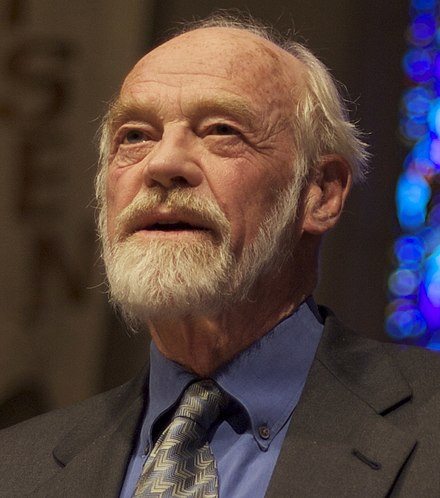
One of my favorite authors and the writer of the paraphrase, The Message, is the late Eugene Peterson. A life-long pastor, Peterson said he didn’t set out to write a paraphrase of the Bible. It came from naturally translating and interpreting scripture for his parishioners on a weekly basis. In his writings, Peterson had the ability to say things differently, causing the reader to pause and reflect. Several times in the Gospels of The Message, Peterson used the term Great Reversal. In all cases, the term is capitalized, which certainly causes one to pause and reflect…

The context for Peterson’s use of the term Great Reversal is related to the upside-downess of life in God’s governance – “the last in line put at the head of the line, and the so-called first ending up last.” Seen from this context, we discover that much of what Jesus said and did was indeed a Great Reversal. The first words attributed to Jesus in Mark’s Gospel are laced with reversal language: The time has come at last – the kingdom has arrived. Repent and believe the good news [gospel] (Mark 2:15). This might be one of those passages that we are over-familiar with and easily miss the intent. So let’s unpack it a bit, starting with the endpoint – the good news.

How was Jesus’ announcement of the arrival of the kingdom good news to the first-century listener? We see some of the answer in Jesus’ description of his mission in Luke 4 (see Mission Statements). He made it very clear that the kingdom was for everyone, a complete reversal of the accepted religious thought of the day. Outsiders now had access to the kingdom – the poor, the sick, the oppressed, their enemies – ciphers and non-entities in the first-century religious system and worldview.

What did Jesus mean when he said to repent and believe this good news? Repent is a word we can easily misunderstand as simply remorse. Though remorse is certainly part of the definition, it’s far more than that. The first-century listener would have understood repent as both a reversal of one’s thinking (change of mind) and a reversal of one’s direction. Twenty-first century understanding of repent stems from an individualist, Western worldview to which we have added Christian as an adjective. From that viewpoint, repent is understood as changing one’s mind about who Jesus is, changing direction, walking toward Him, and thus securing eternal life (usually understood as heaven). Though there is certainly truth to this, it is not what Jesus was proclaiming in the Gospel of Mark.

Jesus was proclaiming to the first-century religious crowd the need to rethink their worldview, which was an insider/outsider and a we/them political worldview. Their worldview pushed others to the back of the line. Jesus’ admonishment to repent also demanded a change of direction accompanying the change of mind, implying some type of action. In the context of Great Reversal, Jesus could have been saying something like, The time has come at last – the kingdom has arrived. Change your worldview. Go bring people up from the back of the line. That would be good news indeed.

How might this play out today? We need to recognize and admit that we have been shaped by an extremely individualistic version of Christianity. For the past half-century, the mantra of mainstream Western evangelicalism has been, “God loves me and has a wonderful plan for my life”– a non-biblical, self-focused, individualistic viewpoint. If we operate out of an individualistic worldview, would it not make sense that we would tend to move to the front of the line, pushing others further away from the kingdom? Might it also make sense that we might not even see the people at the back of the line, the marginalized, the non-entities, our enemies? Jesus would ask us to repent.

Does this stretch your thinking? If so, I might suggest reading through the gospels with the express intent of discovering how much of Jesus’ message and actions displayed a Great Reversal construct.* We might be surprised to discover its prevalence. It might make us rethink some things. We might find the need to repent and believe in this [newly found?] good news/gospel.

* ADDENDUM 1/31/2023: Annie F. Downs has created a podcast that will help the listener experience all four Gospels twelve times during the year 2023. It’s called Let’s Read the Gospels. Enjoy!