Pulling It All Together: Reading Jesus Through the Right Lens


Over the past several posts in this “Not What You Think It Means” series, we have revisited words that sit at the center of Jesus’ message:

Kingdom.
Repent.
Believe.
Gospel.

At first glance, this may have felt like a long detour into vocabulary. But it was never really about vocabulary. It was about lenses.  Because how we understand those words shapes how we read everything Jesus said and did.

If the gospel is primarily about “how I get to go to heaven,” then we will inevitably read the Gospels through that framework. We might admire Jesus, learn from Him, or worship Him, but we may miss much of what He was actually announcing.

Jesus did not begin His ministry by saying, “Here is how to get to heaven.”  As we’ve seen, Mark summarized Jesus’ message this way:

“The time is fulfilled, and the kingdom of God has come near. Repent and believe the gospel.” (Mark 1:15)

That announcement becomes the interpretive key for everything that follows.  Without that lens, we can easily misread the Gospels.  And certainly not capture the full weight of what the writers wanted their readers to hear.


We May Reduce Jesus to a Sin-Forgiveness Mechanism

If the primary point of Christianity becomes personal afterlife assurance (“after-life” insurance?), Jesus can slowly become reduced to the One who helps us “go to heaven.”

Of course, forgiveness matters deeply. Eternity matters deeply.  But the Gospels reveal Jesus announcing something much larger: the reign of God breaking into the present world.  Once we begin to see that, His words and actions make more sense and take on new meaning.

His miracles were not random supernatural proofs designed merely to convince people that He was divine. They were signs of the kingdom.

Jesus was not merely preparing people for life after death. He was revealing what life under the reign of God looks like right now.


We May Misread the Parables

The parables especially begin to change when viewed through a kingdom lens.  Modern readers often approach parables looking primarily for moral lessons or hidden theological codes. But Jesus repeatedly said:

“The kingdom of God is like…”

That matters.  The parables were helping people imagine what happens when God becomes King…

  • The kingdom was like a mustard seed — small, overlooked, yet growing into something far larger than expected.
  • The kingdom was like yeast in dough — quiet, hidden, yet slowly transforming everything.
  • The kingdom was like a treasure hidden in a field — valuable enough to reorder one’s entire life around it.

Without a kingdom lens, we can flatten these stories into generic encouragements about faith or morality.  But Jesus was describing an entirely new reality breaking into the world.

Even parables of judgment begin to read differently. They are not merely threats about the afterlife. They are warnings about resisting the reign of God that was arriving in their midst.


We May Miss Why Jesus Clashed with Religious Leaders

Without understanding the gospel of the kingdom, Jesus’ confrontations with religious leaders can seem unexpectedly harsh.  Why did He provoke them so often?  Why did Sabbath debates become so intense? Why were they scandalized by what he said and did?

Because Jesus wasn’t merely tweaking religious behavior. He was challenging entire ways of seeing God, power, holiness, and identity.  The kingdom of God was disrupting existing systems. He was inaugurating a radical reorientation of thought and life in light of the reality that God’s reign had come near.

“You have heard it said… but I say to you.”

Jesus continually challenged assumptions about enemies, status, greatness, purity, wealth, retaliation, righteousness, etc.

It was all very scandalous!


The Sermon on the Mount Changes Completely

This may be most obvious with the Sermon on the Mount.  Without a kingdom framework, the Sermon can feel impossible, disconnected from reality, or reduced to inspirational ideals.

Love your enemies.
Turn the other cheek.
Bless those who curse you.
Do not worry.
Seek first the kingdom.

Read through an individualistic “how do I get saved?” framework, these teachings can feel strangely disconnected from the “main point” of Christianity.  But Jesus was describing what life looks like under the reign of God, which is the main point.

The Sermon on the Mount is not random ethics. It’s foundational.  It describes life under God’s rule.  It describes the kind of people God is inviting and forming to participate as workers in his kingdom.  

The Beatitudes suddenly become more than poetic sayings. They become announcements of who the kingdom is available to: the overlooked, the humble, the merciful, the peacemakers.

“Seek first the kingdom of God” stops being a decorative Christian phrase and becomes the framework through which we order our lives.

Why This Matters Going Forward

This is why we have spent time visiting these foundational words.  We are not merely nuancing definitions. We are learning to read Jesus through the framework He Himself announced.

The kingdom of God has come near.
Repent.
Believe the good news.

From here forward, we are going to revisit Jesus’ teachings, actions, parables, and confrontations through that lens.

Because when the message of Jesus becomes centered primarily on “going to heaven when we die,” Jesus Himself can gradually become reduced to the means of getting there rather than the One announcing and embodying the reign of God breaking into the present world.

And once that happens, discipleship can quietly become optional.

Following Jesus may be treated as an advanced step only for especially committed Christians rather than the normal response to the King and His kingdom. The focus can shift toward securing forgiveness or eternal destiny while leaving the larger invitation of Jesus — “Follow Me” — sitting at the edges of the Christian life.

Ironically, this can also drift toward moralism.

When the kingdom of God is no longer the central framework, the teachings of Jesus become reduced to ethical expectations detached from the life and power of God’s reign. Remember, He called people to become disciples —

Apprentices who would learn to live under the reign of God here and now.

Not What You Think It Means: The Words That Framed Jesus’ Message


In several recent posts here at Practical Theology Today, we have lingered over a phrase that stood at the heart of Jesus’ proclamation: “the kingdom of God has come near.” We explored what it meant for God’s reign to draw near – how the kingdom was not merely a distant heaven waiting for us someday, but God’s active rule breaking into the ordinary world.

That announcement formed the center of Jesus’ message. But it was not the only thing He said. Mark preserved Jesus’ earliest summary of His preaching in a remarkably compact form:

Now, after John was taken into custody, Jesus came into Galilee, preaching the gospel of God, and saying, “The time has come, and the kingdom of God has come near; repent and believe in the gospel.” (Mark 1:14–15)

In two short verses, Mark gave us the core vocabulary of Jesus’ ministry: kingdomrepentbelieve, and gospel.

These words are familiar to most Christians. Perhaps too familiar. Over time, they have accumulated layers of assumption, tradition, and misunderstanding. We often hear them through modern religious filters rather than through the world in which Jesus first spoke them.

In the posts ahead, we will slow down a bit and take a closer look at the words Jesus used when announcing the kingdom.  So, we begin a short series called…

Not What You Think It Means.


The Beginning of the Good News

Before Mark recorded Jesus’ proclamation in Galilee, two important events had already unfolded.

First, John the Baptist had appeared in the wilderness, calling Israel to repentance and preparing the way for the coming One (Mark 1:1–8). John’s ministry created a sense of anticipation. Something was about to happen. God was stirring again among His people.

Then Jesus came to the Jordan and was baptized. As He came up out of the water, the heavens were torn open, the Spirit descended upon Him, and the Father’s voice declared, “You are my Son, whom I love; with you I am well pleased” (Mark 1:11).

Immediately afterward, the Spirit drove Jesus into the wilderness, where He faced temptation for forty days (Mark 1:12–13). There, in solitude and testing, Jesus confronted the rival voices that would attempt to define His mission.

Only after these events did Jesus step into public ministry.

And Mark noted one more detail: John had been arrested.  The prophetic voice that prepared the way had been silenced by political power. Yet the message did not stop.  Jesus began proclaiming the same kingdom John had announced – but now with a new authority.


The Words that Framed the Message

Mark summarized Jesus’ preaching in a single sentence:

The time has come… the kingdom of God has come near; repent and believe in the gospel.”

Every word in that sentence mattered.

Jesus was announcing that history had reached a decisive moment – “the time has come.” The long story of Israel’s hope was reaching its fulfillment.

And the reason was clear: the kingdom of God had come near.

In previous posts, we explored what that meant. The kingdom was not simply a future destination. It was the reality of God’s reign drawing near, in and through Jesus Himself. Wherever Jesus went, the rule of God came close enough to be encountered.

But notice what followed the announcement. Jesus did not simply declare the kingdom’s nearness. He invited a response:

  • Repent.
  • Believe.
  • Receive the gospel.

Those three words – repent, believe, gospel – have shaped Christian vocabulary for centuries. Yet the meanings we often attach to them are not always the meanings Jesus intended. Which raises an important question: 

What did Jesus actually mean when He said, “Repent and believe in the gospel”?


Luke’s Window into Jesus’ Mission

As you may recall, Luke recorded what many consider to have been Jesus’ mission statement – The Spirit of the Lord is upon me… (Luke 4:16-20).  Jesus described the kind of kingdom He was bringing: one that liberated, restored, healed, and welcomed the marginalized.

Mark’s summary in 1:14–15 functioned differently. Instead of describing the mission, it captured the core announcement and invitation that accompanied it. Put the two together, and we begin to see the shape of Jesus’ message:

  • Luke 4 showed us what the kingdom looked like when it arrived
  • Mark 1 showed us how people were invited to respond when they heard about it

Both passages pointed to the same reality: God’s reign had drawn near in Jesus.


Words We Think We Know

Here’s where our problem begins. When modern readers hear the words repentbelieve, and gospel, we often import meanings that developed much later in Christian history.

For example:

  • Repent is frequently heard as feeling sorry for personal sins.
  • Believe is often reduced to mentally agreeing with certain doctrines.
  • Gospel is sometimes understood as a formula for how individuals go to heaven when they die.

But when Jesus first spoke those words in Galilee, His listeners heard them within the larger story of Israel and the announcement that God’s kingdom was arriving.

Those words carried layers of meaning connected to that announcement. They were not isolated religious commands; they were responses to the nearness of God’s reign.

To hear them rightly, we need to step back into that moment in Mark’s Gospel – when Jesus walked into Galilee and declared that something new had begun.


Where This Series Is Going

In the coming posts in this series, we will slow down and revisit these familiar words one by one.

  • What did Jesus mean when He said, repent?
  • What did it mean to believe in the context of the kingdom?
  • And what exactly was the gospel Jesus proclaimed?

Each of these words has often been simplified, reduced, or misunderstood in modern Christian vocabulary. Yet when we recover their original context, their meaning begins to come to life.

And when they do, something remarkable happens.  We start to hear Jesus’ invitation the way His first listeners did – not merely as religious terminology, but as a call to reorient our lives around the nearness of God’s kingdom.

So this short series will explore some of the most familiar words in the Christian faith.

Words we think we know.

Words that may not mean quite what we think they mean.

And words that, once rediscovered, may help us hear the message of Jesus with new ears.

When the Good News Took to the Streets


Mission statements are easy to admire. They sound clear and purposeful, especially when they remain safely on paper. The real test comes after the words are spoken – when life presses in and those words must be lived. Luke’s Gospel placed Jesus squarely in that tension.

When Jesus stood in the Nazareth synagogue and read from Isaiah – “The Spirit of the Lord is upon me…” – He was not offering a reflection or a general hope for the future. He was naming what He had been sent to do. Luke 4:18–19 functioned like a mission statement, a public declaration that the kingdom of God had arrived and that its arrival would be experienced as good news by the poor, the captive, the blind, and the oppressed.

Luke refused to let that declaration remain abstract. Almost immediately, the narrative moved from announcement to action. The meaning of Jesus’ words was not explained – it was embodied.  The good news hit the streets.

The Kingdom Left the Synagogue 

Luke’s storytelling was deliberate. Jesus’ reading in the synagogue named the purpose of His ministry. What followed showed how that purpose took shape in the world. Rather than unpacking Isaiah line by line, Jesus walked straight into the kinds of lives Isaiah described.

He went to places religious leaders avoided and spent time with people respectable rabbis ignored. He lingered with those whose presence threatened ritual cleanliness and social standing. In doing so, Jesus made something unmistakably clear: the kingdom He announced would not be guarded by distance. That’s why it was such good news.

In Jesus’ world, proximity carried meaning. Rabbis were careful about where they went, whom they touched, and with whom they were seen. Attention was a limited resource, reserved for those deemed worthy of instruction and investment. The margins were not places of formation; they were places of caution.

Jesus inverted that logic – a great reversal, as Eugene Peterson describes it.

Nearness as Good News

Again and again in Luke’s Gospel, Jesus’ presence became the first experience of good news for those Isaiah had named. Before anyone was healed, forgiven, or restored, they were noticed.

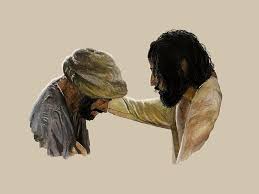
Jesus touched a leper.
He addressed paralytics directly.
He allowed sinful women to draw near.
He welcomed tax collectors into relationship.
He stopped for beggars that others tried to silence.

For these people, the good news was not initially that their circumstances might change. It was that God had drawn near to them at all. No contemporary rabbi would have given them sustained attention (or any attention), let alone shared table fellowship or physical touch. Their lives had trained them to expect avoidance, not engagement.

Jesus shattered that expectation.

It was the nearness of the kingdom made visible.

The Scandal of Proximity

Jesus’ nearness was not accidental, nor was it neutral. It exposed a religious imagination that had learned how to speak about God while remaining distant from the people God seemed most concerned about. Without issuing formal condemnations, Jesus’ actions challenged the assumption that holiness required separation.

He did not lower the bar of faithfulness. He revealed its true direction.

Holiness looked like proximity to suffering rather than insulation from it. Faithfulness looked like interruption rather than efficiency. Righteousness was expressed not through avoidance, but through mercy.

The kingdom did not advance by protecting boundaries, but by restoring people.

Why the Incarnation Matters Here

John’s Gospel deepened what Luke displayed. Where Luke showed us what Jesus did, John named who Jesus was. “In the beginning was the Word… and the Word became flesh and dwelt among us.”

Jesus’ presence among the marginalized was not merely compassionate; it was incarnational – God in the flesh.

God did not redeem the world from a safe distance; He entered it fully – taking on flesh, vulnerability, hunger, fatigue, and rejection. The incarnation declared that divine holiness was not threatened by human brokenness. It moved toward it.

So when Jesus touched the unclean, God was revealing His own heart. When Jesus lingered with the overlooked, God was making Himself known. The margins were not on the edge of God’s mission; they were central to it.

The Geography of God

Luke and John converged on a startling truth: the people others avoided became the very places where God revealed Himself. The poor, the captive, the blind, and the oppressed were not afterthoughts in the kingdom of God. They were its earliest witnesses.

Jesus did not simply bring good news to the margins. His very presence declared that God had always been oriented toward them.

Mission, then, was not merely something Jesus talked about. It was something He practiced with His body, His time, and His attention. The mission statement found its truest expression in His presence.

If We Bear His Name…

If Luke 4 named Jesus’ mission and His life embodied it, the question facing His followers is unavoidable. The issue is not whether we can articulate the mission clearly. The issue is whether our presence communicates it faithfully.

Who experiences good news simply because we showed up?
Who feels seen before they are fixed?
Who encounters the reality of God not through our explanations, but through our nearness?

Jesus did not rush past the people Isaiah named. He lingered. And in that lingering, heaven brushed against earth.

The kingdom had arrived – in person.

And it still does – whenever and wherever His people choose to show up.