The Great Reversal

I remember when I first learned, as a youngster, to drive a tractor in reverse. It took a while, but I finally figured it out. Ultimately, operating in reverse became second nature – on a tractor. Not so much with vehicles of speed. When watching action movies, I am always amazed at the speed with which the “Jack Ryans” are able to operate a vehicle in reverse. Ever try it? Don’t!

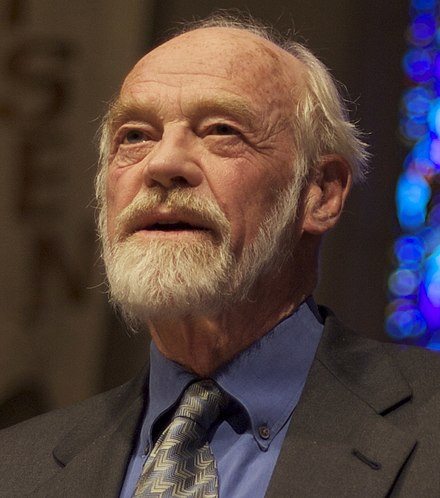
One of my favorite authors and the writer of the paraphrase, The Message, is the late Eugene Peterson. A life-long pastor, Peterson said he didn’t set out to write a paraphrase of the Bible. It came from naturally translating and interpreting scripture for his parishioners on a weekly basis. In his writings, Peterson had the ability to say things differently, causing the reader to pause and reflect. Several times in the Gospels of The Message, Peterson used the term Great Reversal. In all cases, the term is capitalized, which certainly causes one to pause and reflect…

The context for Peterson’s use of the term Great Reversal is related to the upside-downess of life in God’s governance – “the last in line put at the head of the line, and the so-called first ending up last.” Seen from this context, we discover that much of what Jesus said and did was indeed a Great Reversal. The first words attributed to Jesus in Mark’s Gospel are laced with reversal language: The time has come at last – the kingdom has arrived. Repent and believe the good news [gospel] (Mark 2:15). This might be one of those passages that we are over-familiar with and easily miss the intent. So let’s unpack it a bit, starting with the endpoint – the good news.

How was Jesus’ announcement of the arrival of the kingdom good news to the first-century listener? We see some of the answer in Jesus’ description of his mission in Luke 4 (see Mission Statements). He made it very clear that the kingdom was for everyone, a complete reversal of the accepted religious thought of the day. Outsiders now had access to the kingdom – the poor, the sick, the oppressed, their enemies – ciphers and non-entities in the first-century religious system and worldview.

What did Jesus mean when he said to repent and believe this good news? Repent is a word we can easily misunderstand as simply remorse. Though remorse is certainly part of the definition, it’s far more than that. The first-century listener would have understood repent as both a reversal of one’s thinking (change of mind) and a reversal of one’s direction. Twenty-first century understanding of repent stems from an individualist, Western worldview to which we have added Christian as an adjective. From that viewpoint, repent is understood as changing one’s mind about who Jesus is, changing direction, walking toward Him, and thus securing eternal life (usually understood as heaven). Though there is certainly truth to this, it is not what Jesus was proclaiming in the Gospel of Mark.

Jesus was proclaiming to the first-century religious crowd the need to rethink their worldview, which was an insider/outsider and a we/them political worldview. Their worldview pushed others to the back of the line. Jesus’ admonishment to repent also demanded a change of direction accompanying the change of mind, implying some type of action. In the context of Great Reversal, Jesus could have been saying something like, The time has come at last – the kingdom has arrived. Change your worldview. Go bring people up from the back of the line. That would be good news indeed.

How might this play out today? We need to recognize and admit that we have been shaped by an extremely individualistic version of Christianity. For the past half-century, the mantra of mainstream Western evangelicalism has been, “God loves me and has a wonderful plan for my life”– a non-biblical, self-focused, individualistic viewpoint. If we operate out of an individualistic worldview, would it not make sense that we would tend to move to the front of the line, pushing others further away from the kingdom? Might it also make sense that we might not even see the people at the back of the line, the marginalized, the non-entities, our enemies? Jesus would ask us to repent.

Does this stretch your thinking? If so, I might suggest reading through the gospels with the express intent of discovering how much of Jesus’ message and actions displayed a Great Reversal construct.* We might be surprised to discover its prevalence. It might make us rethink some things. We might find the need to repent and believe in this [newly found?] good news/gospel.

* ADDENDUM 1/31/2023: Annie F. Downs has created a podcast that will help the listener experience all four Gospels twelve times during the year 2023. It’s called Let’s Read the Gospels. Enjoy!

Fruitfulness

Mark Johansson, PhD, wrote an email to a friend after a conversation over dinner regarding the seed scattering parable of Mark 4:26-28. Following is the contents of his epistle. This is one of the most freeing things I’ve ever read…

26He also said, “This is what the kingdom of God is like. A man scatters seed on the ground.  27Night and day, whether he sleeps or gets up, the seed sprouts and grows, though he does not know how.  28All by itself the soil produces grain—first the stalk, then the head, then the full kernel in the head.

As a follow up to our dinner conversation regarding usefulness/fruitfulness: It seems to me that our functional, utilitarian, productive and measurement-oriented world of work often misleads our own sense of worth and significance. Against these “measures of the world” we are often left feeling inadequate, falling short, wondering what we actually accomplished and how productive we really are no matter how hard we may try.

I admit there is a good part to holding oneself accountable to results and standards, to giving ones best effort.  But at the same time, as believers, we live in a dual reality; we are part of an invisible if not so apparent second kingdom that is just as real as the first. It is by all accounts more important given its timelessness and eternalness.

Our discussion on Tuesday threw me back to the above scriptures. Our function in the second kingdom is “throwing seeds”, recklessly throwing seeds and then trusting the powers of heaven to bear fruit. To be honest this activity seems random, often capricious and not very measurable to be sure. There appears little cause and effect and certainly there is no control. Nonetheless we are called to live in this manner, throwing seeds.

What is this activity of throwing seeds which (like the mustard seed) seem so insignificant? A smile in the elevator hardly seems the most important thing I do in a given work day; after all my professional job objectives call me to supposedly much more important work than smiling.

However, a journey into the world of complexity theory and quantum theory ironically helps me appreciate what Jesus means by scattering small (and insignificant) seeds. Complexity theory reminds me of the importance of the butterfly effect, those tiny wings of the butterfly potentially impacting large scale weather patterns on the other side of the world. Tiny and even mundane beginnings often have the biggest outcomes.

Nuclear theory tells us one small raisin has enough stored atomic energy to light up all of New York City for several days, if we only knew how to unlock its power. A smile (in Jesus name) can be a spiritual raisin, a mustard seed yielding immeasurable fruitfulness. A gentle word of hope, taking time to give direction, a word of encouragement, an empathic touch, a listening ear, just being with, acting kindly, etc., etc., are “nuclear” acts when unlocked by God yield stunningly explosive results.

We will “wake up” one day (in the next life) and ask “what happened?” I never did that! God responds, “Yes you did!” God has used each of us in stunning ways, no doubt. We just do not have a clue what scattered seeds were used and how God accomplished what He did. It is sometimes easier to see the fruitful outcome in the lives of others. We cannot see it in our own life. God will rarely grant us that insight.

There is something terribly humbling about all of this. We are easily captivated and think too highly of “great” human achievements. Our egos are quite vulnerable to the seductive praise of persons. We often wrap those “smaller” things in life with disparagement. I think it part of God’s humor and delight to use things inconsequential to keep us grounded in spiritual reality and dependence upon Him.

So on those days (and there are more of them than not) when we feel inadequate, less than useful and unproductive we can take comfort in the little things we do realizing again and again that living in the second kingdom challenges our own values, our own sense of effort and calls us into a fundamental dependence upon the Lord to use us as He wants.

We are called to recklessly scatter seeds anywhere and everywhere often in spite of doing our more “important” duties. There can be a joyful and palatable tension we feel while called to live in this world but not of this world when we ultimately integrate His reality.

However, just maybe, those smiles in the elevator, the widow’s coin, that cup of water given in Jesus name are not so insignificant after all. We just do not see the fruit. But on the other hand our human eyes are quite limited and trained to notice human activities. Those large scale majestic events in the second kingdom triggered by those “insignificant” seeds do occur but are hidden from human view. Our eyes of faith are meant to help us see our participation in the divine cosmic drama, to hear the crowd of heaven roar its approval.

Within the second kingdom is found sacred multiplications beyond our own human doings. It is the spiritual mechanism of fruitfulness. Here is a fruitfulness that requires only the smallest and most vulnerable of beginnings as if anything more would choke its’ own creative process. It is the authentically simple things offered to God that fuels the mysterious explosion of fruitfulness.

Seeds by their very nature are unimpressive, small, simple in appearance and to some degree valueless in their original state. It is, however, seeds that we are to scatter, the simple little and unimpressive works of love. Anyone, at any age, of any ability can manage to throw seeds. That is the point is it not? God’s work is available to anyone to do. We shy away, however, seeking more complicated and “important” ways of doing his will: And in doing so we no longer scatter seeds but often scatter unusable objects and things; things that cannot be reproduced; things that cannot be buried and die; things that cannot grow into unmeasureable life.

Doing Right Things

After reading the last post, you can probably surmise that my dad did things right. We had the best crops in the area with rows straight as an arrow. My dad loved driving down the field roads admiring the crops. We stacked hay on the hay-wagons with perfection – exactly 105 bales on each wagon load. We had a premier dairy herd, finishing 1968 with the highest producing herd in the state of Minnesota. And he had only been a dairy farmer for 17 years. Anything worth doing is worth doing right, right?

In fairness to my dad, his success as a farmer was directly related to the fact that he did right things. Anyone can plant corn in straight rows. But my dad was a good steward of the land. He applied humus (manure) to the soil, working it in to prepare a good seedbed. He was also a model conservationist. He rotated crops and allowed land to rest every seven years – a long-lost conservation practice. He treated the cows in a similar manner – allowing plenty of rest between lactations. Doing right things led to his agrarian success. So, how does this apply to our faith journeys?

Jesus told a lot of agrarian-related stories (parables), many focused on doing right things. Living in a highly agrarian culture, his followers were able to understand. Though our culture isn’t agrarian, we can certainly glean (no pun intended) from his stories.

The last post intimated that the Jesus way of doing life entailed doing right things, contrasted with the first century religious leaders who focused on doing things right. Grace versus law. First things first. We also suggested that we westerners tend to focus on doing things right, focusing on second things (and I would suggest western Christians are no different than others).

Did you know that the main topic of Jesus’ story-telling focused on the kingdom of God? Of the 34 parables recorded in the synoptic gospels (Matthew,* Mark, and Luke), 19 address the nature of the kingdom of God and/or life in the kingdom. Likewise, did you know Jesus’ primary message to his hearers was focused on the kingdom of God? Many don’t. In fact, while preaching at a “bible-believing” church a few years ago, I talked about this focus of Jesus. I was inundated after the service by a number of longtime parishioners indicating this was unknown to them.

With an understanding of Jesus’ focus on the kingdom, Matthew 6:33 makes a lot of sense – seeking first God’s kingdom and the associated righteousness. First things, doing right things. Then (and I would propose, only then) would the things we need for living be provided by Him. What does it mean to seek God’s kingdom? That’s a conversation for another post. However, here’s a hint: Jesus wasn’t talking about Heaven.* Meanwhile, as you read the Gospels, pay attention to how often Jesus talks about God’s kingdom and listen to what he is really saying. You might be surprised!

* It’s important to understand that Matthew used the term “kingdom of Heaven” which scholars agree equates with “kingdom of God” language used by Mark and Luke. However, this distinction may have led people to view the kingdom of God as simply Heaven. NT Wright suggests (a bit tongue-in-cheek) that this view might have been perpetuated by well-meaning people, intent on reading the Gospels, who started by reading Matthew first and quit part-way through, thus never encountering “kingdom of God” in Mark or Luke. 😉