He Picked Levi, Too!

Ten years ago we started Young Life in Elk River, MN, the town where I grew up. After a 20+ year absence from the community, we returned and I became the director of youth ministries at a local church. Five years into my tenure at the church, at the urging of the senior pastor, I left the youth ministry work in the hands of others and helped start the community outreach ministry.

A local Young Life presence exists only if the community deems it important enough to provide leadership and financial support. One way of communicating the importance of the ministry and to garner financial support is an annual fund-raising banquet. At our first banquet, we invited the Mayor of Elk River to close the evening with prayer. Prior to praying, she made a couple comments, including the belief that my late-father and former mayor would have been immensely proud of his son. I assumed she was right. Over the years, unfortunately, I’ve known of a number of dads who could not say they were proud of their sons. Take Alphaeus, for example.


Alphaeus’ son, Levi, had gone over to the dark side – he became a tax collector for the Roman empire. Conquerors relied heavily on the taxes collected from their subjects. Given the aggressive building of infrastructure including entire cities, the Romans especially needed to collect significant monies. Their approach was to outsource tax collection – the recruitment of locals as tax collectors. With community eyes, these local tax collectors were well aware who they could bleed for funds. They worked on commission – the more they could collect, the more for themselves. It has also been suggested that a tax collector had a quota to reach. Anything above and beyond was theirs to keep. In essence, a tax collector was a traitor in the eyes of his community.

In Palestine, the tax collector was more than simply a traitor. He was in league with the pagan government. They were doubly despised for their choice of occupation – traitors to the people and traitors to their God. The Mishnah, the written collection of Jewish oral tradition, tells us that Jews who collected taxes were disqualified in every manner – expelled from the synagogue, shunned publicly, and a family disgrace. Thus, tax collectors and sinners were considered one and the same (cf. Matthew 11:19, Luke 5:30, 15:1).

We don’t know anything about Alphaeus’ response to his son’s career choice. But we do have record of Jesus’ interaction with Levi, also known as Matthew (cf. Matthew 9:9-13, Mark 2:13-17, Luke 5:27-32). Jesus was walking along the beach, much like he had when he called the fishermen – Peter, Andrew, James, and John – to become his followers. The Gospel of Mark indicates he was accompanied by a crowd that he was teaching. We can surmise that his newly called fishermen followers were among the crowd. We can also surmise that a source of revenue for Levi was the Galilee fishing industry.

Imagine the scene. Jesus is sitting on the beach teaching. Somewhere in the background, maybe down the beach a hundred feet or so, sits Levi at his tax booth. Imagine the fishermen in the crowd seething with anger just at the sight of this shunned traitor. Imagine, if you are Levi. What’s running through your mind as you watch the interaction of Jesus with the crowd? You long for such interaction.

Then Jesus breaks the rules again. He gets up, walks over to Levi and invites him to become a follower. Levi left everything, rose and followed Jesus (Luke 5:28). Everything. The fishermen left their fathers, but they could always go back to fishing as a fall-back option. Levi left everything. There was no going back. And he did not have family as a fall-back.

We should also imagine the crowd’s reaction to Jesus’ invitation of Levi. Imagine the deep and rightfully held indignation of the people when Jesus not only entered into a conversation with this shunned character, but invited him to join the crowd that was following him. Specifically, imagine the indignation of the fishermen. Jesus gave James and John the nicknames “sons of thunder.” Peter was passionate and zealous about injustice. I can imagine Jesus needing to physical hold these guys back when Levi rose to follow. Then Jesus broke the rules yet again – he accepted an invitation to a party Levi threw for him, inviting his “tax collector and sinner” associates.

Fast forward three years as Jesus said to his followers, “In the same way the Father sent Me, I am now sending you” (John 20:21). I suspect this experience was in the back of their minds as they listened to Jesus’ directive. Jesus expected them to set aside their righteous indignation in favor of the outsider. I assume he expects the same of us.

He Picked Me!

Circa Spring 1958. I was in third grade at Handke Elementary. We took Bus #5 from the farm to school. The bus driver actually made two trips each morning. The neighbor kids up the road were the last to get on the bus for the first trip, we were the first for the second route. The first route riders arrived at school about 20-25 minutes before start time. The second route got us to school just as the first bell rang.

When I arrived at school, the town kids would be coming in from the playground after playing some pick-up baseball. I wanted to play ball all my life, but farm chores negated that opportunity. Maybe there was a way I could get in on the pick-up games. I negotiated with the bus driver that if I was at the road when he came by the first time, he would pick me up allowing me to get early for some baseball. Life was good! Sort of. By the time I got to the playground, teams were already picked and the captains argued over who had to take me. Because the others played ball together all summer, they knew each other’s abilities. I was an unknown and lived with those feelings of being “picked last.”

One day Tim Thompson showed up. Tim, I discovered, was a pretty big deal. He was in eighth grade and apparently was a really good ball player. The town kids urged Tim to play, but they couldn’t decide which team should get him. So Tim solved the problem. He said, “Let me pick one player and we will take on all the rest of you. However, we get to bat first.” Of course all the town kids huddled around him, yelling, “Pick me! Pick me!” Tim looked around and…

…he picked me – the most unlikely candidate! So it was Tim and me against nine. He asked if I could hit. I said, “Yes.” He said, “Good. Just get on base and I’ll get you home!” And that’s what we did. I got on base and Tim hit a home run – again and again. I don’t think the other team ever got to bat! I felt valued (and a bit vindicated).

Jesus tended to invite people to follow him who were not likely candidates. Israel’s first-century education system was religiously focused.  The boys (sorry girls) started school at about age six.  For the next 3-4 years they memorized the Torah – Genesis, Exodus, Leviticus, Numbers and Deuteronomy.  By age 10, those with natural abilities to memorize and understand the scriptures began to distance themselves from the others.  They were invited to continue their education.  The others?  They were sent back home to learn the trades of their fathers.  They were cut by the system – kinda like American sports.

Those that continued a formal education spent the next four years memorizing the rest of the Hebrew scriptures.  During this time, the students also began learning the questions that surrounded the scriptures.  By age 14-15, only the best of the best students remained.  The rest were home, learning the trade of their fathers.  Those remaining would then apply to a well-known rabbi (teacher) to become one of that rabbi’s disciples (student/learner). If selected, the rabbi would invite the student to “follow me.” The goal of the student, now a disciple, wasn’t just to learn from the rabbi, but to actually become like him and participate in his mission. 

Jesus was apparently a rabbi.  People called him one, so at the very least he was perceived as a rabbi.  Jesus lived around the lake Galilee region, probably in the fishing village of Capernaum.  It was a small town so it would be safe to say he knew and was known by a majority of its residents.  I’m guessing the locals were fully aware that their resident rabbi wasn’t like the rest, though they couldn’t quite put their finger on why he was different.

One day Jesus was out walking along the beach. He saw two brothers, the local fishermen Simon (Peter) and Andrew. He called out to them, “Follow me, and I will make you fishers of people.” Farther down the beach, Jesus encountered James and John who were fishing with their father. They received the same invitation. All four RSVP’d immediately, dropping their careers to follow Jesus. There is enough here for several blog postings, but we will briefly consider a few things…

  • Jesus was probably not a stranger to the four fishermen. As Jesus demonstrated throughout his ministry, he was relationally invested in the people around him. We can certainly surmise that Jesus knew these guys, maybe quite well. Likely they were his source of fresh fish.
  • The four guys were probably well aware of Jesus as a teacher (rabbi) who taught and said things differently than they had heard from other teachers. They were hearing about God and his kingdom in new ways. Maybe what Jesus said sounded right to them.
  • This rabbi invited these most unlikely candidates to follow him! They were, after all, no longer going to school. They had been cut and were working their fathers’ trade. Yet Jesus said, “Follow me.”

Given this, why wouldn’t they have walked away from their careers to follow the radical rabbi, Jesus – to become like him and share in his mission? We cannot, we should not take lightly Jesus’ call on us to follow Him, even if we feel like unlikely candidates – especially if we feel like unlikely candidates. Nor should we take lightly his call on those around us who seem like unlikely candidates.

“In the same way the Father sent Me, I am now sending you” (John 20:21)

Mission Statements

Organizational mission statements are a more recent phenomenon – maybe the past 40ish years. Personal mission (or purpose) statements, less so. Stephen Covey challenged readers to consider developing such a statement in his best selling 7 Habits of Highly Effective People, first published in 1990. The book caused me, over a period of a couple years, to consider my personal mission, my niche in God’s kingdom, landing on this: “To know Him and make Him known.”

Why are mission statements important to a Christ-follower? Why is the exact reason! If we don’t know our why, then we will automatically focus on the whats and hows of life, which are important, but secondary. Simon Sinek reminds us of this in his TED Talk, How Great Leaders Inspire Action. So here’s a question: Did Jesus have a mission statement? Absolutely!

After his baptism and wilderness experience, Jesus was attending synagogue in his home town, as was his custom. Apparently it was his turn to read and expand on scripture that particular sabbath. He was handed the scroll containing the writings of the prophet Isaiah. He unrolled the scroll and found the place where this was written…

The Spirit of the Lord is on me,
    because he has anointed me
    to proclaim good news to the poor.
He has sent me to proclaim freedom for the prisoners
    and recovery of sight for the blind,
to set the oppressed free,
to proclaim the year of the Lord’s favor
(Luke 4:18-19, NIV).

Jesus sat down to explain the passage and said, “Today this scripture has been fulfilled in your hearing.” Using the Isaiah passage, he rolled out his mission statement. Initially the people marveled at his teaching (“Isn’t this Joseph, the carpenter’s son?”). Ultimately, they grew angry, forcing him to leave town. Why?

It is important to understand first century cultural Judaism that had been shaped by the religious leaders (the Pharisees, Sadducees, and the teachers of law). The religious leaders made it very clear to people who were either poor, sick, blind, or prisoners that their condition was their own fault. This cause-effect focus on people’s behavior created an oppressive religious system (the Isaiah passage did mention setting the oppressed free!). They were basically told that God didn’t favor them so much.

Jesus was stating that his mission was to proclaim the good news to those oppressed by the religious system. His mission was to communicate to the oppressed that God was indeed interested in them. What better news could there be for someone who had for years been treated as an outsider!? Jesus was turning cultural Judaism upside down. After stating his mission, Jesus went about living it out.

If we read the subsequent chapters in Luke, we see Jesus, not preaching the good news, but healing and caring for the types of people listed in Isaiah. In doing so, he was proclaiming the good news. Religious teachers did not venture out of their comfortable religious world in order to minister to the religious outsiders. Jesus did. As a religious teacher, he wandered into the world of the poor, sick, blind, and oppressed. His very presence was good news to those he encountered. His very presence was a proclamation of the good news that God indeed showed favor toward them.

What’s in this for us? If we want to heed Jesus’ directive “In the same way the Father sent Me, I am now sending you” (John 20:21), there are couple things we can take from this. There’s a word that makes us shudder – evangelism. We feel like we need to be telling people about Jesus, yet live with much guilt because we don’t do that so well. Evangelism (which is derived from the Greek word, euangelion, meaning good news) is easier than we can imagine. It’s as simple as leaving the comforts of our religious world and stepping into the world of the “other,” the outsider. That we can do – we do it every day. Maybe we should call it good newsing.

This also shows us the importance of knowing our mission, the job God has entrusted us to do as workers in and for his kingdom. Jesus knew exactly what his mission was – to proclaim the good news that the kingdom had arrived and it was for everyone, even those who thought they were outside that possibility. Good newsing, indeed!

Chili Con Carne 2.0 (or Geometry 101)

Circa 1987. After a 5 year stint with Young Life, we decided it would be healthy for family and me to return to the world of engineering. I took a structural engineering position in Red Wing, MN, designing high voltage electrical transmission structures. My desire to work with high school kids, however, had not diminished, so I went to some Red Wing High School cross country meets. Not only did I meet a few kids, but also the coach, discovering he was the geometry teacher at RWHS. I asked him if he had a need for a tutor. His response: “YES!!” So, I began to volunteer at RWHS 2-3 days a week during my lunch hour.

In the meantime my wife, Barb, and I joined a small group through the church we were attending. One of the members was particularly fascinated that I chose to tutor high school students with no apparent agenda. A bit out of frustration, he finally asked, “How do you make the transition?” I knew what he was asking. He wanted to know how I transitioned from tutoring to telling kids about Jesus. My response was politically correct – kids needed caring adults in their lives regardless of any potential to share the Gospel. He was not satisfied with my answer. Nor was I. It was one of those times I went away thinking there must have been a better response.

I lay in bed that evening running the conversation through my mind, wondering what a better response might have been. Around 11:00p, I sat up in bed and said, “I get it!” Barb (who was sleeping and a bit annoyed at being awakened) asked “You get what?” I said excitingly, “I am the transition!”

In the previous post we posed the question “How was Jesus sent?” in response to the directive to his followers, “In the same way the Father sent Me, I am now sending you” (John 20:21). If we are to follow that directive, then it’s important we consider how Jesus was sent by the Father. In the post we considered the incarnation of Jesus, his taking on of human form and living among humanity. “The Word became flesh and blood, and moved into the neighborhood” (John 1:14, The Message).

So what? How does that affect what 21st century Christ-followers do? It affects everything. As followers of Jesus, He lives in us through the Spirit. The apostle Paul reminded the believers in Galatia of this: “I have been crucified with Christ. It is no longer I who live, but Christ who lives in me” (Galatians 2:20). And to the followers in Ephesus he prayed they realize the resource of the Spirit within and that “Christ will make his home in your hearts as you trust in him” (Ephesians 3:16-17). Just as Jesus was an incarnate being, so are we!

That means when I attend a cross country meet or tutor high school students, Jesus is in their presence. To borrow a term from Guy Doud, the Staples, MN, educator who was the national teacher of the year in 1986, we get to be “Jesus with skin on” to those around us. We become the transition!

What does that look like for you and me as we live out life? It means when we cross the road to be with our neighbor, Jesus is visiting her. It means when we engage in a conversation with the checkout person at Walmart, so does Jesus. We don’t have to work so hard to share Jesus – we can’t help but! To be “Jesus with skin on” is the highest calling and privilege afforded to Christ-followers! “In the same way the Father sent Me, I am now sending you.”

Chili Con Carne

Fall is here (though it doesn’t feel like it – as I write this temps, are approaching the mid-80s with the dew point in the 70s). The advent of cooler weather increases my appetite for chili. I like all kinds of chili – mild or spicy, and the thicker the better. In restaurants, I like to load up a good bowl of chili with onions, cheese, and sour cream. At home, its the addition of buttered soda crackers (you have to try it sometime!).

Last week I was sitting with my mom at Guardian Angels Care Center, watching one of her two favorite TV shows – The Rachel Ray Show (the other favorite being Jeopardy). Rachel Ray was making chili. I could almost smell it as she did the prep work. Along with all kinds of good looking ingredients, she included some chorizo. Brilliant!

You may or may not be aware of this, but what we simply refer to as “chili” is technically known as “chili con carne” – chili with (con) meat (carne).

As we consider Jesus’ directive to his first century followers “In the same way the Father sent Me, I am now sending you” (John 20:21), it’s imperative that we start at the very beginning of his time on earth. The opening of the Gospel of John tells who Jesus is: “At the beginning God expressed himself. That personal expression, that word, was with God, and was God, and he existed with God from the beginning… So the word of God became a human being and lived among us” (John 1:1-2, 14, JB Phillips New Testament).

How did the Father send the Son? In bodily (human) form! In Jesus! The theological term for this is incarnation, which is connected to the Latin word carne. Incarnation means God in the flesh, God with ‘meat’ (con carne). It’s easy to gloss over this as simply a theological reality and miss it’s implications for Christ-followers who are wanting to discover the practicality of theology.

Continuing in the JB Phillips New Testament, I want to direct our attention to Philippians 2, written by the Apostle Paul: “Let your attitude to life be that of Christ Jesus himself. For he, who had always been God by nature, did not cling to his privileges* as God’s equal, but stripped himself of every advantage by consenting to be a slave by nature and being born a [human being]” (Philippians 2:5-7). What kind of privileges did Jesus give up to become a human being? I can think of a few to start with…

  • His omnipresence (another theological term) – the ability to be anywhere, anytime, all the time. He gave up that privilege and confined himself to the womb of one of His own creations – not much movement there! And after his birth, he had to learn to sit, crawl, stand, and walk just like everyone else. As a grown person, he was limited to walking about 3 mph, just like everyone else.
  • His omniscience – his knowledge about everything, past present and future. When Jesus came out of the birth canal, his brain was a piece of flesh that required input and learning, just like everyone else. Keep in mind this was provided by family and teachers who were also his creations.
  • His omnipotence – his unlimited power. He was limited to the physical abilities of a human body, susceptible to injury and disease, just like everyone else.
  • (Likely we could think of other privileges Jesus gave up to become a human being. I highly encourage you to ponder other examples.)

Since we tend to gloss over the incarnation as simply a theological reality, it’s important to realize that we also gloss over and have domesticated Jesus’ birth – that sweet little boy lying in a fresh bed of hay in a cute manger. Try viewing his birth through the realities of what we’ve discussed above. It will change everything for you. I promise!

* The online version version of the JB Phillips New Testament uses the word prerogative. In my hard-copy, its privileges.

Out of the Salt Shaker

In 1979, I stumbled onto a great little read to which I still reference 40 years later – Out of the Salt Shaker and into the World: Evangelism as a Way of Life, by Rebecca Manley Pippert. She drew attention to an easily overlooked passage in the Gospel of John that was key to the development of a philosophy of ministry/life that has served me well for the past 35-40 years.

The passage is from John 20. On the evening of the day of Jesus’ resurrection, the disciples were huddled behind locked doors in fear of the Jewish religious leaders who might have been out searching for them. John, an eye witness, writes that Jesus came and stood among them, apparently just showing up in the room, presumably not having opened the door! His first words were, “Peace be with you” – an appropriate response when one pops into a room without opening a door!

Jesus proceeded to show them the scars from the crucifixion he experienced two days earlier, to which the disciples were relieved that it was Him and not a ghost of some sort. Then Jesus repeated, “Peace be with you” followed by “In the same way the Father sent Me, I am now sending you” (John 20:21). Turned out to be a pretty revolutionary statement…

Forty days after Jesus popped in among his followers, he departed them and left in their hands the Kingdom work he had inaugurated (See Acts 1). On the day of Pentecost, one of the significant Jewish festivals, the Holy Spirit arrived in their presence, marking the start of the Kingdom work for which Jesus had prepared them to carry out. What I find interesting is this: Reading through the Book of Acts, the story of Jesus’ followers going about the work of the Kingdom, nowhere do we see them ask “How are we supposed to do this?” They just did it. They knew because they had been with Jesus, apprentices learning from the master. They did what he did. “In the same way the Father sent Me, I am now sending you.”

Fast forward a couple thousand years. As 21st century Christ-followers, we have been tasked with the same Kingdom work. How should we do that work? To me, its pretty straight forward: “In the same way the Father sent Me, I am now sending you.” We are being sent in the same manner that Jesus was sent. If you have been reading my postings regularly, you know where this is going: Read the Gospels! The disciples knew what to do by watching how Jesus did things, how he was sent. You and I can do the same. As we spend time with Jesus in the Gospel accounts, we begin to see how he was sent.

In your future readings of the Gospels, I encourage you to be asking the question, “How was Jesus sent?” 40 years ago, I poured through the Gospels with the express purpose of answering that question. The outcome was revolutionary, leading to a philosophy of ministry/life that, as I said earlier, has served me well. In fact, as I write this, it occurred to me that many of the “Right Things” listed in the previous post are directly related to a continuous asking of how Jesus was sent.

Stay tuned – In subsequent postings, we will look at some of the ways Jesus was sent.

Practical “Right Things”

After writing blog posts about “right things” (see Anything Worth Doing is Worth Doing Right and Doing Right Things), I was asked by a couple of people that I mentor what doing right things has looked like in my life over the years. Hmm…great question! I sat down one day a month ago and jotted down things that came to mind. What a great experience! I am going to list them below in bullet form without a lot of explanation and in the order they came to mind (which is roughly chronological, because we engineering types tend to think linearly)…

  • Spontaneous dates with my wife, Barb.
  • Shopppppping with Barb, as opposed to just shopping – i.e. it’s about the hunt, not the capture. (Thank you, Gary Smalley)
  • Regular times of Pondertude – usually at coffee shops, scheduled and unscheduled. (Pondertude is my term – a combination of pondering and solitude)
  • Continuous reading of the Gospels.*
  • “Stopping what I’m doing to play catch” – the point being, if my kids wanted time with me, I tried to postpone what I was doing if at all possible.
    • Similarly, let my kids “crawl on me while fixing the dishwasher” (and now, my grandkids!).
  • Camping with the kids. I often took each of our kids camping one-on-one for a 24-hour overnight – no agenda, no plans (we usually stopped at the grocery store on the way for the necessary supplies!).
  • Incorporating a mantra (Abba, I belong to you) into the rhythms of life. (Thank you Henri Nouwen, Brennan Manning, and others)
  • Create memories. (Thank you, Tom Scheuerman)
  • Go to our kids’ (and now, grand-kids’) stuff. (Again, thank you, Tom Scheuerman)
  • Just show up and be present. (Thank you, Young Life)
  • Lead from a servant’s perspective. (Thank you, Robert Greenleaf)
  • Focus on a few things. In a similar vein, do a few things well.
    • Likewise, focus on a few people – The “Jesus way” (He poured most of his effort into a few – Peter, James, John, Mary, Martha).
  • Keep learning. (Thank you, Dad)
  • Know Him and make Him known.
  • Be good news to those around me.
  • In more recent years (i.e, the last 15-20 years):
    • Learn gratitude
    • Learn the spiritual discipline of submission – I don’t need to be right, I don’t need to get my way. (Thank you, Richard Foster)
    • Pay attention to the other – People that are culturally different, the one that doesn’t look like me.
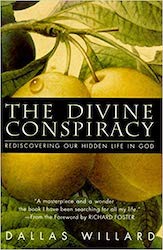
    • Talking to God about what we are doing together – the best description of prayer ever! (Thank you, Dallas Willard)
  • Everything’s a surprise – Allows for spontaneity and is theologically accurate.

I noticed a few things as I went through this experience. First, most of these items have a faith and family focus and are not outcome-based. However, as I pondered this, I recognized an integration of the practices into all aspects of life – faith, family, ministry, job, career, etc. And any outcomes were up to God (see the Seed Scattering post).

Secondly, please know that I have not practiced all these for the past 40 years. If someone had shown me a list like this 40 years ago, I would have thrown up my arms in surrender, knowing I couldn’t incorporate all these into my life. In reality, they showed up as needed and, I assume, as God deemed them necessary (here I think of Acts 15:28 – it seemed right to us and the Holy Spirit). Simple math tells me that one of these right things showed up every couple of years.

Finally, I discovered that over time, a number of these practices have become second nature, to borrow a term from NT Wright. I was watching the Twins game the other night, noticing the right things players did that had become second nature, things they didn’t need to consciously think about anymore. (One could argue that Rocco Baldelli’s success as a manager has been the encouragement of players to do the things that have become second nature for them.) Same thing when we practice doing right things (the operative word here is practice). To be clear, some of these practices are NOT second nature for me. They still take a lot of thought, intentionality, and practice on my part. Maybe, just maybe, 20 years from now a few more will have become second nature.

Note: I am fully aware that the explanations for these right things are brief. I can certainly expand on any of them – just ask and I will do that (after all, it was a couple people’s asking that led to the creation of this list).

* ADDENDUM 1/31/2023: Annie F. Downs has created a podcast that will help the listener experience all four Gospels twelve times during the year 2023. It’s called Let’s Read the Gospels. Enjoy!

As a Man Thinketh…

In 1903, James Allen wrote the essay As a Man Thinketh based on Proverbs 23:7 which, in the King James Version of the Bible used a century ago, suggests “as a man [and presumably a woman] thinks in his heart, so is he.” Or as N.T. Wright would remind us, we become like that on which we focus. Allen’s essay submits that what we spend our time thinking about has a significant impact on who we become.

This morning as I was contemplating what I might want to post this week, I read a “Reading for Reflection” in the devotional guide I have used over the past 30 years, A Guide to Prayer for Ministers and Other Servants. The reading contained an excerpt from Allen’s essay worthy of sharing…

“And you, too, youthful reader, will realize the Vision (not the idle wish) of your heart, be it base or beautiful, or a mixture of both, for you will always gravitate toward that which you, secretly, most love. Into your hand will be placed the the exact results of your own thoughts; you will receive that which you earn; no more, no less. Whatever your present environment may be, you will fall, remain, or rise in your thoughts, your Vision, your Ideal. You will become as small as your controlling desire; as great as your dominant aspiration… The Vision that you glorify in your mind, the Ideal that you enthrone in your heart – this you will build your life by, this you will become.” (My emphasis)

I have always suspected that what we focus on in our younger years comes out in full force in our last years on earth – crabby people get crabbier; happy people exude a grateful cheerfulness, even as the body deteriorates and life becomes more frustrating and dependent on others. As I grow older, I can’t help but wonder what type of resident I will be in a care center. 😕

Yesterday Barb and I attended the Celebration of Life for our dear friend Pat Feit, who passed away last Thursday. I have known Pat for a dozen years, half of which she had suffered from Alzheimer’s disease. Pat exuded grateful cheerfulness, even as she suffered from the debilitating disease. The Pat I knew had an outlook on life that came through the lens of her walk with Jesus. Others confirmed that yesterday. She became like that on which she focused – Jesus. She was Jesus to all those around her to the very end. As James Allen would suggest, Pat became as great as her dominant aspiration (Jesus) – on this she built her life, this she became.

Thanks be to God for models like Pat Feit!

Fruitfulness

Mark Johansson, PhD, wrote an email to a friend after a conversation over dinner regarding the seed scattering parable of Mark 4:26-28. Following is the contents of his epistle. This is one of the most freeing things I’ve ever read…

26He also said, “This is what the kingdom of God is like. A man scatters seed on the ground.  27Night and day, whether he sleeps or gets up, the seed sprouts and grows, though he does not know how.  28All by itself the soil produces grain—first the stalk, then the head, then the full kernel in the head.

As a follow up to our dinner conversation regarding usefulness/fruitfulness: It seems to me that our functional, utilitarian, productive and measurement-oriented world of work often misleads our own sense of worth and significance. Against these “measures of the world” we are often left feeling inadequate, falling short, wondering what we actually accomplished and how productive we really are no matter how hard we may try.

I admit there is a good part to holding oneself accountable to results and standards, to giving ones best effort.  But at the same time, as believers, we live in a dual reality; we are part of an invisible if not so apparent second kingdom that is just as real as the first. It is by all accounts more important given its timelessness and eternalness.

Our discussion on Tuesday threw me back to the above scriptures. Our function in the second kingdom is “throwing seeds”, recklessly throwing seeds and then trusting the powers of heaven to bear fruit. To be honest this activity seems random, often capricious and not very measurable to be sure. There appears little cause and effect and certainly there is no control. Nonetheless we are called to live in this manner, throwing seeds.

What is this activity of throwing seeds which (like the mustard seed) seem so insignificant? A smile in the elevator hardly seems the most important thing I do in a given work day; after all my professional job objectives call me to supposedly much more important work than smiling.

However, a journey into the world of complexity theory and quantum theory ironically helps me appreciate what Jesus means by scattering small (and insignificant) seeds. Complexity theory reminds me of the importance of the butterfly effect, those tiny wings of the butterfly potentially impacting large scale weather patterns on the other side of the world. Tiny and even mundane beginnings often have the biggest outcomes.

Nuclear theory tells us one small raisin has enough stored atomic energy to light up all of New York City for several days, if we only knew how to unlock its power. A smile (in Jesus name) can be a spiritual raisin, a mustard seed yielding immeasurable fruitfulness. A gentle word of hope, taking time to give direction, a word of encouragement, an empathic touch, a listening ear, just being with, acting kindly, etc., etc., are “nuclear” acts when unlocked by God yield stunningly explosive results.

We will “wake up” one day (in the next life) and ask “what happened?” I never did that! God responds, “Yes you did!” God has used each of us in stunning ways, no doubt. We just do not have a clue what scattered seeds were used and how God accomplished what He did. It is sometimes easier to see the fruitful outcome in the lives of others. We cannot see it in our own life. God will rarely grant us that insight.

There is something terribly humbling about all of this. We are easily captivated and think too highly of “great” human achievements. Our egos are quite vulnerable to the seductive praise of persons. We often wrap those “smaller” things in life with disparagement. I think it part of God’s humor and delight to use things inconsequential to keep us grounded in spiritual reality and dependence upon Him.

So on those days (and there are more of them than not) when we feel inadequate, less than useful and unproductive we can take comfort in the little things we do realizing again and again that living in the second kingdom challenges our own values, our own sense of effort and calls us into a fundamental dependence upon the Lord to use us as He wants.

We are called to recklessly scatter seeds anywhere and everywhere often in spite of doing our more “important” duties. There can be a joyful and palatable tension we feel while called to live in this world but not of this world when we ultimately integrate His reality.

However, just maybe, those smiles in the elevator, the widow’s coin, that cup of water given in Jesus name are not so insignificant after all. We just do not see the fruit. But on the other hand our human eyes are quite limited and trained to notice human activities. Those large scale majestic events in the second kingdom triggered by those “insignificant” seeds do occur but are hidden from human view. Our eyes of faith are meant to help us see our participation in the divine cosmic drama, to hear the crowd of heaven roar its approval.

Within the second kingdom is found sacred multiplications beyond our own human doings. It is the spiritual mechanism of fruitfulness. Here is a fruitfulness that requires only the smallest and most vulnerable of beginnings as if anything more would choke its’ own creative process. It is the authentically simple things offered to God that fuels the mysterious explosion of fruitfulness.

Seeds by their very nature are unimpressive, small, simple in appearance and to some degree valueless in their original state. It is, however, seeds that we are to scatter, the simple little and unimpressive works of love. Anyone, at any age, of any ability can manage to throw seeds. That is the point is it not? God’s work is available to anyone to do. We shy away, however, seeking more complicated and “important” ways of doing his will: And in doing so we no longer scatter seeds but often scatter unusable objects and things; things that cannot be reproduced; things that cannot be buried and die; things that cannot grow into unmeasureable life.

Seed Scattering

Recorded in Mark 4 are two of Jesus’ agrarian-related stories (parables). The first one is about sowing seeds in God’s economy. The kingdom message is sown indiscriminately in all kinds of soil – rocky, gravely, and good soil. Since we tend to be people focused on outcomes, we have terribly moralized this story with a focus on trying hard to be good soil, entirely missing the point of the story. Wanting to continue our conversation about doing right things, we are going to turn our attention to the second seed-sowing parable in Mark.

In first century Israel, farmers did not prepare the seedbed in any manner close to the way it’s done today. Same when planting seeds. In the first century, the farmer found a plot of ground capable of growing a crop, scratched the surface with primitive tools, and then threw seed randomly over the “prepared” soil. This seed scattering is what the first Mark 4 parable is all about – some seed landed on the road, some landed on less favorable soil, some among weeds, and a majority (presumably) of the seed landed on the prepared seedbed.

Because of the tendency to moralize Jesus’ words, the second seed scattering parable gets overlooked. It’s short and can be found in Mark 4:26-28:

He also said, “This is what the kingdom of God is like. A man scatters seed on the ground. Night and day, whether he sleeps or gets up, the seed sprouts and grows, though he does not know how.  All by itself the soil produces grain—first the stalk, then the head, then the full kernel in the head.

Back to the Hinkle farm. Each spring, after preparing a good seedbed (doing right things) and sowing seeds in a meticulous manner (doing things right), my dad used to say something to the effect of, “Well, not much we can do now. It will be interesting to see what kind of crop we end up with.” That’s the exact point of the parable! The farmer sows the seeds and goes to bed! And all by itself, the soil produces grain. In the margin of my Bible, I jotted, “And all by himself, God can…”

Through the centuries, God has enlisted his people to be the seed sowers in his kingdom. As Christ-followers, we are kingdom people with one basic job – scattering seeds. Reading these two parables, it appears that we are to do this randomly, intentionally, and indiscriminately. The rest is God’s job. All by himself, God can produce fruit. This is what doing right things is all about!


Next week: I will share the contents of an email that a friend of mine, Mark Johansson, wrote to a friend of his after a conversation over dinner. His little epistle is focused on this parable. It is one of the most freeing things I have ever read! You will not want to miss it.