The Temple: God’s Dwelling Place Among His People


When we think of the Temple in Jerusalem, it’s easy to imagine it as just another impressive ancient building with ornate stonework, golden decorations, and sacred rituals. Most cultures in the ancient Near East had temples. From Egypt to Mesopotamia, from Canaanite shrines to Babylonian ziggurats, temples were everywhere. They were designed to house the presence of the gods, to be places where heaven and earth touched.

Israel’s Temple was different.

From Tabernacle to Temple

The Temple wasn’t Israel’s first “house of God.” In the wilderness, God instructed Moses to build the tabernacle (Exodus 25–31). This portable sanctuary, crafted with careful instructions and exact measurements, was the meeting place between God and His people. Its very design taught theology: the Holy of Holies symbolized God’s throne room, the ark His footstool, and the altar His provision for forgiveness.

And behind it all was the Biblical covenant refrain: “I will take you as my own people, and I will be your God” (Exodus 6:7). The tabernacle was God’s visible way of saying, “I’m not a distant deity. I dwell with you, because you are mine.”

When Israel settled in the land, King David longed for a permanent place where God’s presence would rest. As he looked out from his cedar palace in Jerusalem, he was struck that the ark of the covenant still dwelled in a tent (2 Samuel 7:1-2). His desire was honorable – he wanted to build a house worthy of Yahweh.

But God said no.

Why David Was Not the Builder

God’s response to David was layered. First, He reminded David that He had never asked for a house – He was the One who had always been on the move with His people. Second, God turned David’s request upside down: instead of David building God a house, God promised to build David a “house” – a dynasty through which His kingdom would be established forever (2 Samuel 7).

Upside down. Another Biblical theme.

Another reason, Scripture notes, is that David was a man of war, his hands stained with blood (1 Chronicles 28:3). If they were to have a temple, God wanted it to be built by a man of peace – Solomon. But even more, God wanted to remind Israel: “I am the One who builds. I am the One who establishes.

Temples Then and Temples Now

On the surface, Solomon’s Temple resembled other temples of its time: a sacred inner chamber, priestly rituals, sacrifices, and an emphasis on order and beauty.

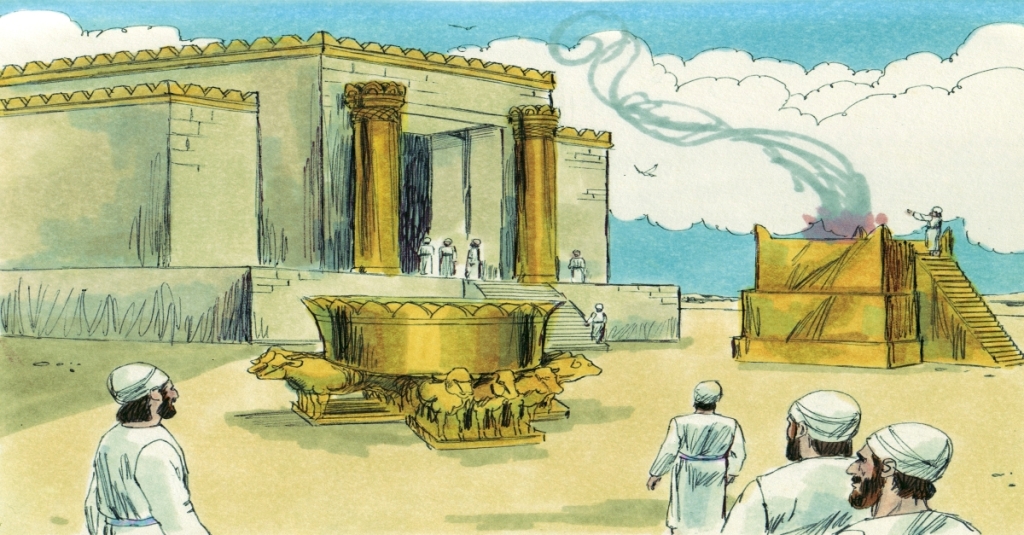
But the distinction was profound. Pagan temples were built to contain an image of the pagan god with a carved idol that embodied the deity’s “presence.” In contrast, Israel’s Temple was built for the presence of the living God Himself. No idol sat in the Holy of Holies – only the ark of the covenant, a symbol of God’s throne. And when Solomon dedicated the Temple, God’s glory, in a theophany, filled the house like a cloud (1 Kings 8:10–11). Yahweh Himself took up residence.

Temple Theology 101

The Temple stood as more than an architectural marvel. It declared foundational truths about God and His kingdom:

  • God dwells with His people. The Temple embodied the covenant promise: “I will be your God, and you will be My people.”
  • God is holy. Access to His presence was carefully ordered, with layers of increasing sanctity leading to the Holy of Holies.
  • God provides atonement. Sacrifices reminded Israel that sin separates humanity from God, and blood was necessary for forgiveness.
  • God reigns as King. The Temple was His throne room in Jerusalem, reminding Israel they were His covenant people under His rule.

The Temple wasn’t just a religious building – it was a kingdom declaration.

The Greater Temple: Jesus Christ

Yet the Temple was never the ultimate goal. It was a shadow pointing forward to something greater. When Jesus arrived, He referred to Himself as the true Temple: “Destroy this temple, and in three days I will raise it up” (John 2:19). In Him, God’s presence didn’t merely dwell in stone walls, but it walked among us in flesh and blood. The Word became flesh and tabernacled among us (John 1:1`4, AMPC).

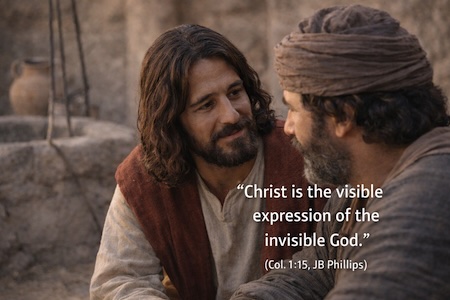
Paul captures this beautifully in Colossians 1:15: “The Son is the image of the invisible God, the firstborn over all creation.” Unlike the pagan temples with their carved images, Jesus Himself is the true image of God. He is not a symbol but the reality – God’s presence embodied fully.

And through Him, the covenant refrain takes on its deepest meaning: because of Jesus, God can say to Jew and Gentile alike, “I will be your God, and you will be My people” (2 Corinthians 6:16).

Dwelling with God Forever

From tabernacle to Temple to Christ, the story is one of God’s presence with His people. What began as a tent in the wilderness finds its completion not in stone, but in a Person – and ultimately, in a city where God Himself will dwell with humanity forever: “God’s dwelling place is now among the people, and he will dwell with them. They will be his people, and God himself will be with them and be their God.” (Revelation 21:3).

The Temple reminds us that God’s desire has always been to take up residence with His people. And in Jesus, that desire has been fulfilled in ways far greater than David or Solomon ever imagined.


What Else Will Distinguish Us?

I have had the privilege of helping Church and other youth-focused ministries develop long-term visions and plans. I always ask for the involvement of a cross-section of people connected to the ministry – staff, volunteer leaders, advisory board, key stakeholders, etc. To get the ball rolling, I lead the gathered group through a typical S.W.O.T. analysis (Strengths, Weaknesses, Opportunities, Threats). Something else I do that might not be as typical: I ask the group, “What distinguishes your ministry from other youth-serving organizations in the community?”

It’s not a question of what they do better, but what their ministry does differently. What are those distinguishing factors that differentiate their ministry from other organizations? That causes others to check them out/send kids their way, etc.? In other words, what is their unique place in the community? It has turned out to be one of the better questions that we address in the process.

Several years ago, when I was still in full-time Youth Ministry work, I, as the oldest among us, facilitated a monthly gathering of the Youth Ministers in our community. Each month I would ask a couple of questions to create some camaraderie and community – questions like, “What book are you presently reading? What’s your favorite TV series, etc?”

One month, keying off “distinguishers” thinking, I asked, “What do you think distinguishes Christians from others in our culture?” The answers mostly related to external, moralistic, and behavioral distinctions. I had been spending time in the Exodus story, so it was a bit of a loaded question, as you will see…

After God revealed sets of commands as to how the rescued Israelites were to relate to their King and to each other, we find an interesting account, probably unbeknownst to many of us. Moses would set up a tent outside the camp, some distance from the crowd. He called it the “tent of meeting,” where he would go and meet with God. It’s where “The Lord would speak to Moses face to face, as one speaks to a friend.” (See Exodus 33:7-11)

One of the times Moses met with God in the tent, he inquired of the Lord…

12 You have been telling me, ‘Lead these people,’ but you have not let me know whom you will send with me. You have said, ‘I know you by name and you have found favor with me.’ 13 If you are pleased with me, teach me your ways so I may know you and continue to find favor with you. Remember that this nation is your people.”

Yahweh replied, “My Presence will go with you, and I will give you rest.”

15 Then Moses said to him, “If your Presence does not go with us, do not send us up from here [to Canaan]. 16 How will anyone know that you are pleased with me and with your people unless you go with us? What else will distinguish me and your people from all the other people on the face of the earth?” (Exodus 33:12-16)

What else will distinguish me and your people from all the other people on the face of the earth?

We must remember that the people rescued from a polytheistic culture were unfamiliar with the concept of a single, ever-present deity. Their cultural concept of a god was a deity tied to time and space, often represented by an idol in a temple. Worshipping these deities required the people to be in their presence. The people were not used to a deity who was present with them. (Could their cultural understanding of deities have been a reason why the people defaulted by making a golden calf?)

The people were discovering that Yahweh, the one true God and King of the universe, was very present. They witnessed his presence in the pillars of fire and cloud during the exodus from Egypt. And again during the 40-day theophany, while Moses communed with the Lord on Mount Sinai. They even experienced his presence as Moses talked with Him in the “tent of meeting.” 1

What a distinguisher!

Here’s another distinguisher – the Egyptian deities of the ~13th Century BC no longer exist. They are extinct. When was the last time you recall anyone referring to the sun god, Ra? Or the god of the Nile, Hapi? Or of Isis? Or any of the other ~10 Egyptian gods? 2

Yahweh, the one true God and King, remains.

Yahweh, who is enthroned in the heavens, was ever-present with His people, watching over and caring for them! The concept of God’s presence with His people is a key theme seen throughout the scriptures. This is a deity worthy of worship. In contrast with contemporary deities, this is a God worth following.

The concept of God’s presence was not lost to the psalmists. They reference a God who was present, watching over them, protecting them. Consider Psalm 121…

I lift up my eyes to the mountains—
    where does my help come from?
My help comes from the Lord,
    the Maker of heaven and earth.

He will not let your foot slip—
    he who watches over you will not slumber;
indeed, he who watches over Israel
    will neither slumber nor sleep.

The Lord watches over you—
    the Lord is your shade at your right hand;
the sun will not harm you by day,
    nor the moon by night.

The Lord will keep you from all harm—
    he will watch over your life;
the Lord will watch over your coming and going
    both now and forevermore.

In Psalm 121, the psalmist casts the ever-present God as a keeper or guardian. It is in the context of a journey. Yahweh guards his people, who face uncertain times while on the journey. Fifteen centuries later, I find great comfort in a God who continues to say…

My Presence will go with you.

1 From Exodus 33, we read, “Whenever Moses went out to the tent, all the people rose and stood at the entrances to their tents, watching Moses until he entered the tent. As Moses went into the tent, the pillar of cloud would come down and stay at the entrance, while the Lord spoke with Moses. 10 Whenever the people saw the pillar of cloud standing at the entrance to the tent, they all stood and worshiped, each at the entrance to their tent.”

2 As I was researching the gods of ancient Egypt, I was reminded that scholars have correlated the ten plagues listed in Exodus to the various deities. For those among us who are interested in such detail, I have prepared a table in a separate blog post, The Ten Plagues.

Sabbath

Years ago, when I was in the corporate world, I had a boss, Bob, who I would rank as my best corporate boss ever. What made him best? First of all, he was very good at what he did. He was known nationally throughout the industry. More importantly, Bob was a man of character.

I remember once when we had a production mistake that required someone on the construction site early Monday morning. Bob had me fly Sunday with no specific instructions. I quickly assessed the situation and had the wrongly-built parts on a truck headed back to the factory (which, fortunately, was 10 miles away). The parts were revised and returned to the construction site by the next morning. The customer was a little surprised when I prescribed the fix without discussing with them who was going to pay.

As I said, Bob was a man of character. I learned from him that we always fix the problem at hand and perform an autopsy later. So that’s what I did. After the prescribed fix was in process, I found myself in the customer’s corporate offices, entering a conference room where I was outnumbered by far. In typical corporate adversarial thinking, the meeting participants were poised, ready to assess blame. Instead, we did a non-adversarial autopsy (I had learned from Bob) and discovered that we built exactly what they specified – what they specified was not what they really wanted. I have many similar stories seeing the benefits of Bob’s non-adversarial approach to doing business.

As a man of character, Bob was also a benevolent boss. A corporate C-suite decision was made that relocated my job from Minnesota to Memphis. With four kids in school, the prospect was challenging, to say the least. His benevolence came through in ways we could not have imagined. He even arranged for my sophomore daughter and me to travel to Memphis to help her get a feel for the area. I was able to get her connected with a Young Life leader and some high school girls. As I write this, I am flooded with great memories of Bob modeling character and benevolence. It brings tears to my eyes.

I don’t know if we fully understand what a benevolent king God is. I was recently reading Psalm 113. It is part of a grouping of Psalms frequently labelled the Passover Hallel (Hallelujah) or the Egyptian Hallel. The Hallel Psalms contain praise to the benevolent Divine King, Yahweh, for rescuing their Israelite ancestors from Egyptian slavery. How benevolent was their view of God?

Who is like the Lord our God,
    the One who sits enthroned on high,
who stoops down to look
    on the heavens and the earth?

He raises the poor from the dust
    and lifts the needy from the ash heap;
he seats them with princes… (Psalm 113:5-8)

Only a benevolent king would go find the poor and needy in the dust and ashes and bring them into the palace to seat them with the princes. As I think about this, I wonder how we might respond if we actually witnessed such benevolence. Especially if we were a prince (or princess) with inherited or earned station. The older prodigal brother comes to mind.

In the last post, Wilderness, we wondered if part of the wilderness experience was to provide the Hebrews with the opportunity to get to know Yahweh, the Divine King who rescued them from Pharaoh (who thought he was a divine king). Think about this: For hundreds of years, all they knew was a malevolent, harsh king. Did they even know what benevolence looked like? They would soon find out.

Their first introduction to God’s benevolence was his very presence. Pharaoh was a distant king, making decisions from a distance that affected the people. When the C-suite executives made the decision that we should uproot our family, they were not present during the resulting difficulties we experienced. Bob was. God welcomed his people out of captivity through the theophanies of pillars of fire or cloud. He was present. He “walked with them.” It reminds me of life in the Garden before the Fall, when things were “on earth as in heaven” with God present and walking with his created humans.

Secondly, Yahweh ensured they had a supply of water (in the wilderness!) and sufficient food. If you recall, he provided manna each morning and quail each evening. In the morning, there was a layer of dew around the camp.  When the dew was gone, thin flakes like frost on the ground appeared on the desert floor. The people of Israel called the bread manna.  Manna sounds like the Hebrew for What is it? (Exodus 16:15). It was white like coriander seed and tasted like wafers made with honey.

The people were instructed to gather exactly what they needed for the day (think, “Give us this day our daily bread”). Gathering more than needed led to spoilage and maggots. Everyone had enough…

Moses: “Everyone is to gather as much as they need. Take an omer (~ 3# or 1.4 kg) for each person you have in your tent.” The Israelites did as they were told; some gathered much, some little… the one who gathered much did not have too much, and the one who gathered little did not have too little. Everyone had gathered just as much as they needed. (Exodus 16:16-18)

Not only did the benevolent Divine King provide sustenance, but he also provided rest. Consider that for hundreds of years, the enslaved Israelites were likely worked by the slave-masters seven days a week. I cannot imagine the malevolent king of Egypt tolerating a weekly 15% labor loss. It wouldn’t be good for economics and project management. So…seven days a week.

At the same time God provided his rescued people with sustenance, he provided rest. He told them he would provide the bread (manna) six days a week. On the sixth day, they could gather enough manna for two days so they could rest on the seventh day – a day of sabbath. What a gift! A day each week to rest and do nothing! Moses reminded the people that it was a gift…

Bear in mind that the Lord has given you the Sabbath; that is why on the sixth day he gives you bread for two days. (Exodus 16:29)


Sabbath is a biblical principle rooted in rest, worship, and trust in God. It originates from Genesis 2:2-3, where God rested on the seventh day after creating the world, setting a pattern for humanity to follow. I find no biblical evidence of “sabbath-keeping” prior to this gifting to the rescued people. Keep in mind that the gift of sabbath was given before it was formalized as one of the Ten Commandments. This might be something of significance for us 21st-century Christ-followers to pay attention to.

I wonder, do we tend to view the sabbath as a command only and miss the gift?

A Visible God

In the recent Theophany post, we looked at ways God manifested himself to the Israelites over the centuries, consummating with His penultimate expression through Jesus Christ.

Fifty years ago this summer God drew me into youth ministry through Young Life, a non-denominational outreach to teenagers. I was serving teenagers in my hometown, working full-time, and pursuing an engineering degree taking classes a couple nights a week. In the midst of it all, I tried to read scripture with some consistency and with some success. In the 70s, we didn’t have the availability of scripture translations and paraphrases as we do today, but we had a few – King James, Revised Standard, New American Standard, The Living Bible, The Good News Bible, and a favorite of Young Life staff, the J.B. Phillips New Testament.

Early into my Young Life experience, at a volunteer leader training, we were pointed to Colossians 1:15 – Now Christ is the visible expression of the invisible God (Phillips). The passage, it was explained, was a cornerstone to Young Life talks – we wanted kids to know the real God who made himself visible through Jesus. Jesus revealed God’s character, compassion, and heart for people. In preparing Young Life talks, I diligently worked at helping kids see this Jesus, the visible expression of the God they could not see. A few months into the beginning of my Young Life tenure as a volunteer leader, a thought occurred to me: I didn’t know God or Jesus, save a few stories I learned in Sunday School*…..

In the midst of a fairly busy schedule, I embarked on a year-long quest to know God. It didn’t start as a year-long quest. It started as a one-time reading of the Gospels in my brand new J.B. Phillips New Testament, underlining and highlighting with a red colored pencil as I progressed. After an initial read, I decided to read them again – Matthew, Mark, Luke, and John – marking the pages with a different color. I was amazed to discover how much I didn’t observe in the first go-around. So I read them again. I soon realized that my eyes were drawn to passages that were already highlighted. So I bought a new bible with a different translation and repeated the process, highlighting new discoveries about Jesus (and thus about God).

Seven translations and a year later I felt I was ready to adequately venture into other parts of the New Testament as well as the Old Testament, the Hebrew Scriptures. As I look back 50 years, I have to believe that year was one of the most transformative experiences of my faith journey. It’s what likely saved me from the tenets of Moralistic Therapeutic Deism. It set me up to know Jesus (not just about Jesus). It set me up to give decent Young Life talks. It set me up to be a better husband and father. It set me up to learn to read Scripture exegetically. IT SET ME UP FOR LIFE!

I suspect few people read the Gospels with regularity

I am amazed how few people have actually read straight through the Gospels even one time, which is why I give everyone I mentor the exact same assignment – read through the Gospels.** When done, I usually have them repeat the process. Invariably, I get the same response – it was a transformative experience (a common ‘practical theology’ theme, you’ll notice).  If you happen to be one that has never done a read-through of the Gospels, then you know what I would suggest. I sincerely hope you would heed the suggestion.

My heart aches when I realize how few Christians spend time in the Gospels, and thus with Jesus. How else will we ever know Him?

* A couple of years ago I had the privilege of joining a group of people to hear George Barna give a researcher’s perspective on what is needed to develop our young people in today’s culture. He said research shows that most church children and youth teachings tend to focus only on about 20 basic Bible stories. (This 2-minute video, Kindergarten Faith, describes the residual effects of Barna’s findings.)

** Annie F. Downs has created a podcast that will help the listener experience all four Gospels twelve times during the year 2023. It’s called Let’s Read the Gospels. The pace: ~three chapters a day. Today, June 1, starts a new set of readings. Check it out.

Theophany

I have always been fascinated by thunderstorms and their lighting displays. I remember laying in bed as a kid estimating how far away the actual lighting bolt might have been. I was always intrigued when a very bright flash turned out to be 5-6 miles away. It gave me a sense of the magnitude and power of a lighting bolt – typically 300 million volts! (Bear in mind that the largest cross-country transmission lines you may see are only 345,000 – 500,000 volts.)

When our two oldest children were around two and four years old, we lived in Oklahoma for a couple of years. Oklahoma knows how to do thunderstorms! Our upper-midwest lighting shows pale in comparison. Our house had a vaulted living room with about 15 feet of window on the vaulted end. I would sit with my kids watching the amazing lightning displays together. We were in awe of the splendor.

Once I was flying from MSP to Houston, sitting next to a young astronaut that had recently returned from her maiden space shuttle voyage as the deployment officer. I was fascinated as she recounted her experience. She equated it to going to summer camp. Her “bed” was adjacent to a window which she said she stared out of when she should have been sleeping. She wanted to take in the splendor of the Earth God had created.

As we neared Houston, we found ourselves surrounded by thunderstorms as the pilots navigated a path of least resistance. We both watched in awe at the height of the thunderheads and the continuous flashes within the clouds. The young astronaut told me about dazzling thunderstorms she had seen from space. Unbeknownst to her (and me!), lighting bolts extend out of the thunderheads upwards toward space in a most glorious display. I can only imagine!

Hebrew thought and literature are laced with theophany language and examples. Though unseen, the one true God chose to manifest himself to his people in a variety of ways. Theophanies were a visible expression of an invisible God, denoting his presence with His people.

Theophany. Though not an everyday word for us, it begins to touch on the magnitude of a thunderstorm. By definition, a theophany is a visible manifestation of a god to humanity. Etymologically, theophany stems from ancient Greek theophaneia, meaning “appearance of a deity” and was part of Greek mythology. Homer’s Illiad was one of the oldest writings to describe theophaneia. My limited knowledge of Greek mythology recalls Zeus as the sender of thunder and lightning.

Examples of theophanies we might be aware of are related to Moses, beginning with the familiar burning bush event (Exodus 3), which captured Moses’ attention given that the shrub was not consumed. From the bush, God revealed his name (Yahweh) and then unveiled Moses’ mission to be instrumental in delivering His people out of captivity in Egypt.

The entire Exodus story is laced with theophanies. After the multitude escaped Egypt under Moses’ leadership, a visible expression of God appeared in the form of a “pillar of cloud by day” and a “pillar of fire by night” (Exodus 13:21-22). But the BIG theophany took place a couple months later at Mount Sinai when God met with His people…

There was thunder and lightning, with a thick cloud over the mountain, and a very loud trumpet blast. Everyone in the camp trembled. Then Moses led the people out of the camp to meet with God, and they stood at the foot of the mountain. Mount Sinai was covered with smoke, because the Lord descended on it in fire. The smoke billowed up from it like smoke from a furnace, and the whole mountain trembled violently (Exodus 19:16-18).

A Theophany!

Another theological term describing what the Hebrews experienced that day was the witness of God’s Shekinah Glory. The word shekinah is a Hebrew name meaning “dwelling” or “one who dwells.” Shekinah Glory then means “He caused to dwell,” referring to the divine presence of God. Not found in scripture, the etymology of shekinah is from the Hebrew word shākan, which means“to reside or permanently stay.”

The rabbis used the term Shekinah to remind the people of Yahweh’s presence with them, a key distinguisher for the Hebrews. Moses once asked God who was going to help him lead these people (a good question since they tended to be a bit unruly!). God basically said, “Me” – “My Presence will go with you…” to which Moses basically said, “Whew” and followed up with, “What else will distinguish me and your people from all the other people on the face of the earth?” (Exodus 33:12-16).

A more preponderant theophany took place upon the completion of Solomon’s temple almost 500 years later. The theophany occurred after a lengthy prayer of dedication by Solomon (2 Chronicles 6:12-42*). God’s Shekinah Glory filled the Temple…

Fire came down from heaven… and the glory of the Lord filled the temple. The priests could not enter the temple of the Lord because the glory of the Lord filled it. When all the Israelites saw the fire coming down and the glory of the Lord above the temple, they knelt on the pavement with their faces to the ground, and they worshiped and gave thanks to the Lord, saying, “He is good; his love endures forever” (2 Chronicles 7:1-3).

God took up residence in the Temple, among his people. He dwelled with them. Shekinah. The people were very aware of his presence, which distinguished them from all the other people on the face of the earth.

Fast forward about ten centuries. The Apostle John was composing his Gospel, the good news of Jesus, the sign of God’s continued presence among the people. One would assume John was well-versed in the Hebrew Scriptures. I would assume he was familiar with Solomon’s prayer…

But will God really dwell on earth with humans? The heavens, even the highest heavens, cannot contain you. How much less this temple I have built! (2 Chronicles 6:18)

…when he wrote the introduction to his Gospel: The Word became flesh and made his dwelling among us. We have seen his glory, the glory of the one and only Son, who came from the Father, full of grace and truth (John 1:14).

Jesus, the visible expression of the invisible God (Colossians 1:15). God built a new Temple and took up residence with his Shekinah Glory.

A Theophany of sorts!

* I encourage you to take the time to read Solomon’s Prayer of Dedication.