The scene at the Jordan River is one of the most beautiful and mysterious moments in all of Scripture. Jesus – thirty years old, fresh from Nazareth, with no disciples, no miracles, no sermons yet preached – stepped into the murky waters where John had been baptizing the crowds. This act seems, at first glance, unnecessary. After all, John’s baptism was a baptism of repentance. What did Jesus have to repent of? So why was He there?
The answer takes us deep into the heart of God’s redemptive story – a story of fulfillment, identification, and revelation.
Fulfillment
John’s ministry had drawn attention across Judea. People flocked to the wilderness, confessing their sins and being baptized as a sign of repentance and renewal. His message was clear and prophetic: “Prepare the way for the Lord” (Isaiah 40:3). John stood at the hinge point of history – the closing of one age and the dawning of another.
So when Jesus came to John to be baptized, Matthew tells us that John resisted: “I need to be baptized by you, and do you come to me?” (Matthew 3:14). John sensed a reversal. The greater was submitting to the lesser. The sinless One was stepping into waters meant for sinners.
But Jesus’ response mattered: “Let it be so now; it is proper for us to do this to fulfill all righteousness” (v.15).
That phrase, fulfill all righteousness, isn’t about moral perfection or rule-keeping. In the Scriptures, righteousness often refers to God’s saving action – His commitment to set things right. Or, as N.T. Wright frequently puts it, to put the world back to rights. Jesus’ baptism wasn’t a personal need; it was a divine necessity. It was His way of saying, I am fully aligned with My Father’s will, and I will walk the path before Me.
Jesus stepped into Israel’s story as its perfect representative. Just as Israel had passed through the waters of the Red Sea and then the Jordan into a new life of covenant faithfulness (Exodus 14; Joshua 3), Jesus passed through these same waters. He embodied the true Israel – obedient, faithful, and ready to inaugurate the kingdom of God.
Identification
But Jesus’ baptism wasn’t only about fulfillment but also about identification.
In choosing baptism, Jesus identified Himself with the very people who needed repentance and renewal. He stepped into the same waters as sinners – not to confess His own sin, but to stand in solidarity with theirs (and ours).
This is the Incarnation made visible. The eternal Word does not remain distant or aloof. He entered fully into human brokenness. He doesn’t shout from heaven, “Get your act together.” He stepped into the muddy Jordan and said, in effect, “I’m with you.”
John’s baptism had become a sign of repentance for those longing for forgiveness and a new beginning. By entering those waters, Jesus declared Himself to be the One who would make that forgiveness possible. Paul later captures this mystery when he writes, “God made Him who knew no sin to be sin for us” (2 Corinthians 5:21). That began in the river Jordan.
It’s easy to miss how radical that act of identification is. The Messiah – the one John had said was coming with fire and Spirit – came first with humility and submission. The very first public act of Jesus’ ministry was to align with sinners. That’s what divine love looks like.
Then Came the Revelation
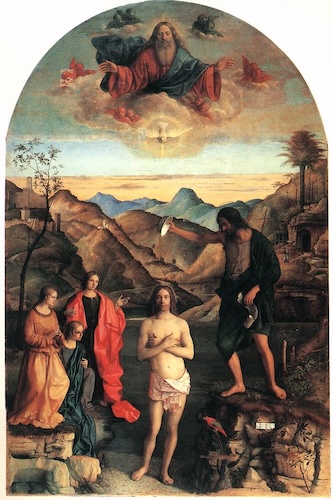
As Jesus rose from the water, heaven opened. Matthew tells us, “The Spirit of God descending like a dove and alighting on Him. And a voice from heaven said, ‘This is my Son, whom I love; with Him I am well pleased’” (Matthew 3:16–17).
The moment is profoundly Trinitarian – the Son standing in the water, the Spirit descending upon Him, and the Father speaking from heaven. It’s as if the curtains of eternity were pulled back for just a moment, revealing who Jesus truly is. What began as an act of humility becomes a moment of divine affirmation.
This was no private whisper. The Father’s voice publicly announced what the world needed to know: God’s kingdom had arrived in His beloved Son. The Spirit’s descent marked Him as the anointed One – the Messiah.
Fulfillment, Identification, Revelation—For Us
What happened that day at the Jordan wasn’t just for Jesus; it was for us. In His baptism, Jesus inaugurated the kingdom breaking into human history. He fulfilled righteousness, identified with humanity, and revealed the heart of the Father.
Our own baptism carries those same echoes. When we step into the waters, we are identifying with Him – dying to the old and rising to new life. Baptism isn’t a private ritual; it’s a public declaration that we belong to the One who first stood in the river for us.
Jesus’ baptism also invites us into a deeper trust in the Father’s love. Before Jesus had preached, healed, or done anything “public,” the Father’s voice declared, “You are my beloved Son.” That same affirmation is offered to us in Christ. Before we accomplish anything, before we succeed or fail, God says, “You are my beloved child.”
In a world driven by performance, this is good news. God’s righteousness isn’t about earning approval; it’s about relationship. It’s about restoration. It’s about making all things new.
 Practical Theology Today