The Temple: God’s Dwelling Place Among His People


When we think of the Temple in Jerusalem, it’s easy to imagine it as just another impressive ancient building with ornate stonework, golden decorations, and sacred rituals. Most cultures in the ancient Near East had temples. From Egypt to Mesopotamia, from Canaanite shrines to Babylonian ziggurats, temples were everywhere. They were designed to house the presence of the gods, to be places where heaven and earth touched.

Israel’s Temple was different.

From Tabernacle to Temple

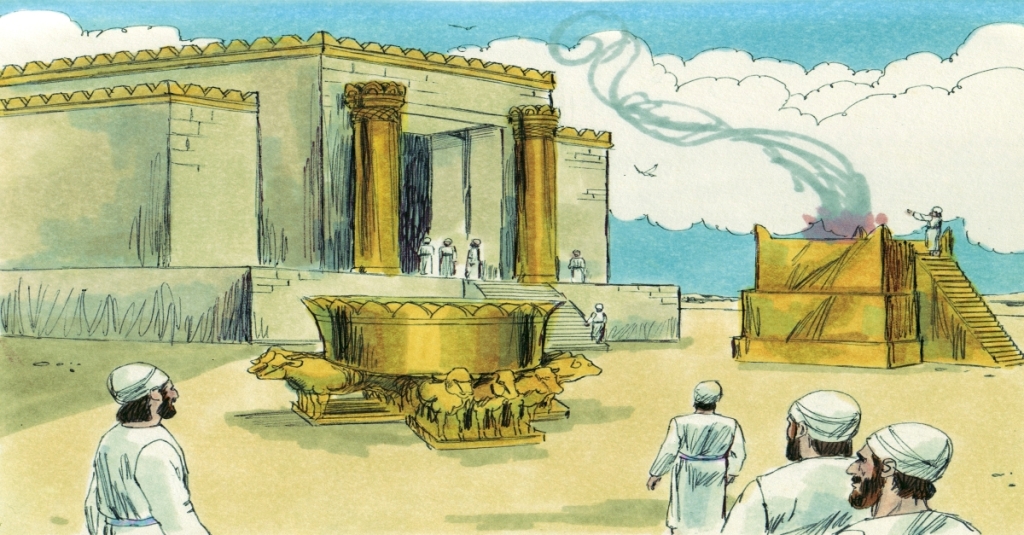
The Temple wasn’t Israel’s first “house of God.” In the wilderness, God instructed Moses to build the tabernacle (Exodus 25–31). This portable sanctuary, crafted with careful instructions and exact measurements, was the meeting place between God and His people. Its very design taught theology: the Holy of Holies symbolized God’s throne room, the ark His footstool, and the altar His provision for forgiveness.

And behind it all was the Biblical covenant refrain: “I will take you as my own people, and I will be your God” (Exodus 6:7). The tabernacle was God’s visible way of saying, “I’m not a distant deity. I dwell with you, because you are mine.”

When Israel settled in the land, King David longed for a permanent place where God’s presence would rest. As he looked out from his cedar palace in Jerusalem, he was struck that the ark of the covenant still dwelled in a tent (2 Samuel 7:1-2). His desire was honorable – he wanted to build a house worthy of Yahweh.

But God said no.

Why David Was Not the Builder

God’s response to David was layered. First, He reminded David that He had never asked for a house – He was the One who had always been on the move with His people. Second, God turned David’s request upside down: instead of David building God a house, God promised to build David a “house” – a dynasty through which His kingdom would be established forever (2 Samuel 7).

Upside down. Another Biblical theme.

Another reason, Scripture notes, is that David was a man of war, his hands stained with blood (1 Chronicles 28:3). If they were to have a temple, God wanted it to be built by a man of peace – Solomon. But even more, God wanted to remind Israel: “I am the One who builds. I am the One who establishes.

Temples Then and Temples Now

On the surface, Solomon’s Temple resembled other temples of its time: a sacred inner chamber, priestly rituals, sacrifices, and an emphasis on order and beauty.

But the distinction was profound. Pagan temples were built to contain an image of the pagan god with a carved idol that embodied the deity’s “presence.” In contrast, Israel’s Temple was built for the presence of the living God Himself. No idol sat in the Holy of Holies – only the ark of the covenant, a symbol of God’s throne. And when Solomon dedicated the Temple, God’s glory, in a theophany, filled the house like a cloud (1 Kings 8:10–11). Yahweh Himself took up residence.

Temple Theology 101

The Temple stood as more than an architectural marvel. It declared foundational truths about God and His kingdom:

  • God dwells with His people. The Temple embodied the covenant promise: “I will be your God, and you will be My people.”
  • God is holy. Access to His presence was carefully ordered, with layers of increasing sanctity leading to the Holy of Holies.
  • God provides atonement. Sacrifices reminded Israel that sin separates humanity from God, and blood was necessary for forgiveness.
  • God reigns as King. The Temple was His throne room in Jerusalem, reminding Israel they were His covenant people under His rule.

The Temple wasn’t just a religious building – it was a kingdom declaration.

The Greater Temple: Jesus Christ

Yet the Temple was never the ultimate goal. It was a shadow pointing forward to something greater. When Jesus arrived, He referred to Himself as the true Temple: “Destroy this temple, and in three days I will raise it up” (John 2:19). In Him, God’s presence didn’t merely dwell in stone walls, but it walked among us in flesh and blood. The Word became flesh and tabernacled among us (John 1:1`4, AMPC).

Paul captures this beautifully in Colossians 1:15: “The Son is the image of the invisible God, the firstborn over all creation.” Unlike the pagan temples with their carved images, Jesus Himself is the true image of God. He is not a symbol but the reality – God’s presence embodied fully.

And through Him, the covenant refrain takes on its deepest meaning: because of Jesus, God can say to Jew and Gentile alike, “I will be your God, and you will be My people” (2 Corinthians 6:16).

Dwelling with God Forever

From tabernacle to Temple to Christ, the story is one of God’s presence with His people. What began as a tent in the wilderness finds its completion not in stone, but in a Person – and ultimately, in a city where God Himself will dwell with humanity forever: “God’s dwelling place is now among the people, and he will dwell with them. They will be his people, and God himself will be with them and be their God.” (Revelation 21:3).

The Temple reminds us that God’s desire has always been to take up residence with His people. And in Jesus, that desire has been fulfilled in ways far greater than David or Solomon ever imagined.

I Almost Bought the Farm

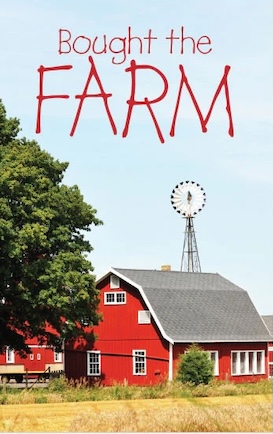
Quite literally! Growing up, I loved farming – despite the inherent challenges of dairy farming in the ’50s and ’60s. We didn’t have much. I remember some bleak Christmases. We only made the 3-mile trip into town if it was absolutely necessary. Dairy farming is a 365-day-a-year commitment, so youth sports and weekend getaways were out of the question. Still, I wouldn’t have traded that upbringing for anything.

But I did – I went to college to be an engineer.

After a couple of years of college, I found myself unsure of what I really wanted to do with my life. I struggled in college. My grades were probably an indicator of my uncertainty. So I dropped out for a time, choosing to work for the local company that had hired me to work in their drafting department as a junior in high school. I had employment as long as I was in school, so I continued taking one or two evening engineering courses per semester at the University of Minnesota. Evening classes in the ’70s required an in-person commute, unlike online school today.

While working and commuting to the U, a dairy farm near my home became available for purchase. Because of my uncertainty about life, I decided to consider the possibility of buying the farm and becoming a dairy farmer. A high school classmate of mine was the realtor. We had many discussions as to how I might be able to purchase the farm. I was excited about the possibilities of becoming a landowner.

I almost bought that farm. I suppose I forgot how relentless dairy farming is. But when our future feels uncertain, we often retreat to what we know best. I wonder if that’s what happened with the Israelites in the wilderness when they formed the golden calf. Moses, their leader and the voice of Yahweh, had vanished up the mountain. Their future looked uncertain. So they defaulted to what was familiar: a tangible god, something they could control.

In time – forty years’ time – they learned to trust God. They followed Him through the desert, being shaped into a people ready to live in the land He had promised. That land wasn’t just a gift, but a launch point – a base from which they would fulfill their calling to be God’s covenant people, a blessing to the world. As kingdom people, they would participate in His redemption project – new creation and an “on earth as in heaven” type restoration.

But their desert journey came with hard lessons. The biggest one? God is sovereign. They were not. Yielding to His rule brought life. Resisting brought the opposite.

Eventually, they were ready. Joshua led them across the Jordan into Canaan. The land was apportioned according to their tribal lines – though the tribes of Reuben, Gad, and half of Manasseh chose to settle east of the river.

Before they entered, Yahweh made it abundantly clear how they were to live together in the land under his Kingship. This was the point of the Torah: for God to be their God, and they His people (cf. Exodus 6:6-7, Leviticus 25:38, Deuteronomy 29:13, Jeremiah 7:23, etc).

Theologically, we know this as the Covenant Formula*

As Creator, the land belonged to Him. “The land must not be sold permanently, because the land is mine and you reside in my land as foreigners and strangers (…)” (Leviticus 25:23-25). They were guests – stewards, not owners.

They were there at His pleasure, so to speak.

As landlord, God gave them instructions on how to treat the land and each other. Every seven years, the land was to rest. This not only rejuvenated the soil but also gave farmers, servants, and animals a Sabbath. This same principle was instituted by the United States Soil Conservation Service to combat the propensity for things like the Dust Bowl. We did something similar when I farmed, fallowing about one-seventh of our land each year. Good husbandry.

God also instituted the Year of the Jubilee. Every 50 years, property returned to its original family, debts were forgiven, and slaves were released. A full reset. A radical vision of liberty and justice.

But as far as we know, the Jubilee was never observed.

For a long time, I struggled with the fairness of Jubilee. But once I grasped that the land never truly belonged to them – it was God’s – the whole concept made sense. He was King. He owned everything. The people were simply stewards.

Somewhere along the way, they lost sight of that. Sometimes I wonder if we have too. God is still King. He still owns everything. We are still stewards – of our resources, our relationships, our work, even our time.

What would it look like if we lived more like that were true?


* A key element of the Covenant Formula is the people’s relationship with God and with each other. Jesus recapped the Formula with his infamous “Love God, love others” command (see Deuteronomy 6:4-5 and Leviticus 19:18).

Dot-to-Dot

When I was a kid, I always enjoyed the coloring books with “dot-to-dots.”  It might have been the first indicator that engineering would be in my future.  When first learning to connect the dots, I paid close attention to the numbers, ensuring the figure that was developing was correct.  In short order, I discovered that if I “stepped back” and observed the arrangement of the dots, I was able to envision the figure that was about to emerge.  Since I knew what the ultimate figure was likely to look like, I could stray from using just straight lines, ending up with a more artistic version of the picture.

One of my top five CliftonStrengths is Connectedness.  When I am able to connect dots in life, things make a lot more sense to me (I’m guessing I’m not alone in this).  This is especially true when connections lead to a better understanding of Context (another of my top five Strengths).  I’m guessing I’m not alone in this, either.  I think it’s an important consideration when it comes to practical theology, to our understanding of who God is and what he is up to.

Dot-to-Dot

As previously discussed, theological understanding comes through the reading and interpretation of scripture in context.  The greatest context, of course, is all of scripture.  As we continuously spend time in scripture in its full context, dots get connected and themes begin to emerge – themes that allow us to “step back,” giving us a better understanding of who God is and what he’s doing in his creation.  One example is the theme of Justice that threads throughout scripture (see What is Justice?).

About 35 years ago, through an Old Testament seminary course, I was introduced to a theme that has helped me connect biblical dots, giving me a context that has informed my reading of scripture ever since.  It’s a theme woven throughout scripture.  That theme?  “I will be your God and you will be my people” in some manner, shape, or form. 

The theme first appeared in the book of Genesis when God called Abram (Abraham) and his descendants to be a blessing to the world, to participate in His project of “putting creation back to rights,” as N.T. Wright would say.  After changing Abram’s name to Abraham (meaning father of a multitude), God told him of a covenant that he was about to establish with His people (Abraham and his descendants).  The covenant was to include land and the inclusion that “I will be their God” (Genesis 17:1-8).  For the restoration project to succeed the people needed to follow God’s lead, letting him be God.

The people seemed to like the idea of being God’s chosen, but not so much the idea of following his lead.  Hundreds of years later, we find his people in captivity as slaves in Egypt.  As God was about to rescue them from captivity, he said through Moses, “I will take you as my own people, and I will be your God” (Exodus 6:6-7).  At this pivotal point in human history, God reminded the Israelites that he was God (and presumably, they were not), promising that he would lead and care for them.  As the people followed his lead, God provided for them and reminded them of their covenant relationship to him – e.g., “I will put my dwelling place among you…I will walk among you and be your God, and you will be my people” (Leviticus 26:11-12).

As we watch the story unfold, we see a recurring pattern. The people strayed from letting God be God, got themselves in trouble, requiring God to repeatedly rescue them. As we watch the story continue to unfold, God repeatedly reminded his people of this covenant relationship to him. We find the theme in both the Old and New Testaments:

  • I will give them a heart to know me, that I am the Lord. They will be my people, and I will be their God, for they will return to me with all their heart. (Jeremiah 24:7, NIV)
  • And they shall know that I am the Lord their God with them, and that they, the house of Israel, are my people, declares the Lord God.  And you are my sheep, human sheep of my pasture, and I am your God, declares the Lord God.” (Ezekiel 34:30-31, ESV)
  • The Apostle Paul, drawing from Leviticus 26 and Ezekiel 37 – For we are the temple of the living God. As God said: “I will live in them and walk among them. I will be their God, and they will be my people.” (2 Corinthians 6:16, NLT)
  • The author of Hebrews, drawing from Jeremiah 31 – This is the covenant I will establish with the people of Israel after that time, declares the Lord.  I will put my laws in their minds and write them on their hearts.  I will be their God, and they will be my people. (Hebrews 8:10, NIV)
  • And from the book of Revelation – I heard a loud voice from the throne saying, “Look! God’s dwelling place is now among the people, and he will dwell with them. They will be his people, and God himself will be with them and be their God.” (Revelation 21:3, NIV)

Since this theme threads its way throughout the entire Biblical narrative, it translates to us as Christ-followers today.  God wants to be God (which he is very good at, by the way) and has invited us to be his people.  If we live in that relational understanding, “all will be well” (Jeremiah 7:23, NLT).  I’m not intimating that following Jesus is easy or simplistic.  But I do know this: God wants to be our God and he wants us to be his people. This is bottom-line stuff. It’s the stuff that helps us connect dots.