What Else Will Distinguish Us?

I have had the privilege of helping Church and other youth-focused ministries develop long-term visions and plans. I always ask for the involvement of a cross-section of people connected to the ministry – staff, volunteer leaders, advisory board, key stakeholders, etc. To get the ball rolling, I lead the gathered group through a typical S.W.O.T. analysis (Strengths, Weaknesses, Opportunities, Threats). Something else I do that might not be as typical: I ask the group, “What distinguishes your ministry from other youth-serving organizations in the community?”

It’s not a question of what they do better, but what their ministry does differently. What are those distinguishing factors that differentiate their ministry from other organizations? That causes others to check them out/send kids their way, etc.? In other words, what is their unique place in the community? It has turned out to be one of the better questions that we address in the process.

Several years ago, when I was still in full-time Youth Ministry work, I, as the oldest among us, facilitated a monthly gathering of the Youth Ministers in our community. Each month I would ask a couple of questions to create some camaraderie and community – questions like, “What book are you presently reading? What’s your favorite TV series, etc?”

One month, keying off “distinguishers” thinking, I asked, “What do you think distinguishes Christians from others in our culture?” The answers mostly related to external, moralistic, and behavioral distinctions. I had been spending time in the Exodus story, so it was a bit of a loaded question, as you will see…

After God revealed sets of commands as to how the rescued Israelites were to relate to their King and to each other, we find an interesting account, probably unbeknownst to many of us. Moses would set up a tent outside the camp, some distance from the crowd. He called it the “tent of meeting,” where he would go and meet with God. It’s where “The Lord would speak to Moses face to face, as one speaks to a friend.” (See Exodus 33:7-11)

One of the times Moses met with God in the tent, he inquired of the Lord…

12 You have been telling me, ‘Lead these people,’ but you have not let me know whom you will send with me. You have said, ‘I know you by name and you have found favor with me.’ 13 If you are pleased with me, teach me your ways so I may know you and continue to find favor with you. Remember that this nation is your people.”

Yahweh replied, “My Presence will go with you, and I will give you rest.”

15 Then Moses said to him, “If your Presence does not go with us, do not send us up from here [to Canaan]. 16 How will anyone know that you are pleased with me and with your people unless you go with us? What else will distinguish me and your people from all the other people on the face of the earth?” (Exodus 33:12-16)

What else will distinguish me and your people from all the other people on the face of the earth?

We must remember that the people rescued from a polytheistic culture were unfamiliar with the concept of a single, ever-present deity. Their cultural concept of a god was a deity tied to time and space, often represented by an idol in a temple. Worshipping these deities required the people to be in their presence. The people were not used to a deity who was present with them. (Could their cultural understanding of deities have been a reason why the people defaulted by making a golden calf?)

The people were discovering that Yahweh, the one true God and King of the universe, was very present. They witnessed his presence in the pillars of fire and cloud during the exodus from Egypt. And again during the 40-day theophany, while Moses communed with the Lord on Mount Sinai. They even experienced his presence as Moses talked with Him in the “tent of meeting.” 1

What a distinguisher!

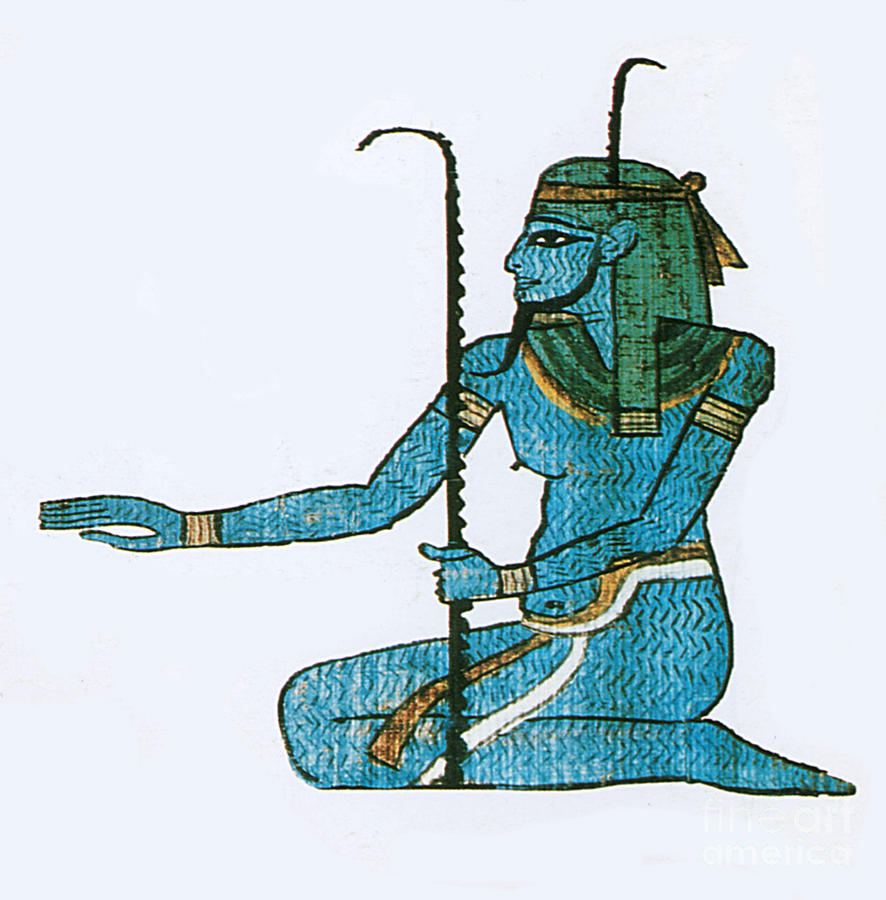
Here’s another distinguisher – the Egyptian deities of the ~13th Century BC no longer exist. They are extinct. When was the last time you recall anyone referring to the sun god, Ra? Or the god of the Nile, Hapi? Or of Isis? Or any of the other ~10 Egyptian gods? 2

Yahweh, the one true God and King, remains.

Yahweh, who is enthroned in the heavens, was ever-present with His people, watching over and caring for them! The concept of God’s presence with His people is a key theme seen throughout the scriptures. This is a deity worthy of worship. In contrast with contemporary deities, this is a God worth following.

The concept of God’s presence was not lost to the psalmists. They reference a God who was present, watching over them, protecting them. Consider Psalm 121…

I lift up my eyes to the mountains—
    where does my help come from?
My help comes from the Lord,
    the Maker of heaven and earth.

He will not let your foot slip—
    he who watches over you will not slumber;
indeed, he who watches over Israel
    will neither slumber nor sleep.

The Lord watches over you—
    the Lord is your shade at your right hand;
the sun will not harm you by day,
    nor the moon by night.

The Lord will keep you from all harm—
    he will watch over your life;
the Lord will watch over your coming and going
    both now and forevermore.

In Psalm 121, the psalmist casts the ever-present God as a keeper or guardian. It is in the context of a journey. Yahweh guards his people, who face uncertain times while on the journey. Fifteen centuries later, I find great comfort in a God who continues to say…

My Presence will go with you.

1 From Exodus 33, we read, “Whenever Moses went out to the tent, all the people rose and stood at the entrances to their tents, watching Moses until he entered the tent. As Moses went into the tent, the pillar of cloud would come down and stay at the entrance, while the Lord spoke with Moses. 10 Whenever the people saw the pillar of cloud standing at the entrance to the tent, they all stood and worshiped, each at the entrance to their tent.”

2 As I was researching the gods of ancient Egypt, I was reminded that scholars have correlated the ten plagues listed in Exodus to the various deities. For those among us who are interested in such detail, I have prepared a table in a separate blog post, The Ten Plagues.
The Ten Plagues

In a footnote of the post Distinguishers, I mentioned that while researching the gods of ancient Egypt, I was reminded that scholars have correlated the ten plagues listed in Exodus to the various deities. For those interested in this stuff, I discovered a table that attempts to connect the plagues of Exodus with various Egyptian gods.

DeityDomainBiblical Context
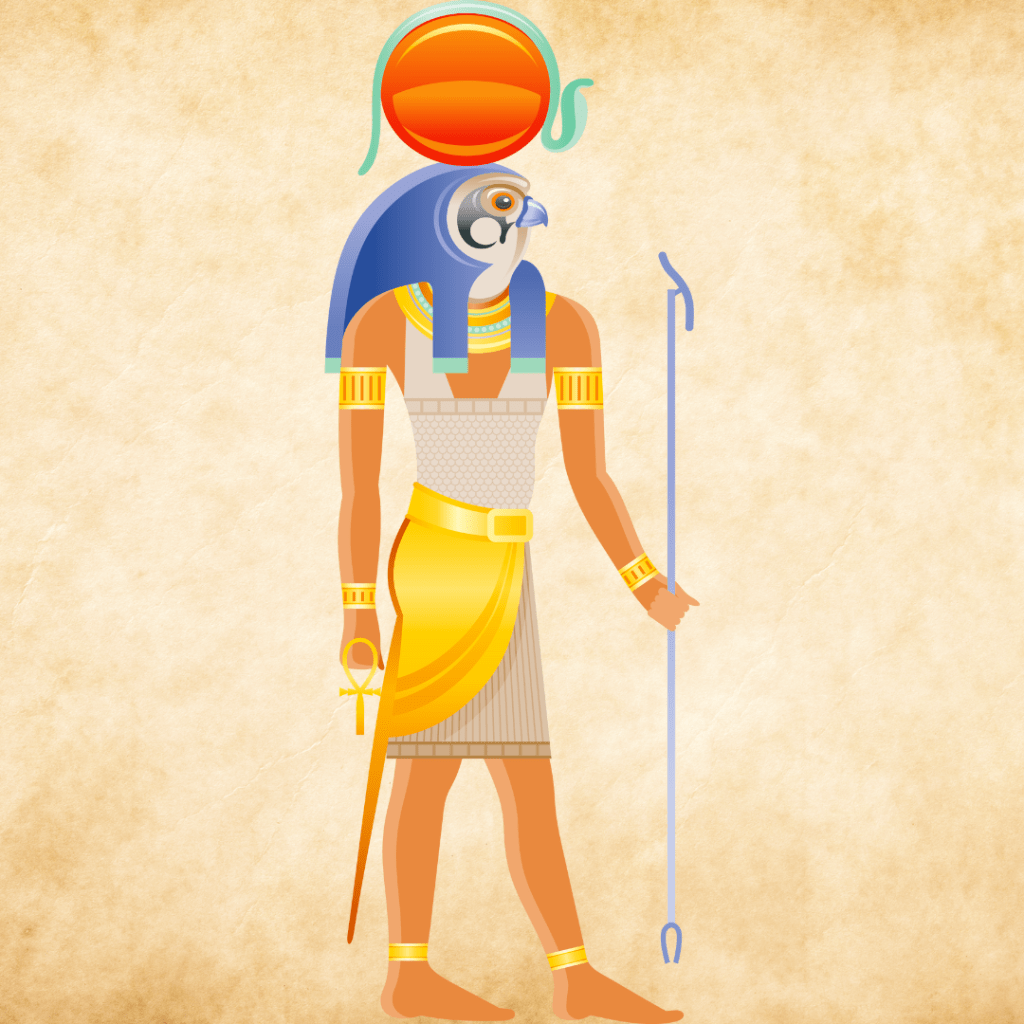
Ra (Re)Sun god, king of godsPlague of Darkness – Yahweh darkened the sun god’s domain (Exodus 10:21-23)
HapiNile & fertilityWater to Blood – Judgment on Nile (Ex. 7:17-21)
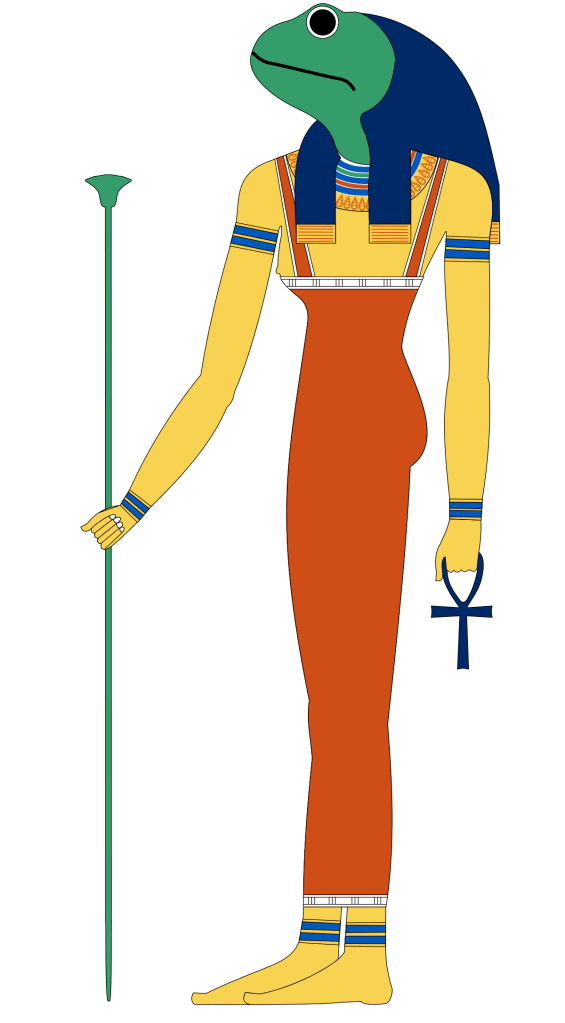
Heqet (Heket)Fertility, birthPlague of Frogs (Ex. 8:1-15)
GebEarthPlague of Dust to Gnats. Dust = earth (Ex. 8:16-19)
KhepriRenewal, sunrise, dung beetlePlague of Flies, beetles (Ex. 8:20-32)
HathorLove, beauty, cowsDeath of Livestock – cattle killed (Ex. 9:1–7)
SekhmetPlague, war, healing??Boils – plague that her power could not stop (Ex. 9:8-12)
Nut, SethSky goddess, Storm god Hail from the sky (Ex. 9:13-35)
Neper / RenenutetGrain & harvestLocusts destroy crops (Ex. 10:1-20)
PharaohA divine king, considered “son of Ra.”Death of Firstborn – God usurps Pharaoh’s claim to divinity (Ex. 12:29-30)

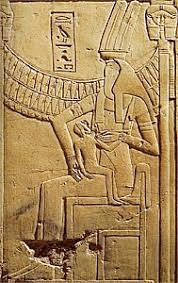
Below are some depictions of the various Egyptian deities I found on-line. I am not vouching for their accuracy!

Rah
Hapi
Geb
Heqet
Hathor
Sekhmet
Nut
Khepri
Neper
Renenutet

Let’s Celebrate!

We love a good celebration. What happens after our sports team wins the big one? Or when a World War ends? Or when we get a promotion? Or when the shepherd finds the lost sheep? We celebrate!

The word celebrate comes from Latin roots, and its etymology reveals some rich and festive meaning. The word comes from the Latin verb celebrare, which means “to honor, to go to in great numbers, to solemnize, to observe a festival.” So at its root, “celebrate” is about gathering people together to honor, remember, and/or observe something significant – often in a joyful or meaningful way.

Humans are wired for celebration and remembrance – to stop, look back, and reflect on momentous occasions. From birthday parties and national holidays to family traditions and cultural festivals, we instinctively celebrate that which matters to us. It’s in our God-given nature.

Celebrations aren’t just about fun; they help anchor us in time, in memory, and in meaning. They remind us who we are, where we’ve come from, and what we value most. Whether sacred or ordinary, these moments shape identity and draw us into community.

Times Square, VE Day 1945

Over the centuries, monarchial leaders have grasped the understanding of our need to celebrate by instituting kingdom-wide festivals. These kingdom parties were usually all-inclusive – from courtiers to the peasant ranks, all participated. Queen Victoria, who reigned over the British Empire from 1837 to 1901, instituted such a national celebration.

Queen Victoria’s Golden Jubilee marked the 50th anniversary of her reign and was celebrated across the British Empire on June 20, 1887. Central events took place in London and included a grand thanksgiving service at Westminster Abbey, attended by royalty, dignitaries, and representatives from around the world. Throughout the Empire, communities held street parties, fireworks displays, and public festivities. The Jubilee served as both a celebration of national unity and a display of the vast reach of the British monarchy.

We see a pattern of celebration deeply woven into Scripture. The benevolent King Yahweh didn’t just permit celebration, He commanded it.

After giving the people the Ten Commandments, Yahweh provided an additional set of commands related to the treatment of others – fellow servants, property protection, and social responsibility focused on justice and mercy. The deliverance of His commands was followed by the institution of three annual festivals that the people were to celebrate – the Festival of Unleavened Bread (Passover), the Festival of Harvest, and the Festival of Ingathering (See Exodus 23).

Reflecting on these three annual festivals we see God’s heart to draw His people into regular rhythms of remembrance, worship, and gratitude. These were not just events on a calendar; they were sacred invitations to remember who He was and what He had done. They reminded Israel that their story began with deliverance, was sustained by provision, and moved toward a future shaped by His faithful presence.

In our fast-paced, “always-on” world, such rhythms still matter, maybe even more so. Celebration slows us down. Celebration is woven into the fabric of God’s kingdom. Remembrance calls us back. When we intentionally create space to remember God’s goodness – through personal moments, family traditions, or gathered worship – we step into something deeply human and profoundly holy. These practices point us to a God who transcends time and is faithful across generations, filling us with gratitude, worship, and wonder. Sometimes a child-like wonder.

Something to reflect on as we approach the annual celebration of our risen King.

The Ten Commandments

[If you have yet to read The Parable of the Benevolent King, you may want to do so first]


I remember the day I received my first Bible. It was a leather-bound King James Version of the Bible, complete with my name written on the cover in gold letters. It was a proud moment when I stood in front of the Church to receive my Bible. Along with it, I received a gold “chain” bookmark inscribed with the Ten Commandments. As a third-grader, attempts to read my new Bible usually resulted in me playing with that smooth, shiny bookmark. I can remember the feeling today, decades later. Though I didn’t read much, I certainly became “familiar” with the Ten Commandments.

Think about the process of Yahweh, the benevolent King, redeeming a people from slavery, where they acquired an identity apart from Him. Their identity and entire being were shaped by their bondage to the Egyptian empire and the worship of its gods. When Yahweh redeemed these people, he took them out to the middle of nowhere, where they had no land and no social identity. He was remaking these people, His people.

In the Sinai desert, about a year after their rescue, God gave the people instructions we know as the Ten Commandments.* These were the first of many covenant commands. We think of them as laws. To us, law conjures “right/wrong” thinking. If we obey the law (or don’t get caught), all is well. If we are disobedient (and get caught), we pay the consequences. It fits our Western judicial thinking. What if that wasn’t God’s intent?

I will take you as my own people, and I will be your God. (Exodus 6:6-7)

For this to be true – for Yahweh to be the people’s God, a few things needed to be true. He was the one true God, there were no others. Period. He was sovereign. Period. They didn’t need nor should they make images. Their experience with the Egyptian “gods” included images of those gods, both in and out of temples. These foreign gods were tied to time and space.

Yahweh transcends time and space

So, for Yahweh to be the people’s God, images were not to be utilized in their attempts to understand him. They were an unnecessary distraction. Images, created by human hands, usurp Yahweh’s sovereign role as the creator God. The people needed to know, needed to discover that they were created in his image and not the other way around.

This reminds me of the early 20th-century discoveries of “untouched” civilizations on remote islands of the Pacific. It was an anthropologist’s dream! They discovered a striking similarity between these previously unknown societies – they all worshipped some form of God, and that god resembled themselves. They had created God in their own image. Anthropologists refer to such societies as “totem societies.”

These newly freed people needed to understand what it meant to be bearers of His image. The old identity as slaves was past, dead, and a new identity as Yahweh’s image-bearers was being formed. He was remaking the people. New creation. Consistent with God’s’ call of Abraham (see On Earth as in Heaven), they were being reshaped to mirror Yahweh’s character to the nations, the Hebrews’ original mission. Not only a new identity but a new vocation.

Now, if you will carefully listen to me and keep my covenant, you will be my own possession out of all the peoples, although the whole earth is mine, and you will be my kingdom of priests and my holy nation. (Exodus 19:5-6, CSB)

As a kingdom of priests, they were to be ambassadors of sorts. That’s why they were to worship only the one true God. They were not only to mirror His character to the nations but also to fellow image-bearers. That’s why things like murder, adultery, lying, stealing, and coveting are so damaging – they tear apart relationships, dehumanize others, and violate the dignity of those created in God’s image.

It becomes evident that the Ten Commandments aren’t exhaustive, even with the additional 603 that the Pharisees tried to keep and enforce. They are primarily descriptive, not prescriptive. They describe our relationship to the one true sovereign God and with His creation, including fellow image-bearers. When we see them primarily as prescriptive, we are ripe to becoming pharisaical.


* It’s important that we grasp the difference between torah and “the Torah.” The Israelites came to refer to the Ten Commandments and the subsequent 603 covenant commands as “torah.” Torah literally means instruction. As said above, these laws, these instructions represented the way that the people of Yahweh’s communal identity, story, and values were being reshaped and recreated. Remember that God’s redemption and restoration project was one of recreation. Formal “Torah” usually represented the Pentateuch, the first 5 books of the Hebrew Scriptures, our Old Testament.

As Christians think about the Old Testament law (torah), we should remember that according to Jesus, a primary facet of torah was to shape people to love God wholeheartedly and to love their neighbors as themselves (Matt. 22:35-40).

Sabbath

Years ago, when I was in the corporate world, I had a boss, Bob, who I would rank as my best corporate boss ever. What made him best? First of all, he was very good at what he did. He was known nationally throughout the industry. More importantly, Bob was a man of character.

I remember once when we had a production mistake that required someone on the construction site early Monday morning. Bob had me fly Sunday with no specific instructions. I quickly assessed the situation and had the wrongly-built parts on a truck headed back to the factory (which, fortunately, was 10 miles away). The parts were revised and returned to the construction site by the next morning. The customer was a little surprised when I prescribed the fix without discussing with them who was going to pay.

As I said, Bob was a man of character. I learned from him that we always fix the problem at hand and perform an autopsy later. So that’s what I did. After the prescribed fix was in process, I found myself in the customer’s corporate offices, entering a conference room where I was outnumbered by far. In typical corporate adversarial thinking, the meeting participants were poised, ready to assess blame. Instead, we did a non-adversarial autopsy (I had learned from Bob) and discovered that we built exactly what they specified – what they specified was not what they really wanted. I have many similar stories seeing the benefits of Bob’s non-adversarial approach to doing business.

As a man of character, Bob was also a benevolent boss. A corporate C-suite decision was made that relocated my job from Minnesota to Memphis. With four kids in school, the prospect was challenging, to say the least. His benevolence came through in ways we could not have imagined. He even arranged for my sophomore daughter and me to travel to Memphis to help her get a feel for the area. I was able to get her connected with a Young Life leader and some high school girls. As I write this, I am flooded with great memories of Bob modeling character and benevolence. It brings tears to my eyes.

I don’t know if we fully understand what a benevolent king God is. I was recently reading Psalm 113. It is part of a grouping of Psalms frequently labelled the Passover Hallel (Hallelujah) or the Egyptian Hallel. The Hallel Psalms contain praise to the benevolent Divine King, Yahweh, for rescuing their Israelite ancestors from Egyptian slavery. How benevolent was their view of God?

Who is like the Lord our God,
    the One who sits enthroned on high,
who stoops down to look
    on the heavens and the earth?

He raises the poor from the dust
    and lifts the needy from the ash heap;
he seats them with princes… (Psalm 113:5-8)

Only a benevolent king would go find the poor and needy in the dust and ashes and bring them into the palace to seat them with the princes. As I think about this, I wonder how we might respond if we actually witnessed such benevolence. Especially if we were a prince (or princess) with inherited or earned station. The older prodigal brother comes to mind.

In the last post, Wilderness, we wondered if part of the wilderness experience was to provide the Hebrews with the opportunity to get to know Yahweh, the Divine King who rescued them from Pharaoh (who thought he was a divine king). Think about this: For hundreds of years, all they knew was a malevolent, harsh king. Did they even know what benevolence looked like? They would soon find out.

Their first introduction to God’s benevolence was his very presence. Pharaoh was a distant king, making decisions from a distance that affected the people. When the C-suite executives made the decision that we should uproot our family, they were not present during the resulting difficulties we experienced. Bob was. God welcomed his people out of captivity through the theophanies of pillars of fire or cloud. He was present. He “walked with them.” It reminds me of life in the Garden before the Fall, when things were “on earth as in heaven” with God present and walking with his created humans.

Secondly, Yahweh ensured they had a supply of water (in the wilderness!) and sufficient food. If you recall, he provided manna each morning and quail each evening. In the morning, there was a layer of dew around the camp.  When the dew was gone, thin flakes like frost on the ground appeared on the desert floor. The people of Israel called the bread manna.  Manna sounds like the Hebrew for What is it? (Exodus 16:15). It was white like coriander seed and tasted like wafers made with honey.

The people were instructed to gather exactly what they needed for the day (think, “Give us this day our daily bread”). Gathering more than needed led to spoilage and maggots. Everyone had enough…

Moses: “Everyone is to gather as much as they need. Take an omer (~ 3# or 1.4 kg) for each person you have in your tent.” The Israelites did as they were told; some gathered much, some little… the one who gathered much did not have too much, and the one who gathered little did not have too little. Everyone had gathered just as much as they needed. (Exodus 16:16-18)

Not only did the benevolent Divine King provide sustenance, but he also provided rest. Consider that for hundreds of years, the enslaved Israelites were likely worked by the slave-masters seven days a week. I cannot imagine the malevolent king of Egypt tolerating a weekly 15% labor loss. It wouldn’t be good for economics and project management. So…seven days a week.

At the same time God provided his rescued people with sustenance, he provided rest. He told them he would provide the bread (manna) six days a week. On the sixth day, they could gather enough manna for two days so they could rest on the seventh day – a day of sabbath. What a gift! A day each week to rest and do nothing! Moses reminded the people that it was a gift…

Bear in mind that the Lord has given you the Sabbath; that is why on the sixth day he gives you bread for two days. (Exodus 16:29)


Sabbath is a biblical principle rooted in rest, worship, and trust in God. It originates from Genesis 2:2-3, where God rested on the seventh day after creating the world, setting a pattern for humanity to follow. I find no biblical evidence of “sabbath-keeping” prior to this gifting to the rescued people. Keep in mind that the gift of sabbath was given before it was formalized as one of the Ten Commandments. This might be something of significance for us 21st-century Christ-followers to pay attention to.

I wonder, do we tend to view the sabbath as a command only and miss the gift?

Exodus…

At the end of the previous post, The Great Egress, the million or so Hebrew slaves were headed toward safety on the East side of the Red Sea (Sea of Reeds?). Pharaoh’s stubbornness had required “acts of God,” natural catastrophes to which he finally succumbed. He succumbed to the reality that Yahweh was sovereign and he, in fact, was not. His arrogance and stubbornness had a direct effect on his people, his subjects, to the point that they urged the Hebrews to leave as quickly as possible, taking booty with them (Exodus 12:33). As we read world history, we see time and again “sovereign” kings confused as to who exactly is sovereign. And their subjects bear the brunt of their misguided autocracy.

This rescue from Egypt is known as The Exodus, the primary event of the Hebrew Scriptures’ redemptive history. It was how God fulfilled his promise to the patriarchs (Abraham et al.) of their role in the world and his restoration project. They would become a great nation and a blessing to the rest of the world. It’s also the root of the annual Passover festival, a celebration of God’s justice and mercy (hesed).

As the Hebrews reached safety, they broke into song, praising Yahweh for the rescue. Typical of many Psalms, the song recapped the events of the rescue, praised God for his salvation and redemption from the Egyptians, and acknowledged God’s sovereignty as a faithful God and king (see Exodus 15). A particularly powerful acknowledgment can be found in the middle of the song…

Who among the gods
    is like you, Lord?
Who is like you—
    majestic in holiness,
awesome in glory,
    working wonders?

These are words of a kingdom people acknowledging the majesty of their (newfound?) king. These are words from a people who are grasping the significance that they are subjects of a King of kings. These are words of a people that God will involve in his restoration project. These are the words of a people who were beginning to understand the God who sent this message to them while they were still in captivity…

“I am the Lord [Yahweh], and I will bring you out from under the yoke of the Egyptians. I will free you from being slaves to them, and I will redeem you with an outstretched arm and with mighty acts of judgment. I will take you as my own people, and I will be your God.” (Exodus 6:6-7)

Their God, Yahweh, was with them.

How was he with them? God manifested himself as a cloud pillar during the day and a pillar of fire at night. It’s how God led them and comforted them with his presence. The pillars were visible expressions of an invisible God. We must not miss the significance that the great Jewish theologian turned Christian Apostle, Paul, used a similar reference in his letter to the Church of Colossae…

 Now Christ is the visible expression of the invisible God. (Colossians 1:15, JB Phillips)

God’s presence with the people was a big deal. In the beginning, when things were “on earth as in heaven,” God walked with his created humanity. When the humans disobeyed God and desired to be like Him, the relationship with God was broken. This is why we say we live in a broken world.

Through Moses and the pillars, Yahweh was leading his people home – home being Canaan, the land where they lived before the Joseph debacle. Canaan was the land promised to the original people called to be kingdom ambassadors – Abraham and his descendants…

“I will establish my covenant as an everlasting covenant between me and you and your descendants after you for the generations to come, to be your God and the God of your descendants after you. The whole land of Canaan, where you now reside as a foreigner, I will give as an everlasting possession to you and your descendants after you; and I will be their God.”  (Genesis 17:7-8)

These million or so freed slaves were descendants of Abraham. The covenant applied to them, though likely most didn’t know of Yahweh or the covenant. Keep in mind that when Moses conversed with God through the burning bush, he didn’t know Him or his name, either. It would be fair to assume he was unfamiliar with the Abrahamic covenant as well.

See where this is going? These former slaves, dependents of the people God chose to be “blessed to be a blessing,” were likely unaware of their calling. A million or so people. As mentioned above, regarding the song they sang, they were probably just starting to get a glimpse of this God that rescued them. They had trusted Him thus far, it seems, but that doesn’t mean they knew him. Likely, they were simply trusting the God of Moses (which is pretty significant trust, by the way). They were just beginning to know and trust the creator God.

Yahweh was their God, and they were his people. But they had yet to learn what that actually looked like!

The Great Egress…

In the late 1800s, Phineas Taylor (P.T.) Barnum, known for his flamboyant and often deceptive marketing, decided to create a “memorable” experience for his audience. He placed a sign at one of his shows that read “This Way to the Great Egress.” The sign was placed at an exit, but it was cleverly designed to confuse and disorient the audience. People, thinking they were being directed to something important or special, followed the sign, only to find themselves outside the venue.

It could be folklore, but it’s a great story anyway. Here’s a little-known fact. I’m related to P.T. Barnum. Yes, the greatest showman! I don’t know how I’m related, but I remember meeting an “Aunt Barnum” years ago.

We have been working our way through a “working document” I created for myself – created to help me understand, capsulate, and articulate the kingdom of God that was central to Jesus’ message. Two-thirds of Jesus’ parables were about the kingdom of God – what it’s like and how things work in the kingdom. Understanding the nature of the kingdom is critical to understanding who God is as the King.

Given interruptions related to the holidays, etc., I suppose a brief recap of the ground we’ve covered thus far is necessary. We started with the creation of the universe, God’s’ kingdom – the heavens and earth. Humans were given “say” over God’s earth as stewards and caretakers. At the time of creation, it wouldn’t be a leap to assume God’s will (reign) was on earth as in heaven. Then distraction! The humans, God’s image-bearers, became distracted by the satan’s lure for them to be like God. Adam and Eve lost sight of their calling and their action created fissures in the kingdom on Earth.

God embarked on a project of new creation. He desired to continue to use his created image-bearers to be stewards and workers in the restoration or new creation project. He selected Abram (who became Abraham) to father a people who would serve His purposes in the larger plan of restoration. They were chosen to be his kingdom people, to be a blessing to the rest of the world – ambassadors of sorts.

Abraham’s descendants got distracted, though (see Joseph, Thermuthis, and Moses as well as Moses), ending up in Egyptian captivity for 400 years as slaves. Abraham’s descendants, the kingdom people, found themselves working seven days a week under brutality and brutal conditions. Tyrannical kings don’t get to abuse image-bearers and get away with it. Yahweh, the Lord of lords and King of kings had enough and stepped in to rescue his people. He chose Moses to be the leader who would confront Pharaoh, his adoptive father, and lead the people to freedom.

We know the story. God sent Moses, accompanied by his brother Aaron, with a message for Pharaoh, the king of Egypt…

Yahweh, the God of the Hebrews, has sent me to say to you: Let my people go so that they may worship me in the wilderness.

Pharaoh was not about to lose his workforce, so he refused. The refusal led to a plague on the nation and its people. Pharaoh’s response to the plague? He dug in his heels (his heart was hardened) with more refusal, leading to more plagues – ten to be exact. In the final plague, God sent an angel of death to all firstborns (humans and animals alike), a judgment on Pharaoh, his people, and their gods.

On the night of the plague of the firstborn, God gave the Hebrews traveling instructions: Kill and roast a young lamb, smear some of its blood on the sides and tops of the doorframes of the houses where they gathered to eat the lamb; no time for the bread to rise, so no yeast. Eat the meal with sandals on and staff in hand, ready to move. Seeing the blood on the doors, the angel of death would “pass over” the house, sparing firstborns.

It was the Lord’s Passover (Exodus 12:11). Passover has been celebrated annually by people of Hebrew descent, Abraham’s descendants, ever since – approximately 3500 years.

Pharaoh ultimately let the kingdom people go, though he changed his mind, leading to the Red Sea fiasco that was the demise of his troops. The whole thing is known as the Exodus.

Exodus | ˈeksədəs |: a mass departure of people, especially emigrants

It was a great exodus, most central in the story of God.* I suppose it could also be called the great egress (the action of going out of or leaving a place), but I doubt it will catch on. Through the Exodus, God revealed that His project of renewal would continue its advancement toward “on earth as in heaven.” God’s kingdom people would remain commissioned to bring blessings and shine as a light to the world. The Exodus people were to be his…

Ambassadors!

* An example of the centrality of the Exodus story is the Psalms of Hallel (Psalms 113-118), also called the Egyptian Hallel, sung during the annual Passover meal (seder).

The First Last Supper

A couple of Sundays ago, we celebrated communion (often referred to as the Last or Lord’s supper) during worship at our church. My wife and I were privileged to serve others in our congregation. After the service, I reflected on an email conversation I had earlier in the week with a friend regarding the first Last Supper that Jesus celebrated with his followers.

The timing of Jesus’ Last Supper was the annual Passover celebration meal. As Jesus’ followers settled in for the all-night celebration, it became apparent that this one wouldn’t be a typical Passover meal. What made it untypical? Jesus!

A little context as a reminder of the significance of the Passover celebration and meal for the first-century Israelites (i.e., all of Jesus’ followers), which had been celebrated every year for about 13 centuries. The back story…

The Israelites had moved from Canaan to Egypt during a drought (cf. Joseph and his Amazing Technicolor Dreamcoat). In time, they outnumbered the Egyptians, were conscripted and enslaved, and moved off their land and into ghettos. They were enslaved for 430ish years.

How long are 430 years? Some American context: 430 years ago, around 1600, England had just begun to colonize North America. Think about what has changed in our world since then.  430 years is a long time.

God, through Moses, demanded the release of his people with the familiar “Let my people go” command. The Egyptian ruler, Pharaoh, refused. God sent a number of plagues to encourage Pharaoh to rethink his stance. Instead of softening, after each plague Pharaoh dug his heels in and treated God’s people more unjustly.

Finally, God sent an Angel of Death.  As payment for Pharaoh’s relentlessness, this angel of justice would fatally visit Egypt, resulting in the death of the firstborn of every household in the land – Egyptian and Israelite. God provided a means of protection for his people. They were to slay a lamb, spreading the blood on the doorframes of their homes.  If they obeyed, this angel of death would pass over the house, saving the firstborn. Finally, Pharaoh relented and let the Israelites go.

This is what the Israelites celebrated every year. Each of Jesus’ followers likely made an annual 80-90 mile trek from Galilee to Jerusalem to celebrate Passover. This particular celebration was no exception. Throughout the Gospels, we can read the story associated with the trek to Jerusalem for what turned out to be their last Passover celebration (cf. Matthew 19-26, Mark 10-14, Luke 17-21, John 11-13).

So, in the first-century Jewish culture, Passover was a BIG deal. Like Christmas or Easter.

The Passover meal kicked off the week-long celebration. Meal preparation began early afternoon with the slaying of a lamb at the temple whose blood was sacrificially sprinkled on the altar. The lamb was then roasted to be served at the Passover meal. The Jewish historian Josephus recorded that 255,600 lambs were slaughtered in the temple in 66 AD, the year the temple was completed. From that, Josephus calculated that approximately 2 1/2 million people were present in Jerusalem that year (assuming one lamb to about 10 people).

The Meal was more than just a meal. It was a well-scripted (think liturgy) religious celebration in which the host helped the participants remember the Exodus story, that event 430 years prior in which God rescued them from the Egyptian slave-holders. That’s not a short story to tell. I recently listened to Flavious Josephus’ rendition of the Exodus story in his Antiquities of the Jews, a rendition that took over two hours to narrate. Not a short story!

There were four distinct parts to the six-hour meal, each followed by a cup of wine. First, the host (presumably Jesus, in this case) offered the first cup of wine and a scripted prayer of blessing, something like this: “Blessed art thou, O Lord, our God, King of the world.” Then someone (usually a child) asked, “Why is this night different from other nights?” and the host retells the WHOLE story.

Thirdly, was the meal itself. Finally! The host blessed the food and the people began to partake. The meal consisted of unleavened bread, herbs, greens, stewed fruit, and roasted lamb. The evening was concluded with the singing of the Hallel (i.e. halleluiah) Psalms (Psalms 113-118).

The evening was so scripted that any variance would not go unnoticed. Kind of like reading to a child their favorite book and getting a sentence wrong. They would know and let you know of any discrepancies.

Jesus varied from the script that night in discrepant ways.

First, he announced that one of the Twelve would betray Him. The evening started with a mic drop of colossal proportions. When it was time to eat, Jesus took the bread and gave thanks, presumably saying the scripted prayer, “Blessed art thou, O Lord, our God, King of the world, who brings forth bread from the earth.” Then he deviated with “Take it; this is my body.” (Mark 14:22). I can envision his disciples, well aware of the deviation, looking at each other in wonderment. “What could he mean?” Another mic drop of sorts.

As if that wasn’t enough, Jesus deviated from the script one more time. He took one of the cups of wine*, gave thanks, and passed it to his followers to drink. As they were drinking the wine, he deviated greatly from the script with “This is my blood of the [new] covenant, which is poured out for many” (Mark 14:24). This deviation was completely outside first-century Jewish thought. Touching blood resulted in ceremonial uncleanliness, which is presumably why the priest and Levite went around the beaten man in the good Samaritan parable. Drinking of blood? Totally forbidden.

Jesus had, in one evening, reshaped the entire belief system of his little band of followers.

Which turned out to be a very good thing as we look back on history. Jesus, in deviating from the expected script, turned his followers’ heads toward a different and more complete understanding of God, his kingdom, and their role in his kingdom. The scripts they were familiar with were part of the story, but not the whole story. Jesus crashed through the comfortable and familiar to give them a new, more complete perspective of God and their calling.

May we always be willing to let Jesus disrupt the comfortable and familiar certainties of our faith with broader perspectives.

* It is believed that it was the Cup of Redemption that Jesus instructed the disciples to partake of in the last supper since both accounts in Matthew and Luke describe the cup being taken after the meal.