Rebuilding What Was Lost: Ezra, Nehemiah, and the God Who Restores


The people of God knew what it meant to lose everything. Jerusalem was in ruins, the temple was ashes, and the people had been carted off to Babylon in humiliation. Decades passed. A generation grew up in exile,* remembering only in stories the songs of Zion and the glory of Solomon’s temple. When the exile finally lifted and the return began, their task was clear but overwhelming: rebuild. Rebuild their homes, rebuild their city, rebuild their temple, rebuild their life with God.

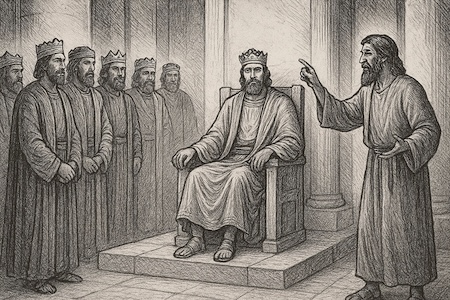
It is in this season that we meet Ezra and Nehemiah – two leaders who carried the weight of restoration on their shoulders, but in different ways. Ezra, the priest and scribe, devoted himself to restoring worship and the teaching of God’s Word. Nehemiah, the cupbearer turned governor, devoted himself to rebuilding the city’s walls and restoring its strength. Both men lived in the tension of hope and hazard. Both knew that what they built was far more than stone and timber; it was a testimony that God had not abandoned His people.

Ezra and the Temple: Restoring Worship

The first wave of exiles returned under Zerubbabel, rebuilding the altar and eventually completing the Second Temple around 516 BC. It was nothing like Solomon’s grand temple, but it was a place where sacrifices could be offered and the presence of God honored. When Ezra arrived some decades later, the Second Temple already stood, but worship had become compromised. People had intermarried with surrounding nations, idolatry lingered at the edges, and the Word of God had been neglected.

Ezra’s mission was not just about stone and mortar – it was about hearts. Scripture describes him as a man who “set his heart to study the Law of the LORD, and to do it and to teach his statutes and rules in Israel” (Ezra 7:10). He called the people back to covenant faithfulness, sometimes with tears, sometimes with stern confrontation. His leadership shows us that rebuilding life with God is not only about physical structures but about returning to obedience and worship.

Ezra faced resistance, of course. Neighboring peoples mocked the efforts of the returned exiles, writing letters to Persian kings to halt the work. Within Israel, there was compromise and half-heartedness. Some resisted his calls to repentance. Yet, slowly, through public reading of the Law and renewed devotion, Ezra helped re-center the people on God.

Nehemiah and the Walls: Restoring Strength

If Ezra carried the priest’s burden, Nehemiah carried the builder’s grit. Serving as cupbearer to King Artaxerxes, he heard word that Jerusalem’s walls lay in ruins and its gates burned. His response? He wept. He fasted. He prayed. And then he risked everything by asking the king for permission to return and rebuild.

When he arrived, he found a city vulnerable and exposed. A city without walls was a city without security, dignity, or identity. Nehemiah walked the ruins at night, surveying the broken stones, and then rallied the people: “You see the trouble we are in… Come, let us rebuild the wall of Jerusalem, and we will no longer be in disgrace” (Neh. 2:17).

But the work was not easy. Opposition sprang up quickly. Leaders like Sanballat and Tobiah ridiculed the project: “What are these feeble Jews doing? … If even a fox climbs up on it, he will break down their wall of stones!” (Neh. 4:2–3). Their mockery turned to threats, and the builders worked with one hand on the stone and the other on their swords. Hazards came from without and within: enemies plotted attacks, while discouragement and fatigue weighed heavily on the workers.

Nehemiah demonstrated true leadership in those moments. He stationed guards, encouraged the weary, and reminded them that the work was God’s. He called out corruption, confronted injustice among the nobles, and kept his own life free of greed. Through sheer perseverance and faith, the wall was completed in just 52 days – a feat that even their enemies had to admit was possible only because “this work had been accomplished with the help of our God” (Neh. 6:16).

The Attitudes of the People

Ezra and Nehemiah both encountered a spectrum of reactions. Some rejoiced at the rebuilding. When the temple’s foundation was first laid, younger voices shouted for joy while older ones wept, remembering the glory of Solomon’s temple (Ezra 3:12). There was excitement and sorrow mingled together—the joy of restoration and the ache of what had been lost.

Others resisted, either through apathy or hostility. Some within the community were more concerned about their own houses than God’s house. Others opposed the reforms that called for sacrifice or repentance. And of course, enemies outside of Israel actively tried to sabotage the work.

Yet through it all, the people gathered. They took their places on the wall. They listened to Ezra read the Law for hours on end, standing in the hot sun. They confessed their sins together. They signed a covenant renewal. The story of Ezra and Nehemiah is not simply about two leaders but about a community that, with all its imperfections, rose to the occasion and chose to hope in God’s promises.

God’s Faithful Restoration

The stories of Ezra and Nehemiah are about more than ancient history. They remind us that God is in the business of restoration – He always has been, He always will be until the “renewal of all things” (Matt. 19:28). His people may stumble, cities may fall, worship may grow cold – but He stirs leaders, awakens communities, and rebuilds what was broken.

Ezra reminds us that restoration begins with returning to God’s Word and realigning our lives with His will. Nehemiah reminds us that God calls us to action, to pick up stones, to stand watch, and to persevere in the face of opposition. Together, they paint a picture of faith that is both spiritual and practical, both inward and outward.

And perhaps the most important lesson? The temple and the walls, as important as they were, pointed to something greater. Generations later, Jesus would walk those same streets, declaring Himself the true temple (John 2:19) and the Good Shepherd who protects His people.

The story ends where ours begins: with a God who restores, a people who return, and a future secured not by stone walls or earthly temples, but by the presence of Christ, through the Holy Spirit, among us.


* Exile: think “eviction.” In I Almost Bought the Farm, we discussed that the land, the Promised Land, belonged to God, and His people resided there at His pleasure.
Isaiah’s Kingdom Message


We would be remiss in this “kingdom journey” if we didn’t spend time with Isaiah and his 60-year ministry as a prophet. His prophetic voice rang out in one of Israel’s darkest seasons. His book spans decades of judgment, grief, promises, and breathtaking visions of God’s kingdom breaking in.

Isaiah’s ministry began in the eighth century B.C. during the reign of Uzziah (Isaiah 6:1). He served as a prophet in Jerusalem, speaking to kings and common people alike. His call was both daunting and exhilarating as he announced God’s word to a people who largely did not want to hear it. He saw firsthand their idolatry, injustice, and false worship. He warned them that Assyria, and later Babylon, would be instruments of God’s judgment.

Isaiah was not simply a prophet of doom. He was also a prophet of hope. His message unfolds in a rhythm of judgment and restoration, not an uncommon theme in the Hebrew scriptures. Israel would be cut down like a tree, but “the holy seed will be the stump in the land” (Isaiah 6:13). In other words, God’s kingdom story and the role of his people were far from over.

Isaiah in the Shadow of Exile

Isaiah straddled a critical time in Israel’s history. Some of his prophecies addressed the immediate threat of Assyria, but his vision stretched far beyond. He foresaw Babylon’s rise and the devastating exile that would follow (Isaiah 39:5–7). For Judah, this meant the unimaginable: the temple destroyed, the land lost, the people scattered.

What do you say to a people stripped of their identity and hope? Isaiah’s answer was to re-anchor them in the character of God. He reminded them that the Holy One of Israel was not confined to stone walls or earthly thrones. Even in exile, God was King.

Comfort, comfort my people, says your God” (Isaiah 40:1). These words echo like cool water in the desert. Isaiah dared to declare that exile was not the end. God was still writing the story, still keeping covenant, still shaping a people for Himself. The kingdom would come, not by human might but by God’s own faithful hand.

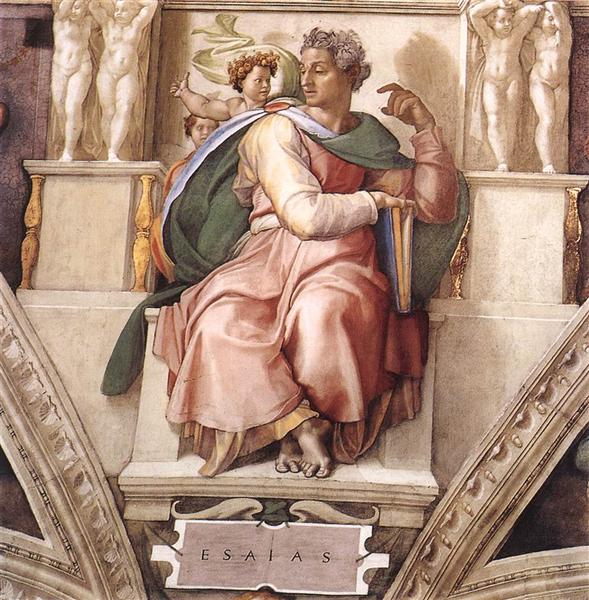
The Prophet Isaiah, Michelangelo (1509, Sistine Chapel)

The Kingdom Vision

Isaiah’s prophecies pulse with kingdom language. He envisioned a day when swords would be beaten into plowshares, and nations would learn war no more (Isaiah 2:4). He pictured a highway in the wilderness, where God Himself would lead His people home (Isaiah 35:8–10). He described a feast of rich food for all peoples, where death is swallowed up forever (Isaiah 25:6–8).

These aren’t just nice images. They are glimpses of God’s reign breaking into human history. Isaiah insisted that God’s kingdom is not limited to Israel’s borders – it is global, cosmic, and eternal.

But who could possibly bring such a kingdom?

Pointing to the King

Isaiah repeatedly pointed forward to a figure who would embody and establish God’s reign. Sometimes he called Him the shoot from Jesse’s stump, a Spirit-filled ruler who delights in righteousness and justice (Isaiah 11:1–5). Other times, He is the Servant of the Lord, who suffers on behalf of His people, bearing their sins to bring them peace (Isaiah 53:4–6).

For Christians, these words unmistakably point to Jesus. He is the child born, the son given, the one called Wonderful Counselor, Mighty God, Everlasting Father, Prince of Peace (Isaiah 9:6). He is the Servant who was pierced for our transgressions and crushed for our iniquities. He is the Spirit-anointed King who announces good news to the poor and freedom for the captives (Isaiah 61:1–2; see Luke 4:18–21).

Isaiah, centuries before Bethlehem, gave Israel a vocabulary of hope that would only make full sense in Jesus.

Kingdom People Then and Now

Isaiah’s voice continues to call out across the centuries. His message to exiles is just as relevant to us. We may not be dragged off to Babylon, but we know what it is to live in a fractured world where kingdoms rise and fall, where injustice festers, and where hope feels fragile.

Isaiah’s kingdom vision re-centers us. It reminds us that our story is not defined by loss or despair but by the faithful God who keeps His promises. It challenges us to live as kingdom people even in exile (both real and perceived) – to pursue justice, to care for the oppressed, to keep our eyes fixed on the coming King.

The same King that Isaiah saw in the temple, high and exalted, with the train of His robe filling the sanctuary (Isaiah 6:1), is the King who took on flesh and walked among us. He is the crucified and risen Lord who promises, “Behold, I am making all things new” (Revelation 21:5).

Living Isaiah’s Hope

To read Isaiah is to be both unsettled and comforted. We are unsettled by his honesty about sin, judgment, and the futility of our false securities. But we are comforted by his relentless insistence that God is faithful, that exile is not the end, and that a King has come – and will come again.

Like the exiles who first heard Isaiah’s words, we are invited to trust, to wait, to hope. To beat our swords into plowshares in anticipation of peace. To walk the highway of holiness with joy. To live as witnesses to a kingdom that is already here and yet still to come.

Isaiah helps us see what’s true: God is King, His kingdom is and has broken in, and Jesus is the fulfillment of the promises. And in that kingdom we find our home.


Prophets in a Foreign Land: God’s Voice in Babylon

Continuing the conversation of the last post, God’s People in Exile


As we discovered, the Exile was disorienting. The old markers of identity were gone – the land, the temple, the city, the king. For Judah, exile in Babylon was not just a political defeat; it was a theological crisis. Who were they now? Did God abandon them? Was His covenant promise broken?

It was in this crucible that the prophets spoke. Their words were not simply predictions of future events, but God’s active voice, calling, warning, reminding, and comforting His kingdom people in a foreign land. If we listen carefully, we hear how God was reshaping His people – not in the glory of Zion, but in the dust of Babylon.

Jeremiah: Faithfulness in the Long Haul

Jeremiah is often remembered as the weeping prophet, the man who mourned the fall of Jerusalem. Yet in his letters to the exiles, he provided a surprising word: “Build houses and live in them; plant gardens and eat their produce… seek the peace of the city where I have sent you into exile, and pray to the Lord on its behalf” (Jeremiah 29:5, 7).

This was not a pep talk about a speedy return. In fact, Jeremiah told them the exile would last seventy years (Jeremiah 29:10). God was not offering escape but faithfulness. He was teaching His people how to live when the outward signs of His kingdom seemed absent.

It’s striking that God’s command was not withdrawal, but engagement. Settle in. Plant. Build. Marry. Have children. Work for the flourishing of Babylon itself. In other words, even in exile, Israel’s vocation as God’s people did not change. They were still called to be a blessing among the nations (Genesis 12:3). It’s the stuff “love your enemies” comes from.

Fresco of Jeremiah, Ezekiel, and Daniel

Ezekiel: God’s Glory on the Move

Ezekiel’s prophetic visions must have startled his fellow exiles. His first encounter – a storm wind, living creatures, wheels within wheels, a blazing throne – was a revelation that God’s glory had not been left behind in Jerusalem (Ezekiel 1). The unthinkable was true: the God of Israel was not bound to the temple. He was with His people, even in Babylon.

That vision redefined holiness. Exile stripped away the illusion that God lived only in stone buildings. It showed that His presence is mobile, transcendent, and faithful. Yet Ezekiel also confronted the people with the reason for exile: their rebellion, idolatry, and covenant unfaithfulness. He dramatized their sin with street theater and symbolic acts – lying on his side, shaving his head, packing up like an exile.

But Ezekiel’s message was not only judgment. He spoke of a new heart and a new spirit (Ezekiel 36), of God breathing life into dry bones (Ezekiel 37). In exile, God was not just punishing – He was remaking His people from the inside out.

Daniel: Living as a Witness in the Empire

Unlike Jeremiah and Ezekiel, Daniel’s story unfolds inside Babylon’s palaces. His life was less about spoken prophecy and more about embodied testimony. Refusing to defile himself with the king’s food (Daniel 1), interpreting dreams (Daniel 2), and standing firm in the face of lions and fire (Daniel 3, 6), Daniel demonstrated that allegiance to God could survive – and even thrive – under foreign rule.

Daniel’s visions reminded the people that the empires of this world are temporary. Babylon, Persia, Greece, Rome – they rise and fall. But “the God of heaven will set up a kingdom that shall never be destroyed” (Daniel 2:44). In exile, this was a daring reminder: God’s kingdom was not defeated. It was eternal.

Lamentations: Learning to Grieve

Alongside these prophetic voices, we hear the raw lament of the book aptly titled Lamentations. It is poetry soaked in grief: “How deserted lies the city, once so full of people!” (Lamentations 1:1). Yet woven into the sorrow is a line that anchors hope: “Because of the Lord’s great love we are not consumed, for his compassions never fail” (Lamentations 3:22).

God’s people were learning that lament is itself a form of faith. To cry out in anguish is to believe that someone is listening. Even in exile, grief became a way to remain tethered to God.

What God Was Saying in Exile

Taken together, the prophets give us a fuller picture of God’s voice in exile:

  • Live faithfully where you are. Exile is not an excuse for disengagement. God calls His people to seek the peace of the city – even foreign cities.
  • My presence goes with you. God’s glory is not tied to geography. He is present in palace and prison, in temple and tent, in Jerusalem and Babylon.
  • Your identity is intact. Though stripped of land and temple, Israel remained God’s covenant people. Exile was discipline, not abandonment.
  • The future is mine. Empires rise and fall, but God’s kingdom endures. The exile was not the end of the story – it was a chapter in God’s ongoing plan.
  • Grief is a language of faith. To lament is not weakness but worship, acknowledging both the pain of loss and hope in God.

Exile and Us

We, too, live as exiles. The New Testament picks up this theme, calling followers of Jesus “sojourners and exiles” (1 Peter 2:11). We belong to a kingdom not of this world, yet we dwell within it.

The prophets remind us that exile is not spiritual silence. God still speaks, calling His people to faithfulness, presence, and hope. He calls us to bless our neighbors, to live distinctly yet compassionately, to remember that our true citizenship is in His kingdom.

Exile strips away illusions, but it also clarifies identity. It reminds us that God’s presence is not confined to buildings or borders. He is with us wherever we are – and He is shaping us, even in “foreign soil,” to be His kingdom people.


God’s People in Exile


The story of Judah’s (southern Israel) exile at the hands of the Babylonians is sobering. It’s not simply about military defeat or displacement – it’s about the covenant people of God learning to live out their calling in a foreign land under foreign gods. The exile is one of the most formative periods in Israel’s history, shaping their identity, faith, and hope in ways that still resonate with us today.

The Fall of Jerusalem

The Babylonian Empire, under King Nebuchadnezzar II, rose to dominance in the early 6th century B.C. Judah was caught in the geopolitical squeeze between Babylon and Egypt, often trying to maneuver for survival. But repeated rebellions against Babylon’s authority provoked Nebuchadnezzar’s wrath.

In 597 B.C., Jerusalem was besieged for the first time. King Jehoiachin surrendered, and Nebuchadnezzar carried off the young king, members of the royal family, military leaders, and skilled craftsmen (2 Kings 24). This first wave of deportees included a young man named Ezekiel, who would later become one of the most significant prophets of the exile.

A decade later, in 586 B.C., Jerusalem fell completely. After a long and brutal siege, the Babylonians broke through the walls, burned the temple, destroyed the palaces, and left the city in ruins (2 Kings 25). It was a devastating moment – the loss of the temple was not just architectural, it was theological. The house of Yahweh, the visible reminder of God’s presence among His people, lay in ashes.

The Etemenanki of ancient Babylon. It was a massive ziggurat dedicated to the god Marduk in ancient Babylon.

Who Was Taken – and Who Was Left

Nebuchadnezzar’s strategy was shrewd. He carted off the best and brightest – the ruling elite, warriors, artisans, and priests. These were the people who could rebuild resistance or inspire rebellion. By removing them, Babylon weakened Judah’s future capacity for independence.

Those left behind were mostly the poor, farmers, and common laborers. To Babylon, they posed little threat. They were left to work the land and provide tribute. But to the exiles, it meant the land of promise was still inhabited – though stripped of its glory. The remnant in Judah and the exiles in Babylon were now two halves of the same broken nation, both struggling to make sense of what had happened.

Geographically, the exile meant a complete shift in worldview. Babylon was far to the east, across the desert, in the lush river valleys of the Tigris and Euphrates. The exiles were now surrounded by imposing ziggurats, walls that dwarfed anything in Jerusalem, and gods whose images dominated public life. Babylon was not just another city—it was the embodiment of human power and pride, the antithesis of Zion.

Stories from Exile

Exile life was not uniform. Some exiles, like Daniel and his companions, found themselves in positions of influence within the Babylonian court. Their stories remind us that even in a foreign land, God’s people could bear witness to His covenant faithfulness – his hesed. Daniel’s refusal to defile himself with the king’s food (Daniel 1), his friends’ fiery trial (Daniel 3), and Daniel’s prayer life that landed him in the lions’ den (Daniel 6) show us that faithfulness was possible under pressure.

Ezekiel’s visions along the Kebar River (Ezekiel 1) revealed that God’s presence was not bound to the temple in Jerusalem. The vision of the wheels and the glory of the Lord on the move proclaimed that Yahweh was not defeated. He had gone into exile with His people.

Psalm 137 gives us another angle – the deep anguish of the exiles. By the rivers of Babylon we sat and wept when we remembered Zion. The grief was real. They wrestled with questions of identity: Who are we without the temple? Who are we without the land?

God’s Directives in Exile

Into this confusion came a remarkable word from the Lord through the prophet Jeremiah. Writing from Jerusalem to the exiles in Babylon, he delivered God’s surprising directive:

“Build houses and settle down; plant gardens and eat what they produce. Marry and have sons and daughters… Increase in number there; do not decrease. Also, seek the peace and prosperity of the city to which I have carried you into exile. Pray to the Lord for it, because if it prospers, you too will prosper.” (Jeremiah 29:5–7)

This was not the message they wanted. Many longed for a quick return, a short captivity. False prophets promised just that. But God was clear: exile would not be over in a year or two. It would be a season of seventy years (Jeremiah 29:10).

In that season, the people were not to withdraw in bitterness or plot rebellion in secret. They were to live faithfully as God’s kingdom people in a foreign land. They were to put down roots, raise families, and bless the city of their captors. In other words, they were to embody God’s covenant life even in exile.

Kingdom People in a Foreign Land

The exile became a crucible for Judah’s faith. They discovered that God was still with them. His kingdom was not bound to geography or to buildings. His people could live for Him anywhere, under any circumstances, if they clung to His word, trusted His promises, and bore witness through obedience.

The exile reminds us of a larger truth: God’s people are always, in some sense, “resident aliens.” Whether in Babylon or in our own cultural moment, we are called to live distinctly, faithfully, and with hope – even when the world around us feels hostile or foreign.


Kingdom Divided: Good Kings, Bad Kings, and the Road to Exile


When we last left the story of God’s kingdom people, David had passed the crown to his son Solomon. David’s reign was far from perfect, but he was remembered as “a man after God’s own heart.” Solomon, with his legendary wisdom and his building of the temple, seemed poised to continue that legacy. Yet the seeds of division were already being sown.

Solomon loved the Lord (1 Kings 3:3), but he also loved foreign wives and their gods (1 Kings 11). His compromises fractured the nation spiritually, and after his death, the kingdom literally split in two: Israel in the north and Judah in the south (1 Kings 12). From this point forward, the biblical story of the monarchy becomes a tale of two nations, each with its own kings, prophets, triumphs, and failures.


Two Thrones, Two Paths

The northern kingdom of Israel had nineteen kings in total, beginning with Jeroboam I. Not a single one is described in Scripture as faithful to the Lord. Jeroboam set up golden calves so the people wouldn’t go to Jerusalem to worship (1 Kings 12:28–30), and every king after him walked in his idolatrous footsteps. Though some were politically successful or militarily strong, spiritually the nation was on a steady downward slope.

Judah, on the other hand, had twenty kings. Most were unfaithful, but a handful are remembered as “good” – not because they were flawless, but because they sought the Lord and led reforms. Kings like Asa (2 Chronicles 14), Jehoshaphat (2 Chronicles 17), Hezekiah (2 Kings 18), and Josiah (2 Kings 23) stand out as bright lights in a darkening landscape. They tore down idols, reinstituted temple worship, and called the people back to covenant faithfulness.

Still, even the “good” kings were inconsistent. Joash started well under the guidance of the priest Jehoiada, but later abandoned the Lord (2 Chronicles 24). Amaziah “did what was right in the eyes of the Lord, but not wholeheartedly” (2 Chronicles 25). Uzziah was faithful for most of his reign but became proud and overstepped his authority in the temple (2 Chronicles 26). The chronicler doesn’t whitewash the record; he shows us leaders who were mixed bags – a bit like us?


“Some listened. Most did not.”

The Prophetic Warnings

Throughout these centuries, God did not leave His people without a voice. Prophets like Elijah and Elisha, Amos, Hosea, Isaiah, Micah, and Jeremiah spoke truth to kings and nations. They confronted idolatry, called out injustice, and reminded the people that covenant blessings were tied to covenant faithfulness (Deuteronomy 28).

But most of the time, the prophets were ignored – or worse, persecuted. Think of Elijah standing alone on Mount Carmel, calling Israel to choose between the Lord and Baal (1 Kings 18). Think of Jeremiah weeping as his warnings fell on deaf ears (Jeremiah 9). Again and again, the prophets said: Return to the Lord, or exile is coming.


Patterns of Faithfulness and Rebellion

Reading through 1 and 2 Kings or 2 Chronicles, we see a pattern emerge. A king rises to power. If he does evil, the nation slides further into idolatry. If he does good, there’s often a brief reprieve, a season of reform, but it rarely lasts. With the next generation, the pendulum swings back toward rebellion.

The northern kingdom never once turned the tide. Every king “did evil in the sight of the Lord.” After centuries of warning, God allowed Assyria to conquer Israel in 722 BC (2 Kings 17). The ten northern tribes were scattered, never to return in the same form.

Judah limped along for another 135 years. Good kings gave the nation moments of hope, but the general trend was downward. Finally, under the weight of idolatry, injustice, and stubborn rebellion, God allowed Babylon to destroy Jerusalem in 586 BC (2 Kings 25). The temple was burned, the walls torn down, and the people carried into exile.


Why This Matters

It’s tempting to read this history as ancient political drama, but I think Scripture invites us to see something deeper. The story of Israel and Judah is the story of human hearts. Left to ourselves, we tend to drift toward idolatry. We start well and falter. We follow God for a season but slip back into self-reliance, pride, or compromise.

The kings of Israel and Judah remind us that leadership matters, but more importantly, they remind us of our need for the greater King. David pointed toward Him (2 Samuel 7:12–16). Solomon’s wisdom hinted at Him (Matthew 12:42). The prophets longed for Him (Isaiah 9:6–7). And though the line of kings failed (which, remember, the people asked for), God promised a Son of David who would reign forever in justice and righteousness (Jeremiah 23:5–6). That King is Jesus.


Living in the Tension

So what do we do with this mixed record of good and bad kings? Perhaps we’re meant to sit in the tension. To acknowledge both the warnings and the hope. The warnings show us the cost of disobedience: exile, loss, brokenness. The hope points us to the faithfulness of God, who never abandons His people even in their rebellion (Lamentations 3:22–23).

The exile was not the end of the story. God brought His people back (see Ezra and Nehemiah), rebuilt Jerusalem, and in the fullness of time, sent His Son (Galatians 4:4-5). The line of David was never truly broken; it was fulfilled in Christ.

As we reflect on the divided kingdom, maybe a takeaway is this: our faithfulness wavers, but God’s faithfulness never does…

If we are faithless, he always remains faithful. He cannot deny his own nature. (2 Timothy 2:13, Phillips).

We don’t need another human king to save us. We already have One who has conquered sin and death, who reigns forever, and who invites us to live as citizens of His unshakable kingdom (Hebrews 12:28).