The Ten Plagues

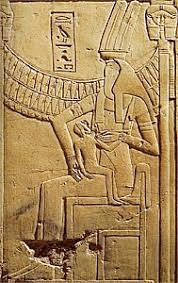
In a footnote of the post Distinguishers, I mentioned that while researching the gods of ancient Egypt, I was reminded that scholars have correlated the ten plagues listed in Exodus to the various deities. For those interested in this stuff, I discovered a table that attempts to connect the plagues of Exodus with various Egyptian gods.

DeityDomainBiblical Context
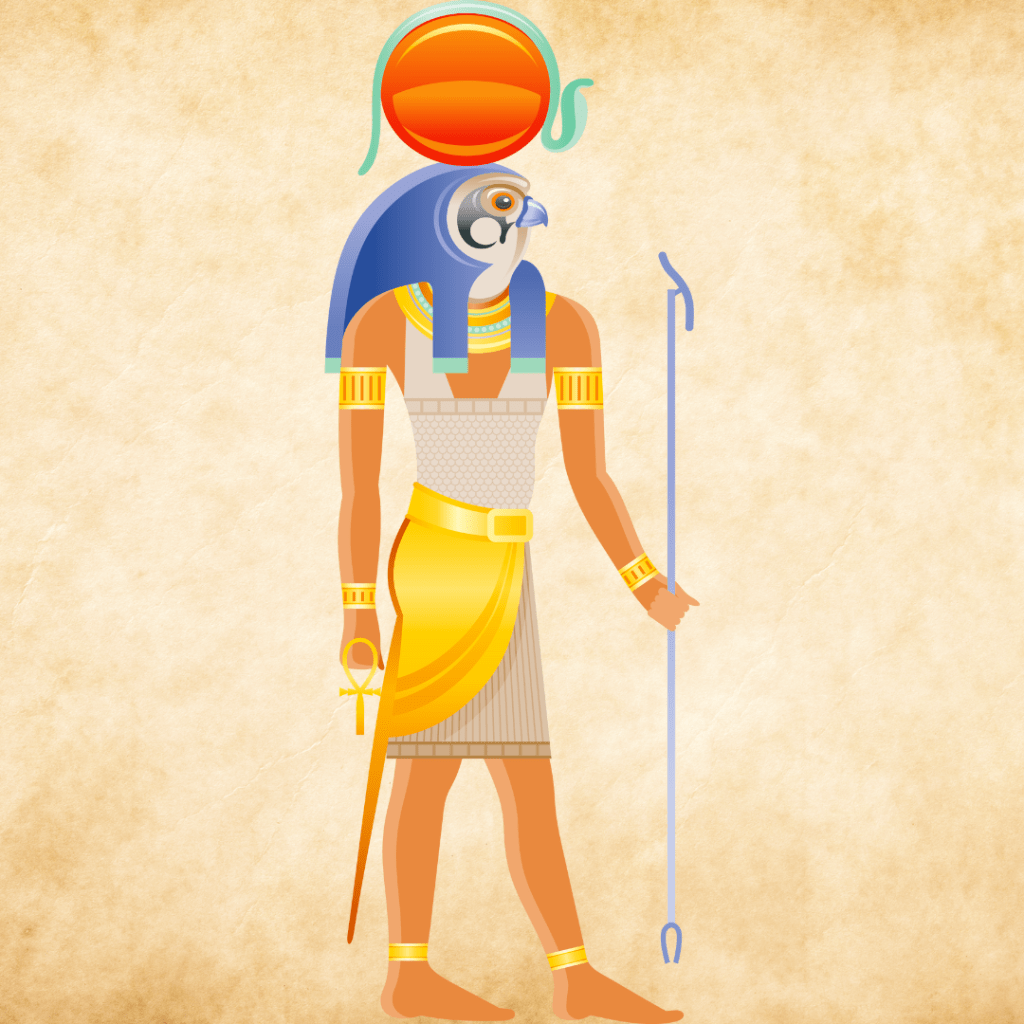
Ra (Re)Sun god, king of godsPlague of Darkness – Yahweh darkened the sun god’s domain (Exodus 10:21-23)
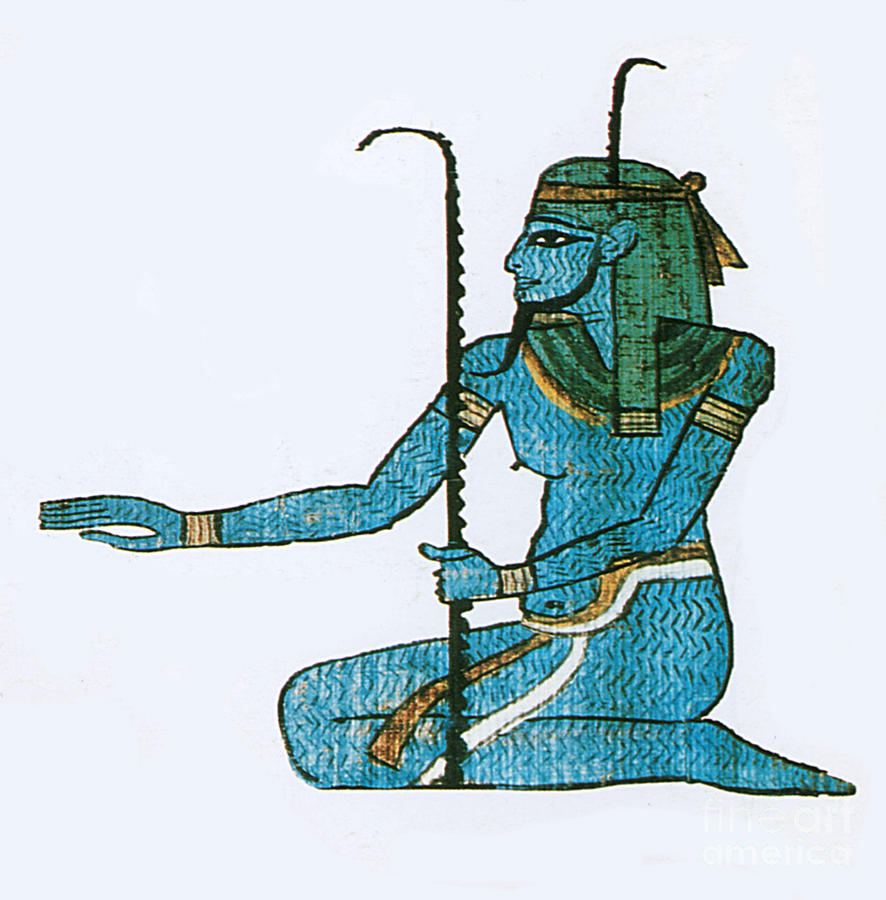
HapiNile & fertilityWater to Blood – Judgment on Nile (Ex. 7:17-21)
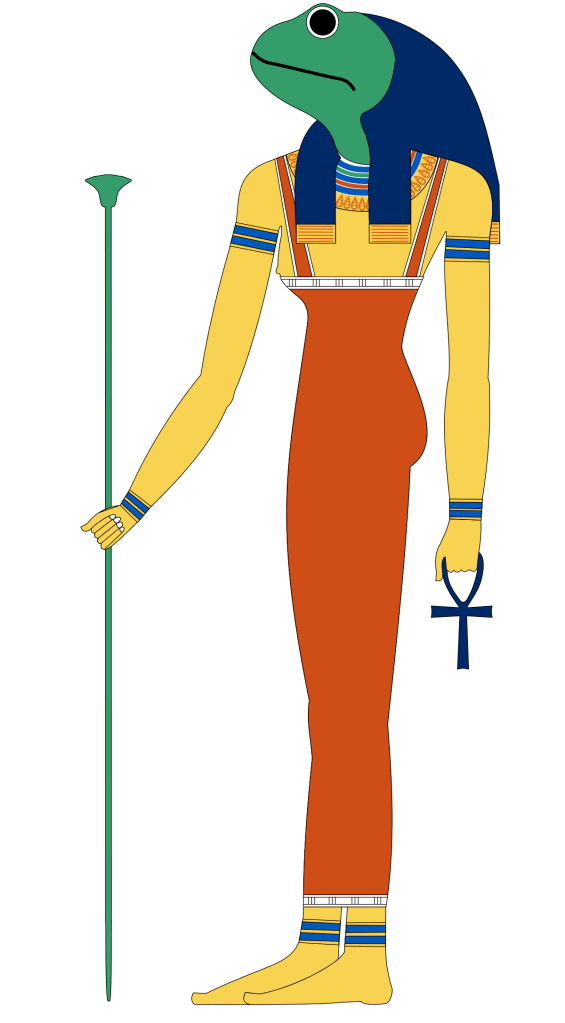
Heqet (Heket)Fertility, birthPlague of Frogs (Ex. 8:1-15)
GebEarthPlague of Dust to Gnats. Dust = earth (Ex. 8:16-19)
KhepriRenewal, sunrise, dung beetlePlague of Flies, beetles (Ex. 8:20-32)
HathorLove, beauty, cowsDeath of Livestock – cattle killed (Ex. 9:1–7)
SekhmetPlague, war, healing??Boils – plague that her power could not stop (Ex. 9:8-12)
Nut, SethSky goddess, Storm god Hail from the sky (Ex. 9:13-35)
Neper / RenenutetGrain & harvestLocusts destroy crops (Ex. 10:1-20)
PharaohA divine king, considered “son of Ra.”Death of Firstborn – God usurps Pharaoh’s claim to divinity (Ex. 12:29-30)

Below are some depictions of the various Egyptian deities I found on-line. I am not vouching for their accuracy!

Rah
Hapi
Geb
Heqet
Hathor
Sekhmet
Nut
Khepri
Neper
Renenutet

Losing Faith in My Faith

I was recently watching a YouTube video of my niece, Haddi Trebisovsky, as she spoke at a fundraising gala for the K.O.L.T Foundation – a non-profit that comes alongside families who have suffered the heartbreak of stillbirth. Haddi and her husband know that pain all too well, having lost their son Ansel at 33 weeks. So when she took the stage, it wasn’t just a speech – it was personal. In her talk, one statement in particular grabbed my attention. She said her faith in her faith had been shattered. I asked her if she’d be willing to write a blog post to expand on that thought. What follows are her words.

I remember the first time I put my faith in Christ—sitting at my mother’s feet while she folded laundry. I was no more than five when she told me about Jesus and Heaven, and I accepted with a child’s excitement. I grew up in a Christian home where faith was central, and as a teen, I served in ministry and spent my first year out of high school in an intense, faith-focused internship.

Before college, I spent two months in Maui with a Christian life coach, preparing for a life built on wisdom and trust in God. All I wanted was to be used by Him. I believed He still spoke to those who listened and would guide my steps.

In college, I met Jimmy. He transferred schools to grow in his faith, and we had open conversations from the start: “Just because we like each other doesn’t mean we should date—let’s pray about it.” We soon knew we were meant to be. After years of spiritual mentorship, I felt confident I could hear God’s voice. When I sensed He was leading us toward engagement by year’s end, we prayed, went ring shopping, and I waited with joy and anticipation.

Then Jimmy hit the brakes. He felt the timing was off—still a year of school left for him, two for me. He wanted to wait until he had a steady income. In hindsight, it was wise. But in the moment, I felt like he was choosing the practical path over trusting God. I was crushed.

More than disappointment, I was shaken by what felt like a failure to hear God. I didn’t doubt God’s existence, but I doubted everything I thought I understood about prayer, timing, and discernment.

I lost faith in my faith.

That disillusionment led to years of spiritual numbness. I still believed, still lived a “good Christian life,” but I didn’t feel connected to God.

Eventually, I knew I had to do something uncomfortable to shake the spiritual fog. So, while pregnant with our third child, we became foster parents. We took in a two-day-old infant who stayed with us for five months. Just before giving birth, we spontaneously decided to buy a bigger house and made an offer that night.

Everything looked perfect—until the night before closing, when a missed tax lien delayed everything. I remembered how lost I’d felt in that earlier season, so instead of spiraling, I asked God for peace, not answers.

During the wait, I sensed a quiet whisper: “If you get a call for a girl tomorrow, say yes.” The next day at 11:00 A.M., the county called—could we take in a three-day-old baby girl? Though our son was only two months old, we said yes. That same afternoon, the title company called—our closing was back on.

The baby stayed with us for just five days. It didn’t make sense. But I began to wonder if it had been a test of faith, a preparation for something yet to come. And I was right.

During the pandemic, I faced another crisis of faith—this time, shaken by the divide between my faith community and the issues unfolding in the world.  If those who claimed the same beliefs as mine held opposite opinions from mine about the then-current events, what did that say about our faith? For the first time, I truly questioned whether God was even real.

Then, one Sunday, a message stirred something in me, and I felt the Holy Spirit whisper, “See, Haddi? I’m real. Just hang in there.” I didn’t know it yet, but I was newly pregnant with a surprise baby—my long-hoped-for fourth child.

That pregnancy was the hardest yet. I dealt with severe migraines and ER visits, but I clung to that whisper. I named him Ansel, which means “with divine protection.” Through the pain, I trusted that this was God’s perfect plan.

Then, at a routine 33-week checkup, I heard the words no parent ever wants to hear: “I’m sorry, there’s no heartbeat.” I remember the scream that came out of me as I drove home—full of rage and betrayal. “You knew how much I was struggling with my faith before this. How could You let this happen? How could You answer my prayer and allow it to end like this?”

I told God, if He wanted me back, He’d have to drag me through the grief. I didn’t have the will to try anymore.

The thing about God is, He’ll take that kind of invitation. He dragged me through it, and in doing so, He unraveled every shaky foundation I had built my faith upon. In the process of writing through my grief, I found Him answering prayers I had prayed as a teenager, prayers I’d forgotten I ever spoke.

This isn’t the story I wanted. But God’s presence in the wreckage was undeniable.

Losing faith in my faith was painful and disorienting—but it was also necessary. Because God isn’t confined to one method of reaching us. He’s not bound by our assumptions or expectations. He is sovereign, eternal, and always speaking.

And in letting go of faith in my ability to believe “the right way,” I finally learned to place my faith where it belonged all along—in Christ alone.


You can follow Haddi on her personal blog: https://hadditrebisovsky.wordpress.com/. You may also want to check out Haddi’s book, The Ansel Diary, describing her journey. In addition, Haddi wrote a guided journal for grief of all kinds, The _____ Diary: A guided journal for grief (The Ansel Diary Collection).

Long Live the King!

“Long live the King!” is a phrase rich with historical significance, symbolizing loyalty, continuity, and the enduring nature of monarchy. Its roots appear to trace back to 15th-century France in the declaration “Le roi est mort, vive le roi!”. “The King is dead, long live the King!” is a proclamation that marked both the death of a reigning monarch and the immediate succession of the next. Over time, the phrase found its place in English tradition and thus, “Long live the Queen!” The king (or queen) was kinda a big deal, I guess.

Recent blog posts have responded to the elusive and lingering question, “What is the Kingdom of God that was central to Jesus’ gospel message?” Why is it so hard for us to wrap our heads around and understand? We have slowly been working through scripture in an attempt to get a 30,000-foot view of God’s activity related to his kingdom and his subjects, starting with Almost Getting It back in November 2024.

Over the past months, I have had many conversations with people who, like me, have come to the realization that Jesus’ primary message was indeed about the Kingdom of God, but with the lingering question of what the kingdom actually is. As mentioned previously, I’ve been wrestling with the question for several decades. Part of this blog journey is my own attempts to articulate what the kingdom is (and what it is not, by the way).

For the last couple of months, I’ve begun to wonder if we have been asking the wrong question. We want to know what the kingdom itself is. I don’t know if it’s a Western thing or a human thing, but I suspect tunnel vision results in asking wrong questions. As I ponder Jesus’ interactions with his disciples, it seems like that was an issue for them, too – asking the wrong questions. So ponder this…

Are we more captivated by the characteristics of the kingdom than by the character of the One who reigns?

We want to know stuff about the kingdom – what it is, where it is, its relation to heaven (or vice versa), etc. We are interested in the characteristics of the kingdom. A place. What if we were to focus our attention on the character of the King himself? It’s this very wonderment that led me to create The Parable of the Benevolent King. I was attempting to describe a kingdom that reflected the character of the king. In the process, the characteristics of the kingdom became evident.

I suspect that when the Israelites met Yahweh at Mount Sinai, they were discovering the character of the God who rescued them from oppression and slavery. In the theophany, they discovered his holy presence on the mountain. The gods they knew about in Egypt were tied to time and place and a bit inept.

Try to imagine what they experienced…

16 On the morning of the third day there was thunder and lightning, with a thick cloud over the mountain, and a very loud trumpet blast. Everyone in the camp trembled. 17 Then Moses led the people out of the camp to meet with God, and they stood at the foot of the mountain. 18 Mount Sinai was covered with smoke, because the Lord descended on it in fire. The smoke billowed up from it like smoke from a furnace, and the whole mountain[a] trembled violently. 19 As the sound of the trumpet grew louder and louder, Moses spoke and the voice of God answered him. (Exodus 19:16-19)

This awesome experience was followed by Him delivering a set of commandments given for the people, His subjects. Starting with the Ten, we usually view these commands as precepts on how the people were to live in the presence of a holy God. There is certainly something to that. But what if we also looked at the commands as a revelation of God’s character to a people who knew nothing of his character? Think about it. As we watch world leaders issue “commands,” don’t their directives tend to reveal their character?

Through the Ten Commandments, the people discovered that Yahweh is the only true God, not tied to time and space (Exodus 20). This God did not require images because He created them as his image bearers, as we discussed in an earlier post.

But God didn’t stop with the Ten Commandments. He instituted an additional set of commands (see Exodus 20-23). Like the bottom of the order of the first Ten, these additional couple of dozen commands are mostly related to how his image-bearers were to relate to each other. We might call them social justice laws. They talk about how servants were to be treated, about fair trade, about the treatment of widows and orphans, about how foreigners were to be treated, about justice and mercy, etc. In fact, the NIV translation’s heading for a section of these additional commands is “Laws of Justice and Mercy.”

Can you see how the commands reveal the character of the King?

So again I wonder, is our attention drawn to the discovery of the characteristics of the kingdom rather than the character of the King? Maybe Dallas Willard had that figured out when he said…

Jesus put a face on the Kingdom of God*


* Willard, D. (2024). The scandal of the kingdom : how the parables of Jesus revolutionize life with God. Zondervan Books.

Radical Shift

On this Easter, let me share another reflection from Philip Yancey…


In my study of the Bible, I was struck by a radical shift in its authors’ attitudes about suffering, a shift that traces directly back to the cross. When New Testament writers speak of hard times, they express none of the indignation that characterized Job, the prophets, and many of the psalmists. They offer no real explanation for suffering, but keep pointing to two events—the death and resurrection of Jesus—as if they form some kind of pictographic answer.

The apostles’ faith, as they freely confessed, rested entirely on what happened on Easter Sunday. Those disciples soon learned what they had failed to learn in three years with their leader: when God seems absent, he may be closest of all. When God seems dead, he may be coming back to life.

The three-day pattern—tragedy, darkness, triumph—became for New Testament writers a template that can be applied to all our times of testing. We can look back on Jesus, the proof of God’s love, even though we may never get an answer to our “Why?” questions.

Good Friday demonstrates that God has not abandoned us to our pain. The evils and sufferings that afflict our lives are so real and so significant that God willed to share and endure them. God, too, is “acquainted with grief.” On that day, Jesus himself experienced the silence of God—it was Psalm 22, not Psalm 23, that he quoted from the cross.

Easter Sunday shows that, in the end, suffering will not triumph

And Easter Sunday shows that, in the end, suffering will not triumph. Therefore, “Consider it pure joy … whenever you face trials of many kinds,” writes James; and “In this you greatly rejoice, though now for a little while you may have had to suffer grief in all kinds of trials,” writes Peter; and “We also rejoice in our sufferings,” writes Paul. The apostles go on to explain what good can result from such “redeemed suffering”: maturity, wisdom, genuine faith, perseverance, character, and many rewards to come.

It’s a matter of time, Paul says. Just wait: God’s miracle of transforming a dark, silent Friday into Easter Sunday will someday be enlarged to cosmic scale.


Yancey, Philip (2009). Grace Notes: Daily Readings with a Fellow Pilgrim.

Black (Holy) Saturday

Mary Magdalen and Mary the mother of Joses saw where he was laid. (Mark 15:47)

For this day, Holy or Black Saturday, Walter Wangerin penned this message to Mary Magdalen as though it were from Jesus. I want to share it with you all…


Even in your despair, observe the rituals. It is the Sabbath; then let it be the Sabbath after all. Pray your prayers. However hollow and unsatisfying they may feel, God can fill them. God is God, who made the world from nothing—and God as God can still astonish you. He can make of your mouthings a prayer—and of your groanings a hymn. Observe the ritual. Prepare your spices. Return on Sunday, even to this scene of your sorrow, expecting nothing but a corpse, planning nothing but to sigh once more and to pay respects.

One story is done indeed, my Magdalene. You’re right. You’ve entered the dark night of the soul.

But another story—one you cannot conceive of (it’s God who conceives it!)—starts at sunrise. And the empty time between, while sadly you prepare the spices, is in fact preparing you! Soon you will change. Soon you will become that holy conundrum which must baffle and antagonize the world: a saint. Saint Mary Magdalene. “As dying, and behold we live; as punished, and yet not killed; as sorrowful, yet always rejoicing; as poor, yet making many rich; as having nothing, and yet possessing all things”—that host of contradictions, the beauty of Spirit, the puzzle of all who know him not, the character of the saints!

Come again on Sunday, Mary, and see how it is that God makes saints. Come, follow.


Wangerin Jr., Walter (1992). Reliving the Passion: Meditations on the Suffering, Death, and the Resurrection of Jesus as Recorded in Mark. (p. 152). Zondervan. Kindle Edition.

“A Bright Light” (Good Friday)

A Good Friday reflection from Philip Yancey…


Author Henri Nouwen tells the story of a family he knew in Paraguay. The father, a doctor, spoke out against the military regime there and its human rights abuses. Local police took their revenge on him by arresting his teenage son and torturing him to death. Enraged townsfolk wanted to turn the boy’s funeral into a huge protest march, but the doctor chose another means of protest.

At the funeral, the father displayed his son’s body as he had found it in the jail—naked, scarred from the electric shocks and cigarette burns and beatings. All the villagers filed past the corpse, which lay not in a coffin but on the blood-soaked mattress from the prison. It was the strongest protest imaginable, for it put injustice on grotesque display.

Isn’t that what God did at Calvary? “It’s God who ought to suffer, not you and me,” say those who bear a grudge against God for the unfairness of life. The curse word expresses it well: God be damned. And on that day, God was damned. The cross that held Jesus’ body, naked and marked with scars, exposed all the violence and injustice of this world. At once, the cross revealed what kind of world we have and what kind of God we have: a world of gross unfairness, a God of sacrificial love.

No one is exempt from tragedy or disappointment—even God was not exempt. Jesus offered no immunity, no way out of the unfairness, but rather a way through it to the other side. Just as Good Friday demolished the instinctive belief that this life is supposed to be fair, Easter Sunday followed with its startling clue to the riddle of the universe. Out of the darkness, a bright light shone.

A friend of mine, struggling to believe in a loving God amid much pain and sorrow, blurted out this statement: “God’s only excuse is Easter!” The language is nontheological and harsh, but within that phrase lies a haunting truth. The cross of Christ may have overcome evil, but it did not overcome unfairness. For that, Easter is required, a bright clue that someday God will restore all physical reality to its proper place.


Yancey, Philip (2009). Grace Notes: Daily Readings with a Fellow Pilgrim.

Let’s Celebrate!

We love a good celebration. What happens after our sports team wins the big one? Or when a World War ends? Or when we get a promotion? Or when the shepherd finds the lost sheep? We celebrate!

The word celebrate comes from Latin roots, and its etymology reveals some rich and festive meaning. The word comes from the Latin verb celebrare, which means “to honor, to go to in great numbers, to solemnize, to observe a festival.” So at its root, “celebrate” is about gathering people together to honor, remember, and/or observe something significant – often in a joyful or meaningful way.

Humans are wired for celebration and remembrance – to stop, look back, and reflect on momentous occasions. From birthday parties and national holidays to family traditions and cultural festivals, we instinctively celebrate that which matters to us. It’s in our God-given nature.

Celebrations aren’t just about fun; they help anchor us in time, in memory, and in meaning. They remind us who we are, where we’ve come from, and what we value most. Whether sacred or ordinary, these moments shape identity and draw us into community.

Times Square, VE Day 1945

Over the centuries, monarchial leaders have grasped the understanding of our need to celebrate by instituting kingdom-wide festivals. These kingdom parties were usually all-inclusive – from courtiers to the peasant ranks, all participated. Queen Victoria, who reigned over the British Empire from 1837 to 1901, instituted such a national celebration.

Queen Victoria’s Golden Jubilee marked the 50th anniversary of her reign and was celebrated across the British Empire on June 20, 1887. Central events took place in London and included a grand thanksgiving service at Westminster Abbey, attended by royalty, dignitaries, and representatives from around the world. Throughout the Empire, communities held street parties, fireworks displays, and public festivities. The Jubilee served as both a celebration of national unity and a display of the vast reach of the British monarchy.

We see a pattern of celebration deeply woven into Scripture. The benevolent King Yahweh didn’t just permit celebration, He commanded it.

After giving the people the Ten Commandments, Yahweh provided an additional set of commands related to the treatment of others – fellow servants, property protection, and social responsibility focused on justice and mercy. The deliverance of His commands was followed by the institution of three annual festivals that the people were to celebrate – the Festival of Unleavened Bread (Passover), the Festival of Harvest, and the Festival of Ingathering (See Exodus 23).

Reflecting on these three annual festivals we see God’s heart to draw His people into regular rhythms of remembrance, worship, and gratitude. These were not just events on a calendar; they were sacred invitations to remember who He was and what He had done. They reminded Israel that their story began with deliverance, was sustained by provision, and moved toward a future shaped by His faithful presence.

In our fast-paced, “always-on” world, such rhythms still matter, maybe even more so. Celebration slows us down. Celebration is woven into the fabric of God’s kingdom. Remembrance calls us back. When we intentionally create space to remember God’s goodness – through personal moments, family traditions, or gathered worship – we step into something deeply human and profoundly holy. These practices point us to a God who transcends time and is faithful across generations, filling us with gratitude, worship, and wonder. Sometimes a child-like wonder.

Something to reflect on as we approach the annual celebration of our risen King.

The Ten Commandments

[If you have yet to read The Parable of the Benevolent King, you may want to do so first]


I remember the day I received my first Bible. It was a leather-bound King James Version of the Bible, complete with my name written on the cover in gold letters. It was a proud moment when I stood in front of the Church to receive my Bible. Along with it, I received a gold “chain” bookmark inscribed with the Ten Commandments. As a third-grader, attempts to read my new Bible usually resulted in me playing with that smooth, shiny bookmark. I can remember the feeling today, decades later. Though I didn’t read much, I certainly became “familiar” with the Ten Commandments.

Think about the process of Yahweh, the benevolent King, redeeming a people from slavery, where they acquired an identity apart from Him. Their identity and entire being were shaped by their bondage to the Egyptian empire and the worship of its gods. When Yahweh redeemed these people, he took them out to the middle of nowhere, where they had no land and no social identity. He was remaking these people, His people.

In the Sinai desert, about a year after their rescue, God gave the people instructions we know as the Ten Commandments.* These were the first of many covenant commands. We think of them as laws. To us, law conjures “right/wrong” thinking. If we obey the law (or don’t get caught), all is well. If we are disobedient (and get caught), we pay the consequences. It fits our Western judicial thinking. What if that wasn’t God’s intent?

I will take you as my own people, and I will be your God. (Exodus 6:6-7)

For this to be true – for Yahweh to be the people’s God, a few things needed to be true. He was the one true God, there were no others. Period. He was sovereign. Period. They didn’t need nor should they make images. Their experience with the Egyptian “gods” included images of those gods, both in and out of temples. These foreign gods were tied to time and space.

Yahweh transcends time and space

So, for Yahweh to be the people’s God, images were not to be utilized in their attempts to understand him. They were an unnecessary distraction. Images, created by human hands, usurp Yahweh’s sovereign role as the creator God. The people needed to know, needed to discover that they were created in his image and not the other way around.

This reminds me of the early 20th-century discoveries of “untouched” civilizations on remote islands of the Pacific. It was an anthropologist’s dream! They discovered a striking similarity between these previously unknown societies – they all worshipped some form of God, and that god resembled themselves. They had created God in their own image. Anthropologists refer to such societies as “totem societies.”

These newly freed people needed to understand what it meant to be bearers of His image. The old identity as slaves was past, dead, and a new identity as Yahweh’s image-bearers was being formed. He was remaking the people. New creation. Consistent with God’s’ call of Abraham (see On Earth as in Heaven), they were being reshaped to mirror Yahweh’s character to the nations, the Hebrews’ original mission. Not only a new identity but a new vocation.

Now, if you will carefully listen to me and keep my covenant, you will be my own possession out of all the peoples, although the whole earth is mine, and you will be my kingdom of priests and my holy nation. (Exodus 19:5-6, CSB)

As a kingdom of priests, they were to be ambassadors of sorts. That’s why they were to worship only the one true God. They were not only to mirror His character to the nations but also to fellow image-bearers. That’s why things like murder, adultery, lying, stealing, and coveting are so damaging – they tear apart relationships, dehumanize others, and violate the dignity of those created in God’s image.

It becomes evident that the Ten Commandments aren’t exhaustive, even with the additional 603 that the Pharisees tried to keep and enforce. They are primarily descriptive, not prescriptive. They describe our relationship to the one true sovereign God and with His creation, including fellow image-bearers. When we see them primarily as prescriptive, we are ripe to becoming pharisaical.


* It’s important that we grasp the difference between torah and “the Torah.” The Israelites came to refer to the Ten Commandments and the subsequent 603 covenant commands as “torah.” Torah literally means instruction. As said above, these laws, these instructions represented the way that the people of Yahweh’s communal identity, story, and values were being reshaped and recreated. Remember that God’s redemption and restoration project was one of recreation. Formal “Torah” usually represented the Pentateuch, the first 5 books of the Hebrew Scriptures, our Old Testament.

As Christians think about the Old Testament law (torah), we should remember that according to Jesus, a primary facet of torah was to shape people to love God wholeheartedly and to love their neighbors as themselves (Matt. 22:35-40).

The Parable of the Benevolent King


Once upon a time, long ago, in a land where mist settled in the meadows and the sun filtered through ancient oaks, there reigned a king unlike any other. His name was Aldemar the Benevolent, and though his crown was gold and his scepter carved from silver and inlaid with jewels, it was his heart, not his wealth, that made him beloved. Tales of his kindness traveled far beyond the kingdom’s borders — stories of a king who walked the village streets talking with the common folk, a king whose hands lifted burdens rather than added to them.

In Aldemar’s kingdom, there was a place for all. The castle gates were never barred, save in times of danger, and even then, emissaries were sent to guide the lost to safety. His subjects were not mere vassals but partners in building a kingdom where justice, mercy, and love flourished.

The scribes in Aldemar’s court labored not merely to copy laws or record taxes but to pen letters of encouragement to distant villages, chronicling the king’s mercies and sending words of hope to the lowly. They preserved not just royal decrees but stories of kindness done in secret to remind the land that even the smallest gesture was part of the kingdom’s ethos.

Farmers and gardeners tilled the soil not only to produce harvests for the tables but to ensure beauty flourished throughout the land. In Aldemar’s realm, gardens were not just for show but for refuge — places where the weary could sit, smell the fragrances, and know peace.

The healers, trained in herbs and salves, walked the roads beside the peasants, carrying bandages, warm hands, and listening ears. In Aldemar’s mind, healing was not just the mending of wounds but restoring dignity, so the healers gave both.

The knights were formidable, but their first loyalty was not to conquest but to the protection of the vulnerable. Each knight swore an oath to defend the weak, to stand in the gap between danger and the defenseless, and to ensure that no cry for help went unheard.

Cooks, weavers, and smiths understood their work to be sacred. A meal offered with joy, a cloak stitched with care, a plow forged to last — each was an offering, a gift that built the kingdom. The king taught them to see that even the unnoticed labor, when done in love, added to the strength of the realm.

Even the children had their role. They carried garlands of flowers to new arrivals at the gates, reminding all who entered that they were welcome, not because of what they could do, but because of who they were — beloved by the king.

People clamored to enter the kingdom…

Beyond the borders of Aldemar’s reign lay kingdoms ruled by greed, fear, and ambition. In those lands, taxes crushed the poor, soldiers enforced the whims of selfish lords, and kindness was mistaken for weakness. News of Aldemar’s kingdom was like a beacon shining in the gloom.

Travelers outside the kingdom spoke of a king who knew his people by name, who sat with beggars, who wept with widows, who offered justice tempered with mercy.

Word spread that in Aldemar’s realm, one was not only provided for but cherished. Pilgrims crossed deserts, forded rivers, and braved robbers to reach his gates. When they arrived, they found themselves welcomed not as strangers but as long-lost family. King Aldemar believed that every soul bore the image of the Divine, and to mistreat one was to wound heaven itself.

Some chose to leave…

Yet, not all who entered remained. There were some who could not abide Aldemar’s ways. They were those who desired power for themselves — who longed to sit above others rather than beside them. In a kingdom where all served one another, there was no place for those who sought to hoard wealth, status, or control.

Some chafed at the king’s mercy. They demanded harsher punishments for those who failed, forgetting that they, too, had stumbled upon their arrival. They desired a kingdom where strength meant dominance, not gentleness. To them, Aldemar’s strengths of kindness and humility were seen as weaknesses. So they left, seeking thrones of their own.

There were others — not wicked, but restless. The call of distant lands, the lure of personal glory, or the simple fear that such goodness was too good to be true, led them away. They doubted that a kingdom built on love could endure in a world so harsh, so they sought fortunes elsewhere, mistaking freedom for isolation.

A kingdom still open…

Even for those who left, Aldemar never shut the gate. His knights stood ready to guide the lost home. His healers kept salves for wounds inflicted in the wild lands. His children wove garlands anew for prodigals who found their way back. And the King, each night, stood on the highest tower, lantern in hand, scanning the horizon for the shadow of a returning wanderer. For in Aldemar’s kingdom, no one was beyond welcome. No one was beyond hope.

The light continues to shine in the kingdom of Aldemar the Benevolent. And even today, the gates stand open for any who would come.


A postscript: Etymology and meaning of the fictional name, Aldemar (not tied to any historical figure). Aldemar has roots that loosely combine elements from Old Germanic languages. “Alde” can relate to old or wise, emphasizing a sense of enduring wisdom. “Mar” could stem from elements meaning fame, greatness, or renown. Together, Aldemar could be interpreted as “renowned for wisdom” or “famous ruler” — a fitting name for a king whose greatness is rooted not in power, but in his kindness and discernment.

Sabbath, Part Deux

Our journey toward a better understanding of the kingdom of God gave us a glimpse of the benevolence of our Divine King, Yahweh. We discovered in his benevolence Yahweh gifted the long-enslaved Israelites with much-needed rest, which we know as Sabbath. It was clearly a gift from God that was later formalized as one of the Ten Commandments. Because it was one of the “Ten Words” (as the commandments are known in Judaism), I wondered…

Do we tend to view the sabbath as a command only and miss the gift?

A story from experience. An “expectation” of the organization I have been part of for 50 years is that staff take one day a month of sabbath for rejuvenation. More than once, as a trainer of new staff, the question of what that day could/should look like would surface. I would usually suggest they poll several seasoned staff people to see how they utilized the day-a-month sabbath. Invariably, the new staff folks reported back that they could not find staff veterans who sabbathed with any regularity.

So I interviewed several people in corporate mid-management, asking, “If your company provided you with the opportunity to schedule a day a month to do nothing, would you take it?” The resounding response was, Yes!” One person even said they’d schedule the full year immediately.

If Sabbath is a gift, then why do we have such a hard time being with the Giver? Maybe that’s part of the issue – we don’t know how to be with the Giver. Before my quasi-retirement, I did a 48-hour silent retreat twice a year at Pacem in Terris, a retreat center near me. The retreat center’s instructions were to bring only my Bible and journal. I recall with fondness 20 years of such retreats. What I don’t recall are specific ways I heard from God. I just enjoyed not working,* reading scripture, and talking with God as I read or went for walks in the woods.

But mostly, I just rested.

The pastor who put me onto Pacem in Terris recommended a 48-hour, two-night retreat. He told me there was a good chance I might sleep a chunk of the first day (which sometimes was true). As I began to understand sabbath, I began to realize that it is simply regular rest from work. Remember that sabbath was a gift of rest to the Israelites, who had likely slaved seven days a week their entire working lives.

So, I wonder, why don’t we see sabbath rest as a gift? Some thoughts…

I suspect one reason is the way we read the fourth commandment: Remember the Sabbath day and keep it holy… and the way it has been taught to us. Our eyes go to two words – capital “S” Sabbath, giving it weight and importance. True as that is, we mustn’t forget (“remember?”) that sabbath, at its core, means rest. God, our creator, knows us and knows us well. We need regular rest.

I also suspect the word holy leads to some confusion. For many of us, holy has some super-spiritual connotation. Thus, we view sabbath rest as something deeply spiritual that is beyond us, so we don’t sabbath. Holy simply means to set apart. In twenty-first-century thinking, it means setting aside days of rest and honoring them. To the young people that I mentor, I tell them to calendar their days of rest/solitude a year out and protect those dates. (I’m fully aware that adjustments might need to take place, but adjust ≠ cancel.)

“I don’t know what to do” is one of the big reasons I hear why people don’t set aside and keep days of sabbath. “Doing” – the great Achille’s heal for Western Christians! About 30 years ago, I began to realize that I’m a human being, not a human doing. Rest means not doing. When we block out times of solitude, we just want to rest and be with God. It’s a hard shift to make, but a shift that can only happen if we protect times of sabbath. What do we usually need rest from? Doing!

We are human beings not human doings

Recently, a young man I mentor who ministers as a profession asked me a great question: “What do you know now that you wished you would have known 30 years ago.” My immediate response: “I wished I would have known that it’s not about me.” One of the main reasons given to me for not taking sabbath rest is one of time. “I’m too busy and don’t have time. I’ll sabbath when I get all caught up.” Or, “There’s too much good work to be done, taking days away from God’s calling feels unproductive.” Or, I often hear a sense of guilt, that sabbath rest feels selfish.

In my estimation, if we get our worth from what we do, then sabbath rest will be difficult for us. If we get our worth from what we do, then we will tend to overestimate our importance in God’s kingdom and it becomes about us. God is good at what he does – being the King of the universe and all. I don’t think sabbath rest is just a command; it’s a statement that our Divine King knows what we need better than we do.

We must remember that Sabbath is a gift from the King to his subjects. Jesus reminded the religious leaders of that…

The Sabbath was made for man, not man for the Sabbath (Mark 2:27)

* One of the things I learned during my times at Pacem in Terris: I bring a small pad with me to jot down things that I need to do once I get back. That way, I have them captured on paper and can ignore them throughout my time of solitude, knowing I can address them when I get home. Interestingly, I rarely ever look at the pad when I get home!