In the previous post in this series, Not What You Think It Means: The Words That Framed Jesus’ Message, we began looking at several words that sit at the very center of Jesus’ proclamation:
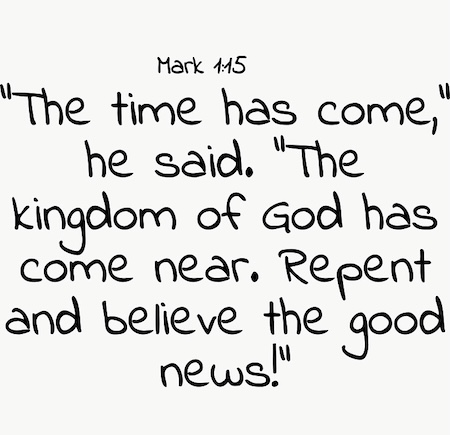
“The time has come,” he said. “The kingdom of God has come near. Repent and believe the gospel!” (Mark 1:15)
For many modern readers, words like kingdom, repent, and gospel have become overly familiar. We hear them so often that we assume we know exactly what they mean.
But familiarity can sometimes mask misunderstanding.
In particular, the word repent often carries baggage that may not reflect what Jesus’ original listeners heard. For many people today, the word repent sounds like a stern religious command: feel guilty, confess your sins, and promise to do better.
While repentance certainly involves moral change, that understanding may miss the larger picture of what Jesus was announcing. To see this more clearly, we need to step back and ask a simple question:
What did the word “repent” mean in the world of Jesus?
Seeing Differently
The New Testament word translated repent is the Greek verb metanoeō, with the related noun metanoia. The word comes from two Greek roots:
meta – after, beyond, or change
nous – mind, perception, understanding
At its most basic level, metanoia meant a change of mind. But in Greek thought, the “mind” was not merely intellectual. It referred to the center of perception – how a person understood reality, made judgments, and oriented their life.
Repentance, therefore, described a shift in how someone saw things: a reconsideration of one’s assumptions and a recognition that one’s previous understanding may have been mistaken.
Classical Greek writers used the word this way long before the New Testament. A general might rethink a military strategy, a statesman might reverse a policy after realizing it was misguided, or a person might reconsider a decision after gaining new insight. In those settings, repentance was not primarily religious. It simply meant reconsidering and changing course.
Another Greek word, metamelomai, described emotional regret or remorse. But metanoia focused more on a change in perspective that led to a change in direction.
That distinction matters. Repentance was not primarily about feeling bad. It was about seeing differently.
The Prophets’ Call: Return to the Lord
When Jewish scholars translated the Hebrew Scriptures into Greek (in what we call the Septuagint), they sometimes used metanoeō to translate the Hebrew word shuv, which meant to turn or to return.
In the Old Testament, repentance meant turning back to God – abandoning idols, injustice, and self-reliance and returning to covenant faithfulness. The prophets called Israel to repent not merely by feeling remorse but by reorienting their lives toward Yahweh (cf. Joel 2:12–13; Hosea 14:1–2; Isaiah 55:6–7; Jeremiah 3:12–14; Ezekiel 18:30–32).
“Return to me,” God said through the prophets.
This Hebrew background added an important dimension to the Greek word. Repentance became not only a change of thinking but a relational turning toward God.

What Repentance Meant in Jesus’ World
Now place yourself among the people who first heard Jesus’ words.
John the Baptist had already appeared in the wilderness calling Israel to repentance and warning that God was about to act decisively in history. Then Jesus arrived in Galilee announcing:
“The time has come. The kingdom of God has come near. Repent and believe the gospel.”
Notice the order.
Jesus did not simply say, “Repent.” He said repent because something had happened. “The time has come.” In other words, the long-awaited moment in God’s story with Israel had arrived.
“The kingdom of God has come near.” God’s reign – the reality Israel had prayed for, longed for, and sung about in the Psalms – was now breaking into history in a new way.
In light of that announcement, Jesus called people to repent. Seen in this context, repentance sounded less like a rebuke and more like an invitation.
It meant something like this: Rethink everything.
The way you understood God’s work in the world.
The way you imagined the kingdom would come.
The way you expected power, victory, and salvation to look.
God was acting – but not in the ways many expected. The kingdom was arriving not through political revolt or military power but through the surprising ministry of Jesus himself. Tax collectors, fishermen, and ordinary villagers began to follow him. The sick were healed. Sinners were welcomed. Outsiders were brought near.
If people wanted to recognize what God was doing, they had to see differently.
They had to repent.
Rethinking Life Under God’s Reign
When Jesus called people to repent, he was not simply telling them to feel sorry for their sins. He was inviting them to adopt a new vision of reality.
Repentance meant allowing one’s assumptions about God, power, righteousness, and identity to be reshaped by the arrival of the kingdom. It meant recognizing that the story many people thought they were living in was not the whole story.
God was doing something new – yet something deeply rooted in the promises of Israel’s Scriptures. To repent was to step into that story. And once someone began to see the world through the lens of God’s kingdom, life inevitably began to change.
Because when we see differently, we live differently.
Part of the challenge for modern readers is that we often hear repentance through the lens of what sociologists call Moralistic Therapeutic Deism1 – the idea that God mainly wants people to be nice, happy, and feel good about themselves. In that framework, repentance shrinks into little more than moral self-improvement. But Jesus’ call to repent was far more disruptive than that – it was an invitation to rethink everything in light of the arriving kingdom.
Repentance as Good News
For many of us, the word repent still carries echoes of accusation or pressure.
But in the mouth of Jesus, repentance was part of the gospel itself. It was an invitation to wake up – to recognize that God’s kingdom had drawn near and that a new way of seeing and living had become possible.
Repentance was not merely about looking backward at past mistakes. It was about turning toward the reality of what God was doing right now.
In other words:
The kingdom was near. So rethink everything.
1Smith, C., & Denton, M. L. (2005). Soul searching: The religious and spiritual lives of american teenagers. Oxford; New York: Oxford University Press.






 Practical Theology Today