Quite literally! Growing up, I loved farming – despite the inherent challenges of dairy farming in the ’50s and ’60s. We didn’t have much. I remember some bleak Christmases. We only made the 3-mile trip into town if it was absolutely necessary. Dairy farming is a 365-day-a-year commitment, so youth sports and weekend getaways were out of the question. Still, I wouldn’t have traded that upbringing for anything.
But I did – I went to college to be an engineer.
After a couple of years of college, I found myself unsure of what I really wanted to do with my life. I struggled in college. My grades were probably an indicator of my uncertainty. So I dropped out for a time, choosing to work for the local company that had hired me to work in their drafting department as a junior in high school. I had employment as long as I was in school, so I continued taking one or two evening engineering courses per semester at the University of Minnesota. Evening classes in the ’70s required an in-person commute, unlike online school today.
While working and commuting to the U, a dairy farm near my home became available for purchase. Because of my uncertainty about life, I decided to consider the possibility of buying the farm and becoming a dairy farmer. A high school classmate of mine was the realtor. We had many discussions as to how I might be able to purchase the farm. I was excited about the possibilities of becoming a landowner.
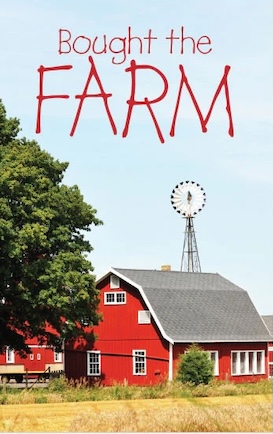
I almost bought that farm. I suppose I forgot how relentless dairy farming is. But when our future feels uncertain, we often retreat to what we know best. I wonder if that’s what happened with the Israelites in the wilderness when they formed the golden calf. Moses, their leader and the voice of Yahweh, had vanished up the mountain. Their future looked uncertain. So they defaulted to what was familiar: a tangible god, something they could control.
In time – forty years’ time – they learned to trust God. They followed Him through the desert, being shaped into a people ready to live in the land He had promised. That land wasn’t just a gift, but a launch point – a base from which they would fulfill their calling to be God’s covenant people, a blessing to the world. As kingdom people, they would participate in His redemption project – new creation and an “on earth as in heaven” type restoration.
But their desert journey came with hard lessons. The biggest one? God is sovereign. They were not. Yielding to His rule brought life. Resisting brought the opposite.
Eventually, they were ready. Joshua led them across the Jordan into Canaan. The land was apportioned according to their tribal lines – though the tribes of Reuben, Gad, and half of Manasseh chose to settle east of the river.
Before they entered, Yahweh made it abundantly clear how they were to live together in the land under his Kingship. This was the point of the Torah: for God to be their God, and they His people (cf. Exodus 6:6-7, Leviticus 25:38, Deuteronomy 29:13, Jeremiah 7:23, etc).
Theologically, we know this as the Covenant Formula*
As Creator, the land belonged to Him. “The land must not be sold permanently, because the land is mine and you reside in my land as foreigners and strangers (…)” (Leviticus 25:23-25). They were guests – stewards, not owners.
They were there at His pleasure, so to speak.
As landlord, God gave them instructions on how to treat the land and each other. Every seven years, the land was to rest. This not only rejuvenated the soil but also gave farmers, servants, and animals a Sabbath. This same principle was instituted by the United States Soil Conservation Service to combat the propensity for things like the Dust Bowl. We did something similar when I farmed, fallowing about one-seventh of our land each year. Good husbandry.
God also instituted the Year of the Jubilee. Every 50 years, property returned to its original family, debts were forgiven, and slaves were released. A full reset. A radical vision of liberty and justice.
But as far as we know, the Jubilee was never observed.
For a long time, I struggled with the fairness of Jubilee. But once I grasped that the land never truly belonged to them – it was God’s – the whole concept made sense. He was King. He owned everything. The people were simply stewards.
Somewhere along the way, they lost sight of that. Sometimes I wonder if we have too. God is still King. He still owns everything. We are still stewards – of our resources, our relationships, our work, even our time.
What would it look like if we lived more like that were true?
* A key element of the Covenant Formula is the people’s relationship with God and with each other. Jesus recapped the Formula with his infamous “Love God, love others” command (see Deuteronomy 6:4-5 and Leviticus 19:18).

 Practical Theology Today
I just watched the American Miracle, a new film produced by Tim Mahoney as requested by historical author Michael Medved. The movie reveals God’s “good pleasure” in bringing a new group of people into this land, and many marveled at the wisdom in our republic’s design, documented as having been inspired through prayer (as requested by Benjamin Franklin) during our founding fathers’ long & arduous debate while they drafted it. These just laws reflected God’s will and, if we follow Dallas Willard’s definition of God’s kingdom as “the effective reign of his will” then we can find renewed hope & awe for God’s reign in our recent history too. Americans have struggled with their blessed status as the Isarelites did. If we were to be a stronghold of light in the world, it has been hit or miss as we’ve succumbed to every human ill as well. As you ponder above, “what would be different if we lived more as stewards, subjects, in the land we have been given by its King??
LikeLike
Andrea,
Looks like an interesting movie. It just came out, right?
What would be different? A lot, I assume. What comes to mind is Walter Brueggemann’s contrast between God’s economy of abundance (“He created enough to go around”) to man’s economy of scarcity (“There isn’t enough to go around so I better grab while I can”). Jubilee would certainly dampen that, I suspect. I’ll probably write a bit about that going forward. I already have a draft started entitled “God’s Economy”
By the way – Brueggemann just passed away this week
LikeLike