On this Easter, let me share another reflection from Philip Yancey…
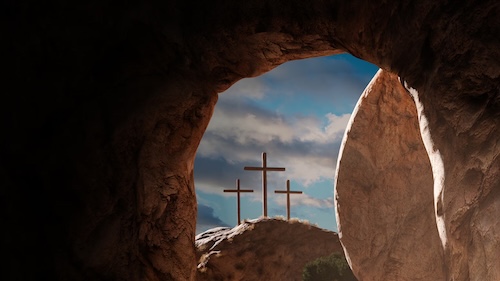
In my study of the Bible, I was struck by a radical shift in its authors’ attitudes about suffering, a shift that traces directly back to the cross. When New Testament writers speak of hard times, they express none of the indignation that characterized Job, the prophets, and many of the psalmists. They offer no real explanation for suffering, but keep pointing to two events—the death and resurrection of Jesus—as if they form some kind of pictographic answer.
The apostles’ faith, as they freely confessed, rested entirely on what happened on Easter Sunday. Those disciples soon learned what they had failed to learn in three years with their leader: when God seems absent, he may be closest of all. When God seems dead, he may be coming back to life.
The three-day pattern—tragedy, darkness, triumph—became for New Testament writers a template that can be applied to all our times of testing. We can look back on Jesus, the proof of God’s love, even though we may never get an answer to our “Why?” questions.
Good Friday demonstrates that God has not abandoned us to our pain. The evils and sufferings that afflict our lives are so real and so significant that God willed to share and endure them. God, too, is “acquainted with grief.” On that day, Jesus himself experienced the silence of God—it was Psalm 22, not Psalm 23, that he quoted from the cross.
Easter Sunday shows that, in the end, suffering will not triumph
And Easter Sunday shows that, in the end, suffering will not triumph. Therefore, “Consider it pure joy … whenever you face trials of many kinds,” writes James; and “In this you greatly rejoice, though now for a little while you may have had to suffer grief in all kinds of trials,” writes Peter; and “We also rejoice in our sufferings,” writes Paul. The apostles go on to explain what good can result from such “redeemed suffering”: maturity, wisdom, genuine faith, perseverance, character, and many rewards to come.
It’s a matter of time, Paul says. Just wait: God’s miracle of transforming a dark, silent Friday into Easter Sunday will someday be enlarged to cosmic scale.
Yancey, Philip (2009). Grace Notes: Daily Readings with a Fellow Pilgrim.

 Practical Theology Today