Radical Shift

On this Easter, let me share another reflection from Philip Yancey…


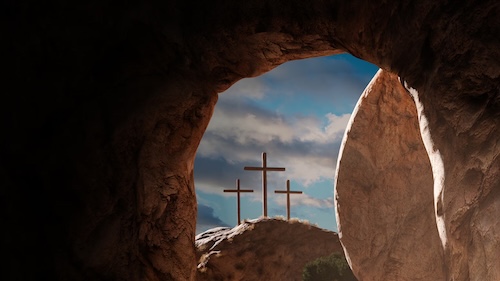
In my study of the Bible, I was struck by a radical shift in its authors’ attitudes about suffering, a shift that traces directly back to the cross. When New Testament writers speak of hard times, they express none of the indignation that characterized Job, the prophets, and many of the psalmists. They offer no real explanation for suffering, but keep pointing to two events—the death and resurrection of Jesus—as if they form some kind of pictographic answer.

The apostles’ faith, as they freely confessed, rested entirely on what happened on Easter Sunday. Those disciples soon learned what they had failed to learn in three years with their leader: when God seems absent, he may be closest of all. When God seems dead, he may be coming back to life.

The three-day pattern—tragedy, darkness, triumph—became for New Testament writers a template that can be applied to all our times of testing. We can look back on Jesus, the proof of God’s love, even though we may never get an answer to our “Why?” questions.

Good Friday demonstrates that God has not abandoned us to our pain. The evils and sufferings that afflict our lives are so real and so significant that God willed to share and endure them. God, too, is “acquainted with grief.” On that day, Jesus himself experienced the silence of God—it was Psalm 22, not Psalm 23, that he quoted from the cross.

Easter Sunday shows that, in the end, suffering will not triumph

And Easter Sunday shows that, in the end, suffering will not triumph. Therefore, “Consider it pure joy … whenever you face trials of many kinds,” writes James; and “In this you greatly rejoice, though now for a little while you may have had to suffer grief in all kinds of trials,” writes Peter; and “We also rejoice in our sufferings,” writes Paul. The apostles go on to explain what good can result from such “redeemed suffering”: maturity, wisdom, genuine faith, perseverance, character, and many rewards to come.

It’s a matter of time, Paul says. Just wait: God’s miracle of transforming a dark, silent Friday into Easter Sunday will someday be enlarged to cosmic scale.


Yancey, Philip (2009). Grace Notes: Daily Readings with a Fellow Pilgrim.

It’s Saturday.  But Sunday’s Coming!

Every year I find myself pondering what it might have been like for the first-century Christ-followers as they woke up on the Saturday after Jesus’ crucifixion, wondering what had just happened.  Jesus had come into their lives with words and actions that gave them hope at a time when they needed hope.  God had not spoken for centuries.  The Romans had conquered them.  The religious leaders heaped burdens upon them that left them with a sour taste of who God was and what He was doing.

Jesus came with the good news that God’s kingdom was near.  Good news.  Hope.  He also spoke of the availability of the kingdom for anyone and everyone – even those whom the religious leaders indicated God was not interested in.  Very good news.  Much hope.  Enough hope to cause many to quit their day jobs to follow him. 

He rocked their worlds.  He spoke with authority, demonstrating that God was significantly different than they had ever thought or dreamed.  As they continued to follow him, it became evident to them that Jesus was a prophet, maybe even the Messiah.  As time passed many became convinced that He was the Messiah and were probably confused as to why the theologians didn’t see it.

Then the last few weeks everything seemed to unravel.  There was a sense that things weren’t going to end well.  Judas tried to force Jesus’ hand.  The rest of the followers were confused and grasped at straws trying to understand why all seemed to be disintegrating before their eyes.

And then it did disintegrate.

Within 24 hours it all came crashing down, culminating with Jesus’ death as a criminal.  Now it’s Saturday.  Friday was the worst and darkest day they had ever experienced.  Now what?  This morning I tried to imagine what they might have been thinking: “What happened?  We thought he was the Messiah.  He even led us to believe he was.  Was he a fraud?  If so, what did we miss?  He seemed like the real deal.  Did we just waste three years of our lives?  The naysayers are going to have a heyday with this!  And what of hope?  We needed hope three years ago and thought we had found it.  Now all hope seems to be lost.  So, now what, God?”

We have the privilege of looking back on that Saturday through the lens of the resurrection, knowing that hope was just around the corner.  But they didn’t have that vantage point.  But God did.  And God, knowing he was going to resurrect Jesus, allowed the followers a moment of despair.  What a powerful act of love!  Doesn’t sound like love to us, does it?  But love, in its truest form, is the lover doing exactly what the loved one needs, not what the loved one thinks he/she needs.  Think of the love of the father who let his son (the one we call ‘the prodigal’) leave, knowing it was ultimately the best thing for him.

We all have ‘Saturdays’ in our lives when hope seems to have been snuffed out.  God has a different vantage point than us.  God tells us, as he told the Israelites, “Be strong and courageous!  Do not be afraid and do not panic before them.  For the LORD your God will personally go ahead of you. He will neither leave you nor forsake you” (Deuteronomy 31:6).   For the Israelites, ‘them’ was the Canaanites that inhabited the land they were to move into.  For us today, ‘them’ might well be the devil’s minions, those demons that would prefer we lose hope. 

History and the experience of all the Christ-followers that have gone before remind us that hope is around the corner.  As you ponder resurrection hope, contemplate something N.T. Wright once said: “They [demons] can still shriek, but since Calvary they no longer have authority.”

It might be Saturday, but Sunday’s coming! Have a Blessed Easter!

The title, It’s Saturday.  But Sunday’s a Coming!, is a takeoff on a classic old message by Tony Campolo that my wife and I heard him give at a Young Life conference in 1979.

Lent 2023

We are midway through this year’s Lenten season. Lent may or may not be something you traditionally think about. Many do. Lent (literally springtime) was popularized in the fourth century and had a different and more practical purpose than we might think seventeen centuries later. As one of the oldest Christian observations, the original intent was a period set aside for reflection and self-examination, demonstrated by self-denial, in preparation for Easter. Like other Christian holy days and holidays, it has morphed over the years, but its purpose has always been the same.

How might it have morphed? If we were to poll people this week as to the purpose of Lent, we would likely hear something about what we should give up during the 6+ weeks leading up to Easter. For many, self-denial has become the main focus. We/you might likely have a similar view. If so, we find ourselves entering this springtime with a negative perspective.

I live in Minnesota. With 2 feet of snow on the ground and another 4-6″ of snow predicted yet this week, I am not hearing many people dread the coming of spring. Who would want to approach spring sullenly? Or Lent?

The editors of Bread and Wine: Readings for Lent and Easter suggest that “Lent should never be morose – an annual ordeal during which we begrudgingly forgo a handful of pleasures. Instead, we ought to approach Lent as an opportunity, not a requirement.” After all, the main purpose of fasting (forgoing of a pleasure) is to provide more opportunities to discover and enjoy God. There is an old liturgy that refers to the Lenten season as “this joyful season.”

You may have reached this halfway point of Lent 2023 without giving it much thought. It’s not too late to step into the season. It’s never too late! How might we approach Lent this year in a manner that brings joy? Here are a few suggestions…

  • Read one of the Gospels. This is always a good starting place. You can plan your reading so that you finish at Easter, providing you with the backstory leading up to Jesus’ death and resurrection. Or listen to the Gospels with Annie F. Downs.
  • Find an online Lenten devotional like the one from Baylor University or Biola University. It’s OK to start in the middle (why do we westerners struggle with that?).
  • Find a weekly Lenten service with the express purpose of discovering and enjoying God in new ways.
  • Since we are talking about the hope of springtime, N.T. Wright’s book Surprised by Hope would be a good book to start during Lent (though it will probably take you well-past Easter to finish).

Whatever you choose to do during the remainder of this season of Lent, God will meet you, further revealing himself to you (I speak from experience). Blessings!

Barrington Bunny, The Story

A couple years ago I mentioned in a blog post Martin Bell’s short story, Barrington Bunny, from his 1983 book, The Way of the Wolf: The Gospel in New Images. Here’s the story, should you want to read it this Christmas season…

ONCE upon a time in a large forest there lived a very furry bunny.  He had one lop ear, a tiny black nose, and unusually shiny eyes.  His name was Barrington.

Barrington was not really a very handsome bunny.  He was brown and speckled and his ears didn’t stand upright.  But he could hop, and he was, as I have said, very furry.

In a way, winter is fun for bunnies.  After all, it gives them an opportunity to hop in the snow and then turn around to see where they have hopped.  So, in a way, winter was fun for Barrington.

But in another way winter made Barrington sad.  For, you see, winter marked the time when all of the animal families got together in their cozy homes to celebrate Christmas.  He could hop, and he was very furry.  But as far as Barrington knew, he was the only bunny in the forest.

When Christmas Eve finally came, Barrington did not feel like going home all by himself.  So he decided that he would hop for a while in the clearing in the center of the forest. 

Hop.  Hop.  Hippity-hop.  Barrington made tracks in the fresh snow.

Hop.  Hop.  Hippity-hop.  Then he cocked his head and looked back at the wonderful designs he had made.

“Bunnies,” he thought to himself, “can hop.  And they are very warm, too, because of how furry they are.”

(But Barrington didn’t really know whether or not this was true of all bunnies, since he had never met another bunny.)

When it got too dark to see the tracks he was making, Barrington made up his mind to go home.

On his way, however, he passed a large oak tree.  High in the branches, there was a great deal of excited chattering going on.  Barrington looked up.  It was a squirrel family!  What a marvelous time they seemed to be having.

“Hello, up there,” called Barrington.

“Hello, down there,” came the reply.

“Having a Christmas party?” asked Barrington.

“Oh, yes!” answered the squirrels.  “It’s Christmas Eve.  Everybody is having a Christmas party!”

“May I come to your party?” Said Barrington softly.

“Are you a squirrel?”

“No.”

“What are you, then?”

“A bunny.”

“A bunny?”

“Yes.”

“Well, how can you come to the party if you’re a bunny?  Bunnies can’t climb trees.”

“That’s true,” said Barrington thoughtfully.  “But I can hop and I’m very furry and warm.”

“We’re sorry,” called the squirrels.  “We don’t know anything about hopping and being furry, but we do know that in order to come to our house you have to be able to climb trees.”

“Oh, well,” said Barrington.  “Merry Christmas.”

“Merry Christmas,” chattered the squirrels.

And the unfortunate bunny hopped off toward his tiny house.

It was beginning to snow when Barrington reached the river.  Near the river bank was a wonderfully constructed house of sticks and mud.  Inside there was singing.

“It’s the beavers,” thought Barrington.  “Maybe they will let me come to their party.”

And so he knocked on the door.

“Who’s out there?” called a voice.

“Barrington Bunny,” he replied.

There was a long pause and then a shiny beaver head broke the water.

“Hello, Barrington,” said the beaver.

“May I come to your Christmas party?” asked Barrington.

The beaver thought for a while and then he said, “I suppose so.  Do you know how to swim?”

“No,” said Barrington, “but I can hop and I am very furry and warm.”

“Sorry,” said the beaver.  “I don’t know anything about hopping and being furry, but I do know that in order to come to our house you have to be able to swim.”

“Oh, well,” Barrington muttered, his eyes filling with tears.  “I suppose that’s true – Merry Christmas.”

“Merry Christmas,” call the beaver.  And he disappeared beneath the surface of the water.

Even being furry as he was, Barrington was beginning to get cold.  And the snow was falling so hard that his tiny, bunny eyes could scarcely see what was ahead of him.

He was almost home, however, when he heard the excited squeaking of field mice beneath the ground.

“It’s a party,” thought Barrington.  And suddenly he blurted out through his tears, “Hello, field mice.  This is Barrington Bunny.  May I come to your party?”

But the wind was howling so loudly and Barrington was sobbing so much that no one heard him.

And when there was no response at all, Barrington just sat down in the snow and began to cry with all his might.

“Bunnies,” he thought, “aren’t good to anyone.  What good is it to be furry and to be able to hop if you don’t have any family on Christmas Eve?”

Barrington cried and cried.  When he stopped crying he began to bite on his bunny’s foot, but he did not move from where he was sitting in the snow.

Suddenly, Barrington was aware that he was not alone.  He looked up and strained his shiny eyes to see who was there.

To his surprise, he saw a great silver wolf.  The wolf was large and strong and his eyes flashed fire.  He was the most beautiful animal Barrington had ever seen.

For a long time, the silver wolf didn’t say anything at all.  He just stood there and looked at Barrington with those terrible eyes.

Then slowly and deliberately the wolf spoke.  “Barrington,” he asked in a gentle voice, “why are you sitting in the snow?”

“Because it’s Christmas Eve,” said Barrington, “and I don’t have any family, and bunnies aren’t any good to anyone.”

“Bunnies are, too, good,” said the wolf.  “Bunnies can hop and they are very warm.”

“What good is that?” Barrington sniffled.

“It is very good indeed,” the wolf went on, “because it is a gift that bunnies are given, a free gift that bunnies are given, a free gift with no strings attached.  And every gift that is given to anyone is given for a reason.  Someday you will see why it is good to hop and to be warm and furry.”

“But it’s Christmas,” moaned Barrington, “and I’m all alone.  I don’t have any family at all.”

“Of course you do,” replied the great silver wolf.  “All of the animals in the forest are your family.”

And then the wolf disappeared.  He simply wasn’t there.  Barrington had only blinked his eyes, and when he looked – the wolf was gone.

“All of the animals in the forest are my family,” thought Barrington.  “It’s good to be a bunny.  Bunnies can hop.  That’s a gift.”  And then he said it again.  “A gift.  A free gift.”

On into the night, Barrington worked.  First, he found the best stick that he could.  (And that was difficult because of the snow.)

Then hop.  Hop.  Hippity-hop.  To beaver’s house.  He left the stick just outside the door. 

With a note on it that read: “Here is a good stick for your house.  It is a gift.  A free gift.  No strings attached.  Signed, a member of your family.”

“It is a good thing that I can hop,” he thought, “because the snow is very deep.”

Then Barrington dug and dug.  Soon he had gathered together enough dead leaves and grass to make the squirrel’s nest warmer.  Hop.  Hop.  Hippity-hop.

He laid the grass and leaves just under the large oak tree and attached this message: “A gift.  A free gift.  From a member of your family.”

It was late when Barrington finally started home.  And what made things worse was that he knew a blizzard was beginning.

Hop.  Hop.  Hippity-hop.

Soon poor Barrington was lost.  The wind howled furiously, and it was very, very cold.  “It certainly is cold,” he said out loud.  “It’s a good thing I’m so furry.  But if I don’t find my way home pretty soon even I might freeze!”

Squeak.  Squeak. . . .

And then he saw it – a baby field mouse lost in the snow.  And the little mouse was crying.

“Hello, little mouse,” Barrington called.

“Don’t cry.  I’ll be right there.”  Hippity-hop and Barrington was beside the tiny mouse.

“I’m lost,” sobbed the little fellow.  “I’ll never find my way home, and I know I’m going to freeze.”

“You won’t freeze,” said Barrington.  “I’m a bunny and bunnies are very furry and warm. 

You stay right where you are and I’ll cover you up.”

Barrington lay on top of the little mouse and hugged him tightly.  The tiny fellow felt himself surrounded by warm fur.  He cried for a while but soon, snug and warm, he fell asleep.

Barrington had only two thoughts on that long, cold night.  First, he thought, “It’s good to be a bunny.  Bunnies are very furry and warm.”  And then, when he felt the heart of the tiny mouse beneath him beating regularly, he thought, “All of the animals in the forest are my family.”

The next morning, the field mice found their little boy, asleep in the snow, warm and snug beneath the furry carcass of a dead bunny.  Their relief and excitement was so great that they didn’t even think to question where the bunny had come from.

And as for the beavers and the squirrels, they still wonder which member of their family left the little gifts for them that Christmas Eve.

After the field mice had left, Barrington’s frozen body simply lay in the snow.  There was no sound except that of the howling wind.  And no one anywhere in the forest noticed the great silver wolf who came to stand beside that brown, lop-eared carcass.

But the wolf did come.

And he stood there.

Without moving or saying a word.

All Christmas Day.

Until it was night.

And then he disappeared into the forest.
Beeswax Candles

I have traveled to a few foreign countries, each time aware of smells and aromas different from what I am familiar with. My first journey was to Paris where I was inundated with the smells of all kinds of perfumes and colognes. Now anytime I pass the cosmetic section of a department store, the aromas make me think of that trip to Paris. Anyone who has traveled to a foreign country knows what I mean.

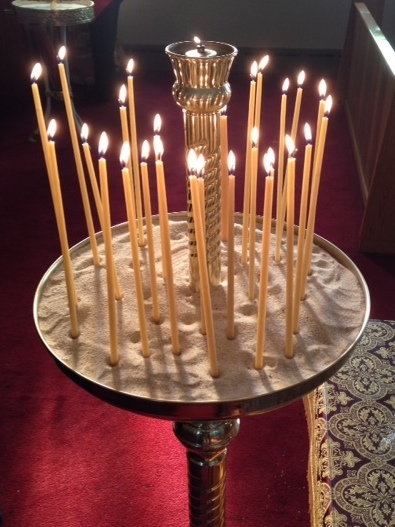
While navigating the narrow shop-lined streets of Old Jerusalem a few weeks ago, I was confronted with a particularly sweet smell that seemed to permeate everything. I discovered the common source – virgin beeswax candles. Almost every shop was selling them in preparation for the upcoming Easter celebrations. They were sold in bundles of 30-40, thousands and thousands of bundles. (They are apparently available on Amazon, as well). I had never seen these pencil-thin beeswax candles before in my life. What was their significance?

I discovered that the candles are of particular importance in Eastern Christian traditions. We got a little sense of their use while in Jerusalem visiting various Christian shrines like the Church of the Holy Sepulcher. After returning from our pilgrimage to Israel, I did a little more digging…

Our Eastern Orthodox friends celebrated Easter this past weekend (April 24, 2022). This is my abridged understanding of how Greek orthodoxy celebrates the resurrection of Jesus: The celebration actually begins the night prior to Easter, the day often referred to as Holy Saturday (the “forgotten day” of Easter week). Parishioners gather for a typical lengthy liturgical service. At midnight, in a completely darkened church, a priest steps out from the altar area with a single lighted candle (the Holy Light), announcing “Christos Anesti!”– Christ is Risen!

“Christos Anesti!”– Christ is Risen!

The parishioners arrive with candles in hand, prepared to receive the light of the world. While continuing to chant “Christos Anesti!” the priest begins passing the Holy Light to nearby parishioners who in turn pass the light to one another, saying “Christos Anesti!” with the recipient replying “Alithos Anesti!” (Truly He is Risen). The light, representing the Risen Christ radiates out into the congregation, then out the door into the world. The candles, usually beeswax, remain lit and carried home, bringing the Light into their homes.

As we witnessed when in Israel, light from candles permeates Eastern Orthodox tradition, culture, and worship. As it apparently should! The Apostle John began his Gospel narrative by reminding his readers that Jesus is the light of the world:

In the beginning was the Word, and the Word was with God, and the Word was God. He was with God in the beginning. Through him all things were made; without him nothing was made that has been made. In him was life, and that life was the light of all mankind. The light shines in the darkness, and the darkness has not overcome it…  9 The true light that gives light to everyone was coming into the world. (John 1:1-5, 9)

Jesus’ teaching likely shaped John’s thinking regarding this “light of all mankind.” In John 7, we find Jesus in Jerusalem attending the Festival of the Tabernacles (or Booths). It was one of three annual festivals to which the Israelites were to make a pilgrimage to the Temple, if at all possible. As typical, Jesus used the opportunity to teach “the people” about God’s Kingdom. And as typical, opposition arose from the religious leaders, specifically the chief priests and the Pharisees.

The feast associated with the Festival included a lamp lighting ritual. It is possible that Jesus was alluding to this ritual when he said to the people (anyone within hearing – pilgrims, his followers, the opposition)…

“I am the light of the world. Whoever follows me will never walk in darkness, but will have the light of life.” (John 8:12)

John would also have remembered Jesus’ teaching in what we know as the Sermon on the Mount. Speaking specifically to his disciples, his close followers, Jesus passed the light onto them:

14 “You are the light of the world. A town built on a hill cannot be hidden. 15 Neither do people light a lamp and put it under a bowl. Instead they put it on its stand, and it gives light to everyone in the house. 16 In the same way, let your light shine before others, that they may see your good deeds and glorify your Father in heaven. (Matthew 5:14-16)

As Christ-followers in the 21st century, maybe we should light a few beeswax candles as a reminder that we, too, are the light of the world. We possess the light but are not to be possessive of that light. We are to let it shine. We are to pass it on to others, so it can radiate out into a dark and broken world. A statement N.T. Wright made at the Wheaton Theology Conference in 2010 comes to mind…

Politics is the constant to-ing & fro-ing between tyranny and chaos.  But we believe in Jesus Christ and in the sovereign saving rule that he exercises from the cross and in His resurrection.  And we have the task of modeling before the world what that sort of polis would look like.  Not as an independent thing hiding away from the world, keeping the light to ourselves so that we can then say, “look at the rest of the world, isn’t it dark?”  Well, of course it is if we’re not shining the light there!

Let your light shine before others, that they may see your good deeds and glorify your Father in heaven.

An addendum (4/29/2022). I invited my friend and Young Life Colleague in North Macedonia, Brook Filipovski , to critique my description of Eastern Orthodox Easter. Her response: I think you did a great job of explaining the Orthodox practice. We have actually not been to a service here as our kids are so little and there’s no good place to go in the church, but maybe next year… This year I was at a friend’s house until just past midnight as she turned 40 on Easter morning. As I drove our mutual friend and me home, we got detoured as a huge Orthodox church in the neighborhood was spilling out thousands on the street in the 12:15 AM time slot. It was very moving to see everyone with their candles.

Barrington Bunny

“A gift. A free gift. No strings attached.”

The above quote was lifted from a short story by Martin Bell called Barrington Bunny. It’s a Christmas story. And an Easter story. The two can’t be separated. Both are about giving. And about sacrifice.

In our culture, we usually give from our surpluses, our extra, when we can afford it. And in our economy today, fewer of us can afford it. But in God’s economy, giving is sacrificial…

Consider Jesus’ discourse with his disciples, after observing the giving habits of people at the temple: Jesus sat down opposite the place where the offerings were put and watched the crowd putting their money into the temple treasury. Many rich people threw in large amounts. But a poor widow came and put in two very small copper coins, worth only a fraction of a penny. Calling his disciples to him, Jesus said, “I tell you the truth, this poor widow has put more into the treasury than all the others. They all gave out of their wealth; but she, out of her poverty, put in everything—all she had to live on.” (Mark 12: 41-44)

Jesus equates giving to sacrifice. He’s kind of an authority on the subject. He was the greatest unconditional gift. A free gift. No strings attached. The well-known scripture passage tells us just that: For God so loved the world that he gave his one and only Son, that whoever believes in him shall not perish but have eternal life. (John 3:16)

So what do we do with this? What of us? The Apostle John made sure that we understood the principle that Jesus modeled, “God loved, so he gave,” transferred to us his disciples, his followers. This is what he wrote to early believers and was captured in the New Testament book of 1 John: This is how we know what love is: Jesus Christ laid down his life for us. And we ought to lay down our lives for one another. (1 John 3:16)

God loved, so he gave the ultimate gift – Jesus. A free gift. No strings attached.

Jesus loved, so he gave the ultimate gift – his life. A free gift. A sacrificial gift. No strings attached.

We are called to love, to give of ourselves – free gifts. Sacrificial gifts. With no strings attached.

This Christmas, ponder on the significance that God loved, so he gave. So simple and yet so profound. This is the true meaning of Christmas. And of Easter.