The Temple: God’s Dwelling Place Among His People


When we think of the Temple in Jerusalem, it’s easy to imagine it as just another impressive ancient building with ornate stonework, golden decorations, and sacred rituals. Most cultures in the ancient Near East had temples. From Egypt to Mesopotamia, from Canaanite shrines to Babylonian ziggurats, temples were everywhere. They were designed to house the presence of the gods, to be places where heaven and earth touched.

Israel’s Temple was different.

From Tabernacle to Temple

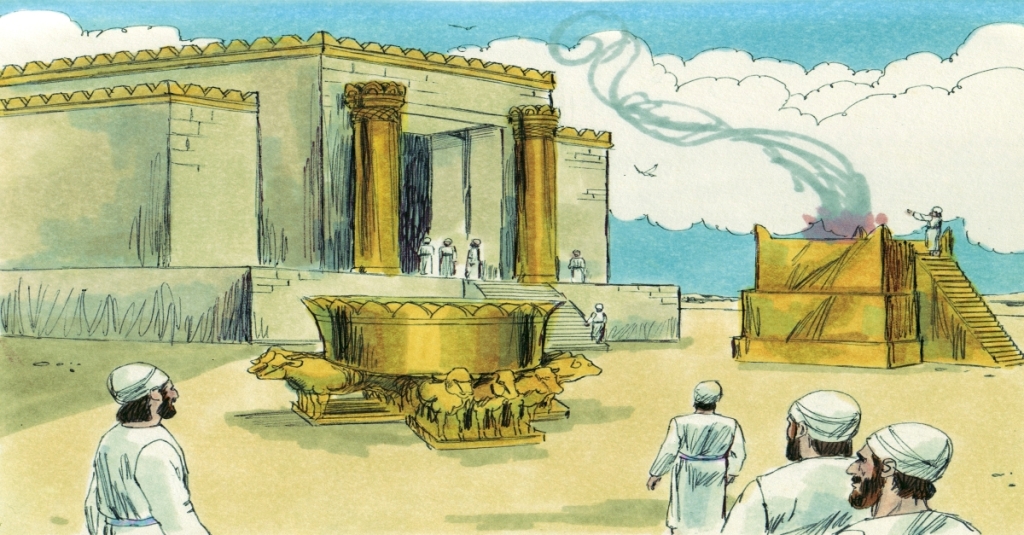
The Temple wasn’t Israel’s first “house of God.” In the wilderness, God instructed Moses to build the tabernacle (Exodus 25–31). This portable sanctuary, crafted with careful instructions and exact measurements, was the meeting place between God and His people. Its very design taught theology: the Holy of Holies symbolized God’s throne room, the ark His footstool, and the altar His provision for forgiveness.

And behind it all was the Biblical covenant refrain: “I will take you as my own people, and I will be your God” (Exodus 6:7). The tabernacle was God’s visible way of saying, “I’m not a distant deity. I dwell with you, because you are mine.”

When Israel settled in the land, King David longed for a permanent place where God’s presence would rest. As he looked out from his cedar palace in Jerusalem, he was struck that the ark of the covenant still dwelled in a tent (2 Samuel 7:1-2). His desire was honorable – he wanted to build a house worthy of Yahweh.

But God said no.

Why David Was Not the Builder

God’s response to David was layered. First, He reminded David that He had never asked for a house – He was the One who had always been on the move with His people. Second, God turned David’s request upside down: instead of David building God a house, God promised to build David a “house” – a dynasty through which His kingdom would be established forever (2 Samuel 7).

Upside down. Another Biblical theme.

Another reason, Scripture notes, is that David was a man of war, his hands stained with blood (1 Chronicles 28:3). If they were to have a temple, God wanted it to be built by a man of peace – Solomon. But even more, God wanted to remind Israel: “I am the One who builds. I am the One who establishes.

Temples Then and Temples Now

On the surface, Solomon’s Temple resembled other temples of its time: a sacred inner chamber, priestly rituals, sacrifices, and an emphasis on order and beauty.

But the distinction was profound. Pagan temples were built to contain an image of the pagan god with a carved idol that embodied the deity’s “presence.” In contrast, Israel’s Temple was built for the presence of the living God Himself. No idol sat in the Holy of Holies – only the ark of the covenant, a symbol of God’s throne. And when Solomon dedicated the Temple, God’s glory, in a theophany, filled the house like a cloud (1 Kings 8:10–11). Yahweh Himself took up residence.

Temple Theology 101

The Temple stood as more than an architectural marvel. It declared foundational truths about God and His kingdom:

  • God dwells with His people. The Temple embodied the covenant promise: “I will be your God, and you will be My people.”
  • God is holy. Access to His presence was carefully ordered, with layers of increasing sanctity leading to the Holy of Holies.
  • God provides atonement. Sacrifices reminded Israel that sin separates humanity from God, and blood was necessary for forgiveness.
  • God reigns as King. The Temple was His throne room in Jerusalem, reminding Israel they were His covenant people under His rule.

The Temple wasn’t just a religious building – it was a kingdom declaration.

The Greater Temple: Jesus Christ

Yet the Temple was never the ultimate goal. It was a shadow pointing forward to something greater. When Jesus arrived, He referred to Himself as the true Temple: “Destroy this temple, and in three days I will raise it up” (John 2:19). In Him, God’s presence didn’t merely dwell in stone walls, but it walked among us in flesh and blood. The Word became flesh and tabernacled among us (John 1:1`4, AMPC).

Paul captures this beautifully in Colossians 1:15: “The Son is the image of the invisible God, the firstborn over all creation.” Unlike the pagan temples with their carved images, Jesus Himself is the true image of God. He is not a symbol but the reality – God’s presence embodied fully.

And through Him, the covenant refrain takes on its deepest meaning: because of Jesus, God can say to Jew and Gentile alike, “I will be your God, and you will be My people” (2 Corinthians 6:16).

Dwelling with God Forever

From tabernacle to Temple to Christ, the story is one of God’s presence with His people. What began as a tent in the wilderness finds its completion not in stone, but in a Person – and ultimately, in a city where God Himself will dwell with humanity forever: “God’s dwelling place is now among the people, and he will dwell with them. They will be his people, and God himself will be with them and be their God.” (Revelation 21:3).

The Temple reminds us that God’s desire has always been to take up residence with His people. And in Jesus, that desire has been fulfilled in ways far greater than David or Solomon ever imagined.

Kingdom Divided: Good Kings, Bad Kings, and the Road to Exile


When we last left the story of God’s kingdom people, David had passed the crown to his son Solomon. David’s reign was far from perfect, but he was remembered as “a man after God’s own heart.” Solomon, with his legendary wisdom and his building of the temple, seemed poised to continue that legacy. Yet the seeds of division were already being sown.

Solomon loved the Lord (1 Kings 3:3), but he also loved foreign wives and their gods (1 Kings 11). His compromises fractured the nation spiritually, and after his death, the kingdom literally split in two: Israel in the north and Judah in the south (1 Kings 12). From this point forward, the biblical story of the monarchy becomes a tale of two nations, each with its own kings, prophets, triumphs, and failures.


Two Thrones, Two Paths

The northern kingdom of Israel had nineteen kings in total, beginning with Jeroboam I. Not a single one is described in Scripture as faithful to the Lord. Jeroboam set up golden calves so the people wouldn’t go to Jerusalem to worship (1 Kings 12:28–30), and every king after him walked in his idolatrous footsteps. Though some were politically successful or militarily strong, spiritually the nation was on a steady downward slope.

Judah, on the other hand, had twenty kings. Most were unfaithful, but a handful are remembered as “good” – not because they were flawless, but because they sought the Lord and led reforms. Kings like Asa (2 Chronicles 14), Jehoshaphat (2 Chronicles 17), Hezekiah (2 Kings 18), and Josiah (2 Kings 23) stand out as bright lights in a darkening landscape. They tore down idols, reinstituted temple worship, and called the people back to covenant faithfulness.

Still, even the “good” kings were inconsistent. Joash started well under the guidance of the priest Jehoiada, but later abandoned the Lord (2 Chronicles 24). Amaziah “did what was right in the eyes of the Lord, but not wholeheartedly” (2 Chronicles 25). Uzziah was faithful for most of his reign but became proud and overstepped his authority in the temple (2 Chronicles 26). The chronicler doesn’t whitewash the record; he shows us leaders who were mixed bags – a bit like us?


“Some listened. Most did not.”

The Prophetic Warnings

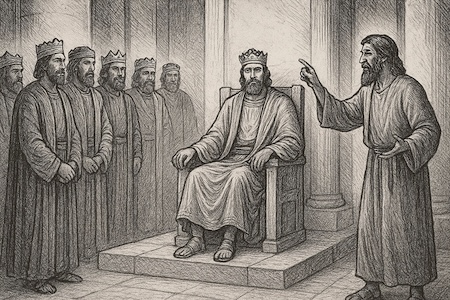
Throughout these centuries, God did not leave His people without a voice. Prophets like Elijah and Elisha, Amos, Hosea, Isaiah, Micah, and Jeremiah spoke truth to kings and nations. They confronted idolatry, called out injustice, and reminded the people that covenant blessings were tied to covenant faithfulness (Deuteronomy 28).

But most of the time, the prophets were ignored – or worse, persecuted. Think of Elijah standing alone on Mount Carmel, calling Israel to choose between the Lord and Baal (1 Kings 18). Think of Jeremiah weeping as his warnings fell on deaf ears (Jeremiah 9). Again and again, the prophets said: Return to the Lord, or exile is coming.


Patterns of Faithfulness and Rebellion

Reading through 1 and 2 Kings or 2 Chronicles, we see a pattern emerge. A king rises to power. If he does evil, the nation slides further into idolatry. If he does good, there’s often a brief reprieve, a season of reform, but it rarely lasts. With the next generation, the pendulum swings back toward rebellion.

The northern kingdom never once turned the tide. Every king “did evil in the sight of the Lord.” After centuries of warning, God allowed Assyria to conquer Israel in 722 BC (2 Kings 17). The ten northern tribes were scattered, never to return in the same form.

Judah limped along for another 135 years. Good kings gave the nation moments of hope, but the general trend was downward. Finally, under the weight of idolatry, injustice, and stubborn rebellion, God allowed Babylon to destroy Jerusalem in 586 BC (2 Kings 25). The temple was burned, the walls torn down, and the people carried into exile.


Why This Matters

It’s tempting to read this history as ancient political drama, but I think Scripture invites us to see something deeper. The story of Israel and Judah is the story of human hearts. Left to ourselves, we tend to drift toward idolatry. We start well and falter. We follow God for a season but slip back into self-reliance, pride, or compromise.

The kings of Israel and Judah remind us that leadership matters, but more importantly, they remind us of our need for the greater King. David pointed toward Him (2 Samuel 7:12–16). Solomon’s wisdom hinted at Him (Matthew 12:42). The prophets longed for Him (Isaiah 9:6–7). And though the line of kings failed (which, remember, the people asked for), God promised a Son of David who would reign forever in justice and righteousness (Jeremiah 23:5–6). That King is Jesus.


Living in the Tension

So what do we do with this mixed record of good and bad kings? Perhaps we’re meant to sit in the tension. To acknowledge both the warnings and the hope. The warnings show us the cost of disobedience: exile, loss, brokenness. The hope points us to the faithfulness of God, who never abandons His people even in their rebellion (Lamentations 3:22–23).

The exile was not the end of the story. God brought His people back (see Ezra and Nehemiah), rebuilt Jerusalem, and in the fullness of time, sent His Son (Galatians 4:4-5). The line of David was never truly broken; it was fulfilled in Christ.

As we reflect on the divided kingdom, maybe a takeaway is this: our faithfulness wavers, but God’s faithfulness never does…

If we are faithless, he always remains faithful. He cannot deny his own nature. (2 Timothy 2:13, Phillips).

We don’t need another human king to save us. We already have One who has conquered sin and death, who reigns forever, and who invites us to live as citizens of His unshakable kingdom (Hebrews 12:28).


David: A Shepherd, A King, A Foreshadow of Christ


In the previous post, we discussed what happened when the people rejected God and asked Him to “Appoint a king to lead us, such as all the other nations have” (1 Sam. 8:5). They got Saul, the tall, farmer-turned-king, who rallied Israel’s tribes against their enemies and shone with early promise. But pride, fear, and disobedience consumed him, and the once-chosen ruler fell by his own sword on Mount Gilboa. Then came David.

In Saul, God gave the Israelites what they clamored for. With David He gave them what they needed.

Michelangelo’s “David”

David’s story didn’t begin in a palace or on the battlefield but in the pastures outside Bethlehem. The youngest son of Jesse, he was given the lowly work of tending sheep. Alone under the stars, he learned to sing psalms of worship and to trust God’s presence. He also learned courage, protecting his flock from wild animals – a courage that would one day defend Israel itself.

After Saul’s demise, the prophet Samuel was sent to Jesse’s house to anoint a new king. Jesse presented his older sons, but God whispered, “The Lord does not look at the things people look at. People look at the outward appearance, but the Lord looks at the heart” (1 Samuel 16:7). Finally, David was called in from the fields, and, to everyone’s surprise, was anointed by Samuel as the successor-king. God has a habit of raising up the overlooked.

At first David’s service was small. He played the harp in Saul’s court to soothe the troubled king. But then came the defining moment against the Philistine giant, Goliath. Armed with only a sling, five smooth stones, and faith, David declared, “The battle is the Lord’s” (1 Samuel 17:47). One stone was enough. The shepherd boy became a hero.

David’s fame sparked Saul’s jealousy. The people sang, “Saul has slain his thousands, and David his tens of thousands” (1 Samuel 18:7). Consumed with envy, Saul pursued David. Years of exile followed, with David hiding in caves, leading outcasts, and refusing to kill Saul when given the chance. At times, David leaned on cunning or fear instead of faith, even pretending madness before foreign kings (1 Samuel 21:13). Brave and trusting, and, yes, deeply human.

When Saul fell in battle, David grieved. He mourned Saul and his son Jonathan, his dearest friend. Soon, the tribe of Judah anointed him king, and after years of conflict, all Israel followed. He captured Jerusalem, made it his capital, and brought the Ark of the Covenant into the city with rejoicing. Then came God’s promise through the prophet Nathan: “Your house and your kingdom will endure forever before me; your throne will be established forever” (2 Samuel 7:16). This “Davidic covenant” became the heartbeat of Israel’s hope.

But David’s reign was far from spotless. One evening, while others were at war, David lingered in Jerusalem. From his rooftop, he saw Bathsheba bathing. He summoned her, slept with her, and when she became pregnant, arranged the death of her husband Uriah to cover it (2 Samuel 11). It was an abuse of power. Nathan confronted him, and David confessed. Out of that brokenness came Psalm 51: “Create in me a pure heart, O God, and renew a steadfast spirit within me” (Psalm 51:10). 

In his later years, David faltered again. He ordered a census, placing confidence in numbers rather than God. A plague followed, another reminder that Israel’s security rested in Yahweh, not its king. As his death approached, palace intrigue swirled. One son, Adonijah, tried to seize the throne. But David named Solomon – Bathsheba’s son – as his rightful heir. On his deathbed, he charged Solomon: “Walk in obedience to him, and keep his decrees and commands… do this so that you may prosper in all you do” (1 Kings 2:3). After forty years of reign, David died and was buried in Jerusalem.

So how do we remember him? Scripture calls him “a man after God’s own heart” (Acts 13:22), yet his sins were grievous. He was faithful yet flawed, victorious yet vulnerable. His life shows both the heights of devotion and the depths of failure. But more importantly, it shows God’s faithfulness.

David’s story always pointed forward. His psalms give prophetic glimpses of Christ. Psalm 110 speaks of a king-priest greater than David. The angel’s announcement to Mary echoed God’s covenant: “The Lord God will give him the throne of his father David, and he will reign… his kingdom will never end” (Luke 1:32-33).

David’s reign ended in the grave. But the Son of David rose from the grave. Where David’s failures brought brokenness, Jesus’ obedience brought salvation. Where David’s kingdom crumbled, Jesus’ kingdom stands forever. David was a shepherd-king whose songs still teach us to pray. Jesus is the Good Shepherd, the King of kings, who answers those prayers with life.

David’s story, warts and all, is good news for us. If God’s grace could work through someone like David – flawed, repentant, forgiven – then there is hope* for us too. His life reminds us that no earthly king can save us. Only the Son of David can.


* I wrote this blog post on August 27, 2025, the day of yet another school shooting, this time at Annunciation Catholic School in Minneapolis. The school’s theme for the year is one of hope: “A Future Filled with HOPE!” A website message to the Annunciation family was posted by the principal and pastor with the closing salutation, “In partnership, in community, in Christ” – HOPE!