A couple of weeks ago our pastor introduced us to Obed-Edom. Obed who? Obed-Edom. I was vaguely familiar with the story about him but didn’t know his name. This is what I was familiar with…
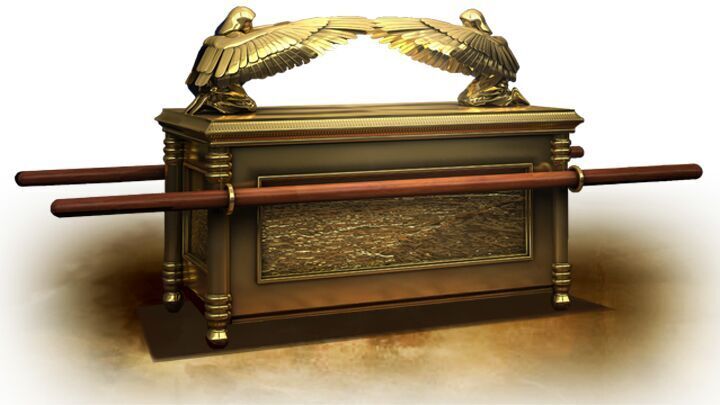
The Ark of the Covenant (also known as the Ark of the Lord) was central to the Israelites’ relationship with God. The Ark contained items specific to the covenant relationship between Yahweh and the people: a gold jar of manna, Aaron’s staff that had budded, and the stone tablets of the covenant, according to the author of Hebrews (see Hebrews 9:3-4). It was more than just a fancy box. It was called the Name, the name of the Lord (Yahweh) Almighty (cf. 2 Samuel 6:2, 1 Chronicles 13:6). The Ark was a visible representation of God’s presence with His people. Think, Christ is the visible expression of the invisible God (Colossians 1:15, Phillips). The Ark was a big deal.
You may recall that the Philistines were the arch-enemy of the Israelites. At one point, they decided that it would be wise to carry the Ark into battle, hoping it would ensure victory. It did not. In fact, aware of the presence of the Ark, the Philistines doubled down, defeated the Israelites, and captured the Ark. They placed the Ark in the temple of their god, Dagon. But Dagon’s statue kept falling over in the presence of the Ark. So, after a few months, the Philistines sent the Ark back to Israel. It ended up at Abinadab’s house where it remained for 21 years, during the entire reign of King Saul, possibly unbeknownst (1 Samuel 5-7).
When David became king of Israel, he assembled an entourage to go get the Ark from Abinadab’s house. Not understanding the significance and holiness of the Ark, the people mishandled it, resulting in loss of life. Fear seized the people and David, so they dropped the Ark off at Obed-Edom’s house where it remained for three months, during which the Lord blessed his household (1 Chronicles 13).
David did not do due diligence before his first attempt to bring the Ark back to Jerusalem. The second time he did better. With thought and foresight, he returned to Obed-Edom’s house to retrieve the Ark, adhering to directives outlined in the Hebrew Law. This attempt proved to be successful.
This is the part of Obed-Edon’s story that was less familiar to me…
After living three months with the Ark (the representation of the Lord’s presence) in his home, Obed-Edom was all-in. He and his family relocated to Jerusalem to continue to be in the presence of the Ark, of God. We don’t know what his pre-Jerusalem occupation was, but he became a gatekeeper in Jerusalem, ultimately ministering before the ark as a worship musician and a doorkeeper for the ark (1 Chronicles 15-16). Obed-Edom’s legacy was primarily as a gatekeeper/doorkeeper for the sanctuary of the Lord. To us, not what we might consider a legacy, but as a follower of Yahweh, he left a legacy worthy of record in the Hebrew scriptures (see 1 Chronicles 26:1-8).
As I discovered this secondary story about Obed-Edom, I immediately thought of the poem Sam Shoemaker wrote as an apologia for his life, I Stand by the Door. His legacy…
I stand by the door.
I neither go too far in, nor stay too far out.
The door is the most important door in the world—
It is the door through which men walk when they find God.
There’s no use my going way inside, and staying there,
When so many are still outside and they, as much as I,
Crave to know where the door is.
And all that so many ever find
Is only the wall where a door ought to be.
They creep along the wall like blind men,
With outstretched, groping hands.
Feeling for a door, knowing there must be a door,
Yet they never find it . . .
So I stand by the door.
The most tremendous thing in the world
Is for men to find that door—the door to God.
The most important thing any man can do
Is to take hold of one of those blind, groping hands,
And put it on the latch—the latch that only clicks
And opens to the man’s own touch.
Men die outside that door, as starving beggars die
On cold nights in cruel cities in the dead of winter—
Die for want of what is within their grasp.
They live, on the other side of it—
live because they have not found it.
Nothing else matters compared to helping them find it,
And open it, and walk in, and find Him . . .
So I stand by the door.
Go in, great saints, go all the way in—
Go way down into the cavernous cellars,
And way up into the spacious attics—
It is a vast, roomy house, this house where God is.
Go into the deepest of hidden casements,
Of withdrawal, of silence, of sainthood.
Some must inhabit those inner rooms,
And know the depths and heights of God,
And call outside to the rest of us how wonderful it is.
Sometimes I take a deeper look in,
Sometimes venture in a little farther;
But my place seems closer to the opening . . .
So I stand by the door.
There is another reason why I stand there.
Some people get part way in and become afraid
Lest God and the zeal of His house devour them;
For God is so very great, and asks all of us.
And these people feel a cosmic claustrophobia,
And want to get out. “Let me out!” they cry.
And the people way inside only terrify them more.
Somebody must be by the door to tell them that they are
Spoiled for the old life, they have seen too much:
Once taste God, and nothing but God will do any more.
Somebody must be watching for the frightened
Who seek to sneak out just where they came in,
To tell them how much better it is inside.
The people too far in do not see how near these are
To leaving—preoccupied with the wonder of it all.
Somebody must watch for those who have entered the door,
But would like to run away. So for them, too,
I stand by the door.
I admire the people who go way in.
But I wish they would not forget how it was
Before they got in. Then they would be able to help
The people who have not yet even found the door,
Or the people who want to run away again from God.
You can go into deeply, and stay in too long,
And forget the people outside the door.
As for me, I shall take my old accustomed place,
Near enough to God to hear Him, and know He is there,
But no so far from men as not to hear them,
And remember they are there, too.
Where? Outside the door—
Thousands of them, millions of them.
But—more important for me—
One of them, two of them, ten of them,
Whose hands I am intended to put on the latch.
So I shall stand by the door and wait
For those who seek it.
“I had rather be a door-keeper . . .”
So I stand by the door.

 Practical Theology Today