About 20 years ago, Rick Warren, founding pastor of Saddle Back Church in Lake Forest, CA, rolled out his best-selling book, The Purpose Driven Life: What on Earth Am I Here For? It quickly rose to the top of the New York Times Best Seller list – an indicator that the topic met a felt need.
Churches responded to the popularity of the book offering book studies to help parishioners process the 40 short chapters. Chapters were designed for daily reading with the goal of helping readers reflect on their lives, values, and beliefs. I remember two distinct responses to the book/studies. For some, it was a transformative, even a watershed experience (see Watershed Moments).
There was another segment of readers that came away disappointed – they were hoping that God would reveal to them a very specific purpose, maybe even a change in direction, career, etc. – “what does God want me to do?” stuff. That didn’t happen for them, nor was it the “purpose” of the book. I think Rick Warren’s hope was to help people live a life of purpose, not necessarily find their purpose. There is a significant difference. It’s Why versus What and How stuff. Why precedes What and How. Always. (Simon Sinek reminds us of this in his TED Talk, How Great Leaders Inspire Action.) If we don’t know the Why we might find ourselves just pounding sand.
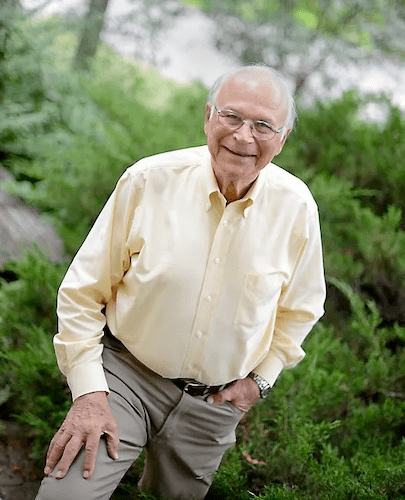
The Hon. Al Quie passed away recently (8/18/2023) at the age of 99. As a fellow Minnesotan, I followed with interest his life of political service, with service being the operative word. He served as a state senator, congressman, as well as the Governor of Minnesota.
Al Quie knew his Why
I’m not aware that Al Quie had a written “life purpose statement.” But his unwritten purpose statement was evident from his life. It was one of serving and ministering to those in his sphere of influence, which was pretty significant, by the way. A couple of examples:
One example took place in the mid-1970s as Chuck Colson of Watergate “fame” was serving out a prison sentence for his role in the Watergate scandal. While awaiting trial, Colson became a Christ-follower through the ministering of Quie and others. Influenced by his new-found faith, Colson decided to own his role in the scandal, pleading guilty accordingly. The judge rewarded him with a 1–3-year sentence.
About a half year into serving his sentence, it soon became evident that Colson’s family was suffering immensely from his incarceration. His teenage son was particularly struggling. Quie, knowing that Colson’s family’s well-being was in jeopardy, made a stunning offer:
“Chuck, I have been thinking,” Quie said to Colson. “There’s an old statute someone told me about. I’m going to ask the President if I can serve the rest of your term for you… Your family needs you, and I can’t sleep while you’re in prison; I think I’d be a lot happier being inside myself.” 1
Al Quie knew his Why
I don’t remember all the details, but within a few days of the offer, the sentencing judge released Colson after serving seven months of his sentence “because of family problems.” I suspect that somehow Quie’s offer was instrumental.
I got to meet Al Quie a few times through my friend Mick. For twenty years, Mick, Al, and a couple of other guys have met on Thursday mornings for prayer and fellowship, more recently at the memory care center where Quie finished his life. Mick explained that though Al’s sphere of influence was reduced to a small room and the hallway outside his door, his purpose remained steadfast – ministering to those around him.
Apparently, Quie would work on jigsaw puzzles in the hall outside his room. Al shared with Mick, that as he worked on a puzzle when a resident happened to look blue and melancholy, he would help them place some pieces to the puzzle. This simple gesture consistently led to a spark of joy in their eyes and the re-emergence of their smiles.
Al Quie knew his Why!!
1 Colson, C. W. (1997). Born again. Spire.

 Practical Theology Today